For piston aircraft owners, time between overhaul isn't just a number on a data plate. It's a financial milestone that shapes every maintenance budget, annual inspection, and resale decision you make. Lycoming has officially announced an increase to a 2,600-hour TBO, and if your aircraft is powered by one of their engines, this news deserves your full attention. Whether you're 200 hours into a fresh overhaul or already watching the Hobbs meter creep toward the old limit, understanding exactly what this change means and what it doesn't mean could save you significant money and help you make smarter decisions going forward.
Table Of Contents
- What Lycoming Actually Announced and How It Compares to Previous Guidance
- Which Engines Qualify and the Conditions That Apply
- What a Higher TBO Means for Your Maintenance Budget and Resale Value
- TBO, the FAA, and What's Actually Required of You
- How to Verify Compliance and What to Watch for Next
- Conclusion
- Sources
What Lycoming Actually Announced and How It Compares to Previous Guidance
Lycoming made the announcement on July 20, 2026, expanding the time between overhaul interval to 2,600 hours for a large majority of their engine models under Service Instruction 1009BF, an FAA-approved enhancement designed to increase aircraft availability and reduce lifecycle costs across the fleet [1]. Lycoming's Chris Gayman confirmed that field data on engine performance supported the extension, signaling this was an engineering-driven decision grounded in real-world operational evidence, not a competitive marketing move [2].
This is not a minor housekeeping update to a service manual footnote. SI 1009BF carries FAA approval, which means it carries institutional weight that owners, mechanics, and insurers will all need to take seriously. If you're a Lycoming-powered aircraft owner, this document belongs in your maintenance records file today.
For context, many of the most common Lycoming engine families previously operated under a 2,000-hour TBO, though that figure varied by model and high-performance or turbocharged variants operated under different intervals. The jump to 2,600 hours represents an additional 600 flight hours before overhaul is recommended. For an owner flying 150 hours per year, that's roughly four additional years of operation before reaching the new TBO. Flying 300 hours annually, it's still an extra two years. The math works in your favor regardless of how frequently you fly.
That said, TBO figures are model-specific, and not every engine in the Lycoming catalog has migrated to the same number. Verify your specific model against SI 1009BF before drawing any financial conclusions.
Which Engines Qualify and the Conditions That Apply
Eligible Engine Models
The 2,600-hour TBO applies to a large majority of Lycoming factory new and rebuilt engines across both fixed-wing and rotorcraft applications. The engine families covered include the O-320, IO-320, O-360, IO-360, IO-390, O-540, and IO-540 series, which together represent a substantial portion of the piston GA fleet.
Exclusions do apply. Lycoming has specifically carved out turbocharged and high-performance variants from the 2,600-hour interval. If your engine carries a "T" or "TIO" prefix, don't assume you're covered. Pull SI 1009BF directly from lycoming.com/2600 and confirm your exact model number before adjusting your maintenance planning or reserve accounts. The stakes of getting this wrong are too high to rely on a general summary, including this one.
Cross-reference your engine data plate against the SI. The data plate lives on the engine case itself and carries the full model designation. Your engine logbooks should reflect any prior major overhauls and current time since overhaul (TSO). Both documents matter here.
Operating and Maintenance Conditions
Manufacturer TBO extensions rarely come without strings attached. While the full conditions are detailed in SI 1009BF, the general framework for TBO applicability requires that the engine has been operated in accordance with Lycoming's published service requirements, including adherence to recommended oil change intervals, use of appropriate aviation oil grades, and compliance with applicable Service Instructions and Airworthiness Directives. An engine that has accumulated hours while skipping Service Instructions or exceeding recommended oil change intervals is not automatically eligible simply because the new TBO number is higher.
Engines with documented periods of extended inactivity deserve particular scrutiny. Long-term storage affects seals, cam lobes, cylinder bores, and bearing surfaces in ways that total time alone doesn't capture. If your engine has sat for months at a stretch, discuss its condition history with your A&P or IA before applying the new TBO figure to your planning.
Factory vs. Field Overhaul
The 2,600-hour TBO applies to Lycoming factory new and rebuilt engines. If your engine was overhauled at the factory, you're likely in scope. If a field overhaul was performed by an FAA-certificated repair station, review SI 1009BF carefully to confirm applicability. The distinction between factory and field overhaul has historically mattered for TBO eligibility in Lycoming documentation, and that precedent may not have changed.
What a Higher TBO Means for Your Maintenance Budget and Resale Value
The Real Cost of a Lycoming Engine Overhaul
Engine overhaul is one of the largest single expenditures in piston aircraft ownership. Factory and field overhaul costs vary considerably by model, shop, and what the engine reveals at teardown, so treat any figures you encounter, including those below, as rough market estimates rather than firm quotes. That said, the directional math behind the TBO change is clear and worth walking through.
Consider an owner whose IO-360 overhaul runs $28,000 all-in, covering overhaul labor, parts, and reinstallation. At a 2,000-hour TBO, the per-hour engine reserve works out to $14.00 per hour. At 2,600 hours, that same overhaul cost spreads to approximately $10.77 per hour, a reduction of more than 23% in your per-hour engine reserve. For an owner flying 200 hours per year, that's roughly $640 back in your pocket annually, or more than $3,200 across a typical five-year period between overhauls.
These are illustrative figures. Your actual overhaul cost will vary by model, shop, and parts condition discovered at teardown. But distributing a fixed overhaul cost across more hours reduces your per-hour liability regardless of the specific dollar figure. Adjust your engine reserve account accordingly, but don't eliminate it. Engines don't always make it to TBO, and reserve accounts exist precisely for unscheduled events.
Also factor in costs beyond the overhaul invoice itself: removal and reinstallation labor, hangar fees during downtime, and any rental aircraft needed to cover the gap. The total impact of an overhaul event is meaningfully higher than the shop invoice alone.
Impact on Aircraft Resale Value
If you're thinking about selling in the next several years, the TBO increase works in your favor in a concrete way. A buyer evaluating a Lycoming-powered aircraft wants to know how much engine life remains before a major overhaul expenditure. Under the old TBO, an engine at 1,800 hours had 200 hours of published life remaining, a near-term liability that buyers discount heavily in any offer. Under the new 2,600-hour TBO, that same engine has 800 hours remaining, which reframes it as a mid-life asset rather than a liability. That's a meaningful shift in both perceived value and negotiating position.
Document your compliance with all applicable Lycoming Service Instructions meticulously. Buyers and their pre-purchase inspection mechanics will look for exactly that paper trail. A clean logbook with full SI compliance history supports the TBO claim. Gaps in that history undermine it.
TBO, the FAA, and What's Actually Required of You
Part 91 vs. Part 135: A Critical Distinction
Here's where many owners misunderstand their obligations. For Part 91 operators, manufacturer TBO is a recommendation, not a regulatory mandate. You are not legally required to overhaul your engine at 2,000 hours, 2,600 hours, or any specific interval under Part 91 operating rules. That said, SI 1009BF carries FAA approval, which gives the 2,600-hour figure more standing than a standard manufacturer recommendation.
For Part 135 operators, charter, air taxi, and on-demand operations, TBO compliance is generally mandatory and enforced through your operations specifications. If you operate under Part 135, do not apply any TBO change to your maintenance program without coordinating with your FSDO and reviewing your ops specs. The consequences of getting this wrong in commercial operations are significant.
Regardless of which operating rule applies to you, consult your A&P or IA and, if necessary, an aviation attorney before making any TBO-related decisions. General guidance, including this article, is not a substitute for professional advice on your specific operation.
What Your Insurance Policy Might Say
Your aircraft hull and liability insurer may have TBO-related requirements entirely independent of FAA rules or Lycoming's Service Instructions. Some aviation underwriters specify that TBO compliance is a condition of coverage, and flying beyond a manufacturer's published TBO, even legally under Part 91, could affect a claim. Review your current policy language and contact your aviation insurance broker before using the new 2,600-hour figure to adjust your maintenance timeline. If your policy was written referencing a 2,000-hour TBO, a routine conversation with your broker now, while it's an administrative update rather than a mid-claim dispute, is worth having.
The Role of Condition Monitoring
Even with FAA-approved TBO guidance in hand, condition monitoring remains non-negotiable. Regular oil analysis, compression checks at each annual inspection, and periodic borescope inspections of cylinder interiors give you a real-time picture of what's happening inside your engine that TBO numbers alone cannot provide. An engine at 1,500 hours with declining compression trends and metal in the oil filter needs a conversation with your A&P regardless of where the TBO falls. Conversely, an engine at 2,400 hours with excellent compression, clean oil analysis, and strong borescope results is telling you something meaningful about its actual condition.
Use condition monitoring as a complement to TBO guidance, not a replacement for it. Work with an IA who knows Lycoming engines specifically. They'll recognize normal wear patterns and flag what warrants further investigation far faster than a generalist.
How to Verify Compliance and What to Watch for Next
Start With the Official Service Instruction
The governing document is Service Instruction 1009BF. Pull it directly from Lycoming's official TBO page at lycoming.com/2600. Do not rely on summaries, social media posts, or secondhand descriptions of what the SI says. Read the original document. If you're not comfortable interpreting it yourself, bring it to your A&P or IA and review it together. That conversation costs nothing and could save you a significant misunderstanding later.
Review Your Engine Logbooks and Talk to Your A&P
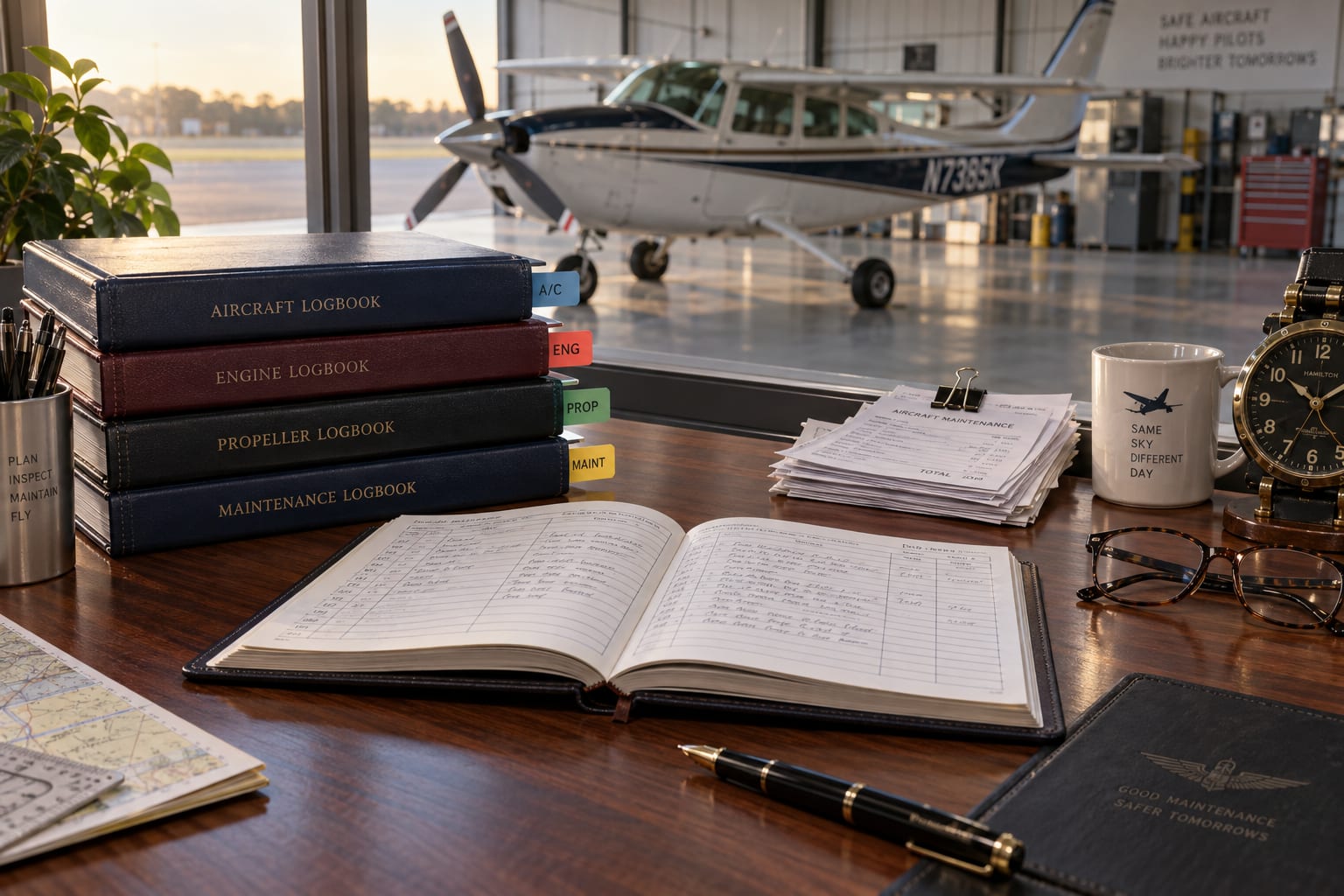
Before adjusting your maintenance planning, sit down with your engine logbooks and confirm two things: total time since new (TTSN) and time since overhaul (TSO). Verify that all applicable Lycoming Service Instructions have been complied with and properly logged. SI compliance is frequently a stated condition of TBO applicability, and gaps in the record can disqualify an engine from the higher interval regardless of how healthy it looks on a borescope.
This announcement does not automatically qualify your engine for 2,600 hours. A qualified mechanic familiar with your specific engine model needs to review your logbooks, confirm SI compliance history, and assess current engine condition before you adjust your planning. Document that conversation and ensure any applicable endorsements or sign-offs make their way into the aircraft and engine logs. If you're within a few hundred hours of the previous TBO limit, do not delay this conversation.
What to Monitor Going Forward
Lycoming will likely follow this announcement with model-specific clarifications, FAQs, and updated documentation as operators and shops raise questions about edge cases. Monitor Lycoming's official communications directly, their website, service bulletin distribution, and email updates are the authoritative channels. AOPA, EAA, and type clubs like the Cessna Pilots Association and American Bonanza Society are also reliable sources for owner-focused interpretation of manufacturer announcements.
Sign up for Lycoming's service bulletin notifications if you haven't already. Being ahead of follow-on guidance is far better than discovering a clarification that affects your maintenance plan after the fact.
Conclusion
Lycoming's increase to a 2,600-hour TBO under Service Instruction 1009BF is genuinely significant news for piston aircraft owners. For operators flying O-320, O-360, IO-360, IO-390, O-540, and IO-540-series engines, this represents a real reduction in per-hour operating costs, a potential improvement in resale position, and additional years of flying before a major overhaul event. But the details matter. Model eligibility, SI compliance conditions, your regulatory context under Part 91 or Part 135, and your insurance policy language all need to be reviewed before you adjust your maintenance budget or timeline.
Make your first call to your A&P or IA. Pull SI 1009BF directly from lycoming.com/2600. Review your engine logbooks for compliance history. Document everything. Owners who do this work now will be in a far stronger position, financially, legally, and operationally, than those who assume the new TBO applies without verifying it first.
Sources
- Lycoming Extended TBO – lycoming.com/2600
- Lycoming Announces TBO Extension to 2,600 Hours – avbrief.com
Disclaimer: Some articles on this site are created with the assistance of AI technology.