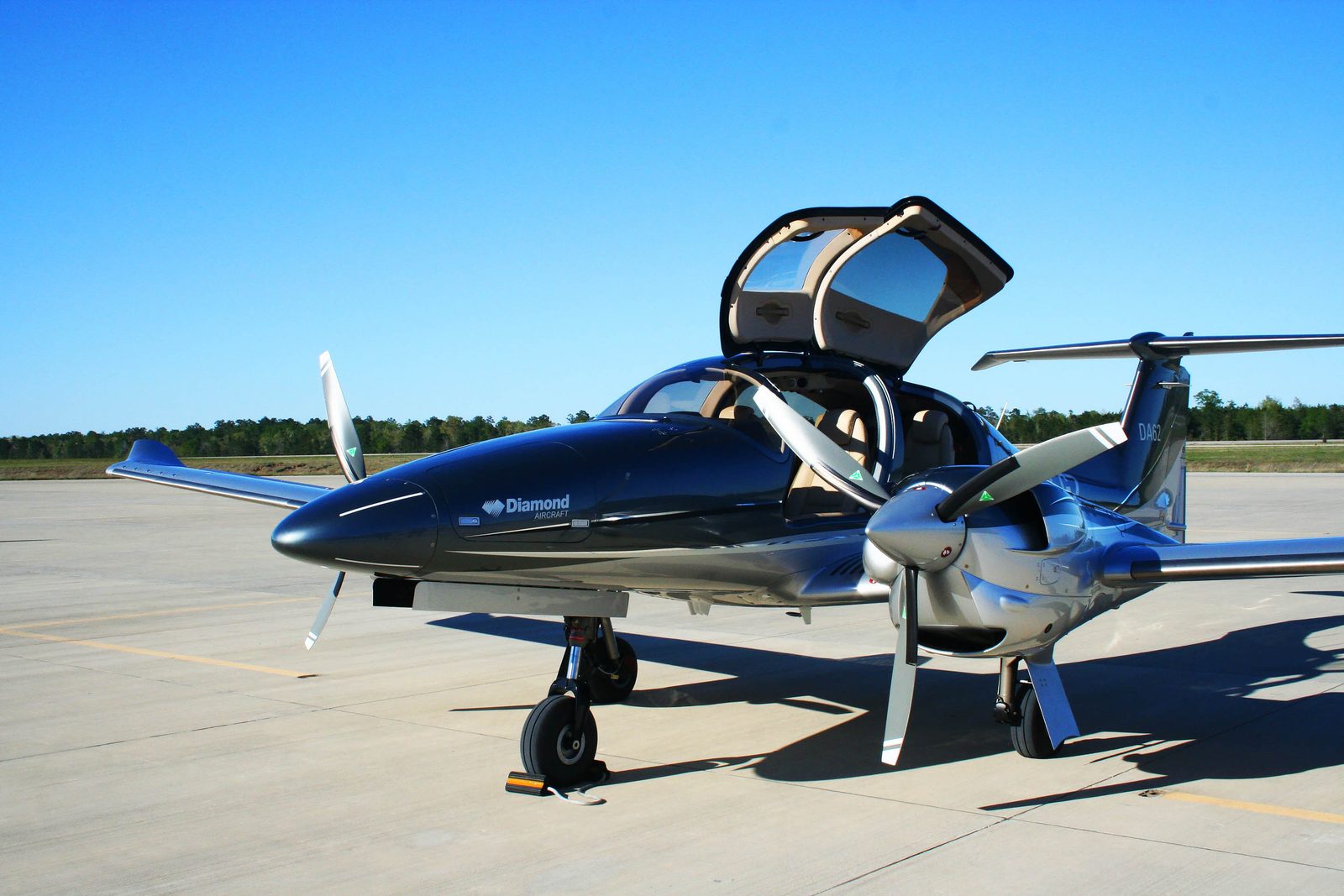
There's a short list of aircraft in general aviation that genuinely change how you think about mission capability. The Diamond DA62 is on that list. It's a twin-engine piston aircraft that moves more passengers and equipment farther and faster than anything else in its class, while burning Jet-A fuel at a fraction of what comparable avgas-powered twins cost to operate [1]. Whether you're a flight training organization evaluating your next multi-engine platform, a private owner-operator planning cross-country IFR missions, or a special mission operator looking for a cost-effective composite airframe with serious payload flexibility, the DA62 deserves a thorough look. Here's everything you need to know.
Table Of Contents
- What Is the Diamond DA62?
- Powerplant, Performance, and Fuel Economics
- Cockpit, Cabin, and Flying Characteristics
- Operating Costs and Total Cost of Ownership
- How the DA62 Compares to Its Competition
- Who Is the Diamond DA62 Best Suited For?
- Conclusion: Is the Diamond DA62 the Right Twin for Your Mission?
What Is the Diamond DA62?
Diamond Aircraft Industries has built its reputation on one consistent design philosophy: composite airframes that are lighter, stronger, and safer than their aluminum counterparts. Founded in Austria and operating production facilities in both Wiener Neustadt, Austria, and London, Ontario, Canada, Diamond has become one of the most influential manufacturers in modern general aviation, not because of volume, but because of innovation.
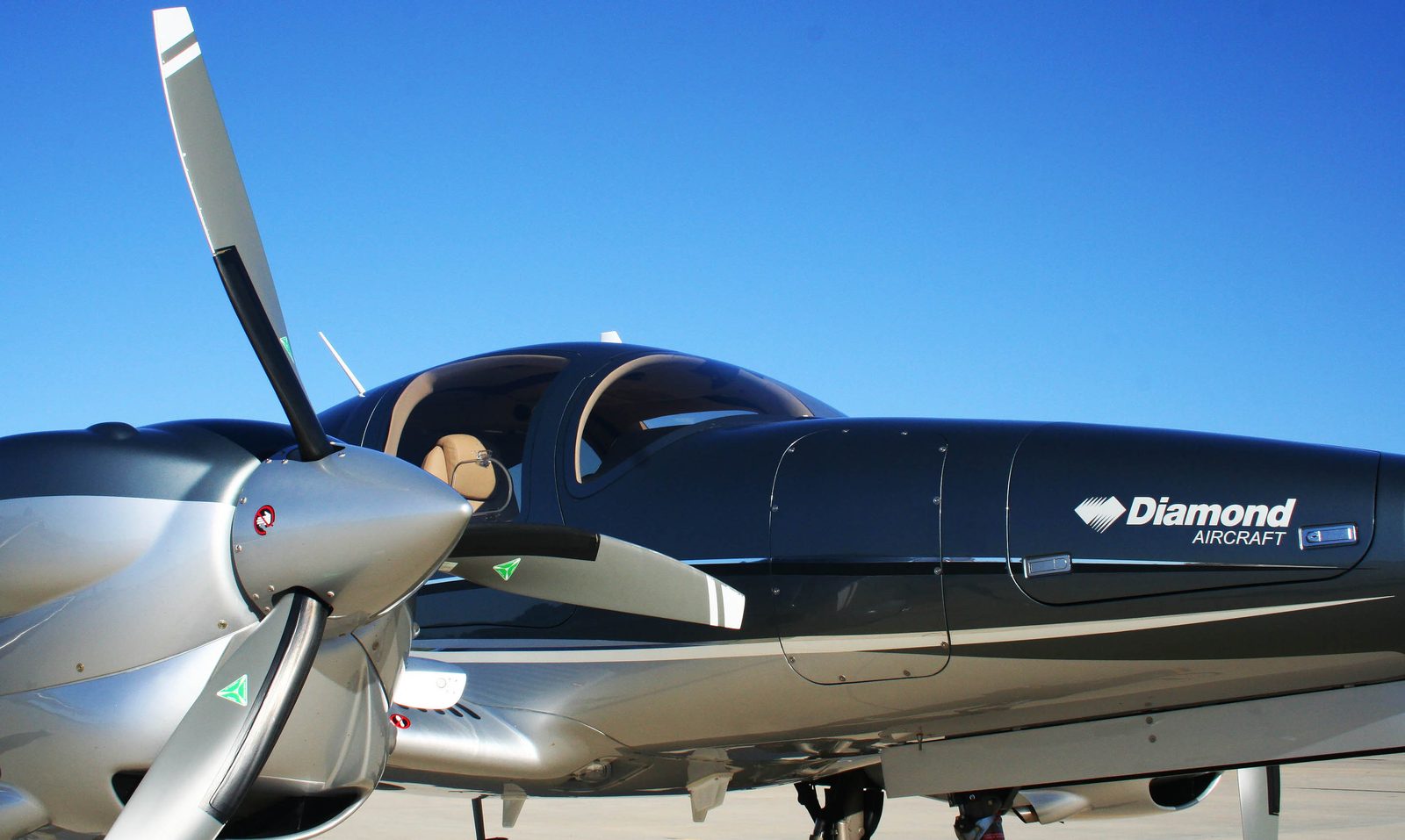
The DA62 sits at the top of Diamond's piston lineup, positioned above the DA42 twin and the single-engine DA40, and just below turbine class territory. It targets a broad but well-defined market: owner-operators who need real passenger-carrying capability, flight training organizations building serious multi-engine programs, charter and air taxi operators, and special mission users including law enforcement, search and rescue, and aerial survey [2].
What sets Diamond apart from legacy manufacturers is a commitment to building safety into the structure of the aircraft itself, what engineers call passive safety. The DA62 is not an aluminum tube with sheet metal bolted on. It's a purpose-built carbon fiber airframe designed to absorb energy in a crash scenario, protect occupants, and resist the corrosion that degrades older airframes over time. That's not marketing language. It's an engineering philosophy with measurable consequences for long-term ownership cost and safety outcomes.
Diamond's approach to design has always centered on three pillars: aerodynamic efficiency, structural crashworthiness, and operational simplicity. The DA62 inherits all of this from its predecessors, the DA40 and DA42, and extends it into a larger, heavier, more mission-capable platform. The all-carbon fiber airframe delivers meaningful weight savings over equivalent aluminum designs, which translates directly into useful load and fuel efficiency. Corrosion resistance is a practical advantage that any owner who has dealt with an aging aluminum airframe will appreciate immediately. No skin panels to inspect for oxidation, no rivets to re-treat, no hidden corrosion eating into your annual inspection budget.
The DA42 Twin Star taught Diamond and the market that a composite, diesel-powered twin could be commercially viable. The DA62 takes those lessons and scales them: more seats, more range, more payload, better avionics integration, and a cabin that can genuinely compete with light turbine aircraft on passenger comfort.
Powerplant, Performance, and Fuel Economics
Engine Configuration and FADEC
The DA62 is powered by two Austro Engine AE330 turbocharged diesel engines, each producing 180 horsepower [1]. Austro Engine is Diamond's sister company, which gives the manufacturer a level of vertical integration that is unusual in general aviation and it matters for parts availability, technical support, and ongoing development.
When we say "diesel" here, we mean engines certified to run on Jet-A fuel, the same fuel that turboprops and jets burn. Avgas, the 100LL fuel that powers most piston aircraft in the United States, is expensive, increasingly scarce at international airports, and facing an uncertain regulatory future as the industry moves toward unleaded alternatives. Jet-A is available at virtually every airport worldwide, often at significantly lower cost per gallon.
The AE330 engines are controlled by FADEC, Full Authority Digital Engine Control. If you've never flown a FADEC-equipped aircraft, the simplest way to explain it is this: the engine computer manages fuel flow, mixture, and power delivery automatically based on pilot power lever inputs. You set the power lever, and FADEC handles the rest. No mixture control to lean, no cowl flap management, and no risk of shock-cooling on descent. The result is a meaningfully reduced pilot workload, particularly during high-workload phases like single-engine emergencies. Feathering in the DA62 is managed digitally and can be accomplished with a single switch.
Performance and Fuel Flexibility
The DA62 is certified with a maximum takeoff weight of approximately 5,070 pounds. Cruise performance puts it in genuinely competitive territory for a twin-engine piston aircraft of this size. With seven seats available (pilot plus six passengers), the aircraft handles small business teams, family groups, or any combination of passengers that would otherwise require two trips in a smaller airframe.
In the competition comparison section, I reference 800-plus nautical mile capability as a practical mission benchmark. Diamond's published range figures support this well, and specific cruise speed and fuel burn data by altitude and power setting are available in Diamond's official performance documentation. Always cross-reference those charts for your actual mission before flight planning.
This is where the DA62 separates itself from legacy twins in a way that goes beyond raw numbers. Jet-A availability globally versus avgas scarcity is a real operational consideration for anyone flying internationally or in remote markets. If you're operating out of smaller regional airports in Europe, Latin America, or Asia, avgas is frequently unavailable or requires advance notice to order. Jet-A is simply there. Running two engines on Jet-A rather than avgas, across hundreds of hours annually, represents a meaningful reduction in direct operating costs. For flight training organizations running aircraft at high utilization rates, that fuel cost advantage translates directly to improved fleet economics.
Cockpit, Cabin, and Flying Characteristics
Garmin G1000 NXi and Autopilot
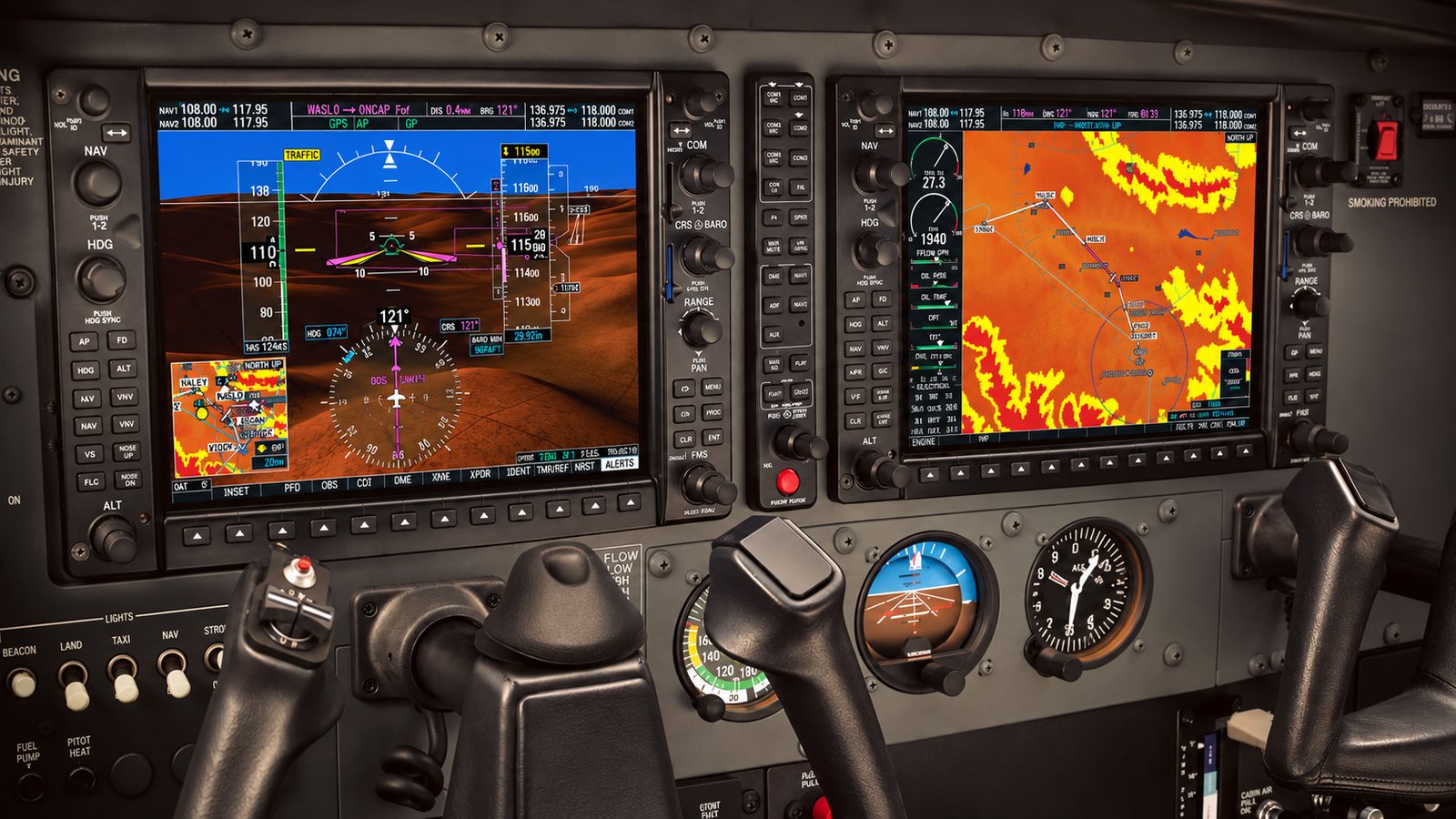
The DA62 comes standard with the fully integrated Garmin G1000 NXi avionics suite. The NXi generation is a significant upgrade over the original G1000 platform: faster processing, improved graphical resolution, Wi-Fi connectivity for database updates, and better integration with options including weather radar and Synthetic Vision Technology.
In practical terms, the G1000 NXi gives you a primary flight display and multifunction display configured side by side, with engine monitoring, moving map, traffic alerting, terrain awareness, and full IFR navigation capability in a single coherent interface. The GFC 700 autopilot pairs natively with the G1000 NXi and provides coupled approaches, altitude preselect, and flight director guidance that meaningfully reduces workload during IMC operations.
For flight training organizations, this matters for a specific reason: students who train in G1000 NXi-equipped aircraft build scan habits and workflow patterns on the same platform used across a wide range of professional and commercial aircraft. The transition value is real.
Cabin Layout and Handling
The DA62 is configured for up to seven seats. The cabin includes generous, adjustable front seats, a 60/40 split folding three-seat second-row bench, and a third-row seating section [3]. Seats are trimmed in high-quality leather, and the interior finish is legitimately comparable to light turbine aircraft in terms of materials and attention to detail.
The diesel powerplant contributes to the cabin experience in a way that's easy to overlook until you've flown it: diesel engines are inherently smoother and quieter than comparable gasoline piston engines at cruise power settings. Noise and vibration levels are reduced relative to conventional piston twins, which matters on longer flights when passenger comfort becomes a factor.
The DA62's canopy-style windshield provides a wide, unobstructed field of view that enhances situational awareness both in the pattern and in cruise flight. Ground handling is conventional with tricycle gear. In the air, the DA62 is honest and predictable across its flight envelope, including crosswind operations and turbulence. Single-engine handling benefits from the FADEC system and the aircraft's aerodynamic efficiency, which keeps VMC at manageable levels.
I'll say this directly: no amount of reading substitutes for type-specific training. Asymmetric thrust scenarios in any twin require current, quality instruction. Make sure your checkout includes thorough single-engine work with an instructor who knows this aircraft.
Operating Costs and Total Cost of Ownership
Fixed Costs
Fixed costs for a DA62 are shaped by how you use the aircraft, where you base it, and what coverage limits you carry. Insurance for a twin-engine piston aircraft in this category is meaningfully more expensive than single-engine coverage, driven by hull value, passenger liability exposure, and type rating requirements. Work with an aviation-specific insurance broker who understands complex piston twins.
A carbon fiber composite airframe needs to be hangared, not tied down outdoors. UV exposure and weather cycling affect composite materials over time, and protecting your investment means paying for covered storage. Annual inspection costs reflect both the sophistication of the aircraft and the specialized maintenance knowledge required for composite airframes and diesel powerplants. Budget for an IA or facility with documented Diamond experience. Recurring fixed costs also include Garmin avionics database subscriptions, which are essential for IFR operations.
Variable Costs and Total Ownership Math
Fuel burn is where the DA62's economic case becomes compelling. Two AE330 engines burning Jet-A at combined rates that are competitive with single-engine turboprop economics on a per-seat basis represent a meaningful cost advantage over avgas-powered alternatives. Consult Diamond's performance documentation for figures relevant to your typical mission profile.
Engine reserves are a non-negotiable line item. Each engine should have a dedicated reserve account funded on a per-hour basis against the eventual overhaul cost. Twin-engine ownership means two of everything: two reserve accounts, two sets of inspection intervals, two engines to manage. That's the honest math that optimistic ownership projections sometimes gloss over.
The DA62's total cost of ownership needs to be evaluated against what it delivers: seven seats, Jet-A fuel compatibility, modern glass avionics, and a composite airframe with corrosion resistance built in. Compared to an older aluminum twin in the same payload class, you'll likely spend more on acquisition but less on corrosion repair, fuel, and avionics upgrades over a ten-year ownership horizon. Well-maintained examples in the pre-owned market have historically held value effectively, which is both a cost of entry and a resale advantage when it's time to move on.
For flight schools and charter operators, model your utilization rate honestly, account for maintenance downtime, and run the numbers against your local rental rate or charter pricing before committing.
How the DA62 Compares to Its Competition
DA62 vs. Piper Seminole
These two aircraft are frequently mentioned together, but they're not in the same mission category. The Piper Seminole is a purpose-built multi-engine trainer: light, simple, and widely available with an enormous installed base at flight schools across the country. It earns multi-engine ratings well. But its useful load, range, and passenger capacity are modest relative to the DA62.
The DA62 is a mission-capable aircraft that can also train pilots. That's a fundamentally different value proposition. If your primary need is an efficient, cost-effective multi-engine training platform with a large pool of type-qualified instructors, the Seminole still has a strong case. If you need a twin that can carry six passengers on Jet-A while providing professional-grade avionics and cabin comfort, the DA62 is in a different class entirely.
DA62 vs. Beechcraft Baron G58 and Other Competitors
The Baron G58 is a legitimate competitor in terms of mission capability. It's powered by two Continental IO-550 engines burning avgas, a proven powerplant with an enormous service network. The G58 offers strong useful load, good cruise performance, and a well-understood maintenance ecosystem built over decades.
What the DA62 offers that the Baron does not: Jet-A fuel compatibility, a modern composite airframe without corrosion exposure, FADEC engine management, and a seven-seat configuration. For operators based near well-equipped maintenance facilities with avgas readily available, the Baron's familiarity has real value. For operators flying internationally, managing a large fleet, or prioritizing long-term corrosion costs, the DA62's design philosophy carries a compelling advantage.
The Tecnam P2006T and similar modern light twin designs occupy a slightly different niche: lighter, less expensive to acquire, and often positioned primarily as trainers. None of them match the DA62's combination of passenger capacity, avionics integration, and Jet-A fuel capability in a single airframe.
The honest advice regardless of which comparison you're evaluating: fly all the candidates before making a purchase decision. Specifications on paper don't tell you how an aircraft feels in a crosswind, how the cabin sounds at cruise altitude, or how the avionics interface fits your workflow. Budget for demo flights in every aircraft you're seriously considering.
Who Is the Diamond DA62 Best Suited For?
The DA62 works across a genuinely wide range of operators, but each group has distinct reasons to choose it.
Flight training organizations benefit from FADEC-equipped engines that reduce power management complexity for students already managing a full glass cockpit scan and asymmetric thrust scenarios. The G1000 NXi provides a training environment consistent with light business jets and advanced turboprops, preparing students for professional careers more directly than older-generation avionics. Single-engine training is realistic and thorough, with FADEC feathering allowing instructors to focus on decision-making rather than procedural complexity.
Private owner-operators with real mission requirements get an outstanding cross-country IFR platform. If you're regularly flying a family of four or five on trips of 500 to 800 nautical miles in actual IMC, the DA62 gives you capability, comfort, and safety margins that single-engine aircraft can't match. Factor transition training time and cost into your acquisition budget: the DA62 requires a multi-engine rating and type-specific checkout.
Special mission and commercial operators have a dedicated variant to consider. Diamond developed the DA62 MPP (Multi Purpose Platform) specifically for law enforcement operations, search and rescue missions, and land and sea border monitoring. The composite airframe's structural characteristics and payload flexibility make it well-suited for sensor integration, camera systems, and specialized mission equipment. For charter and air taxi operators, the seven-seat IFR configuration and Jet-A compatibility create a commercially viable platform, particularly in markets where avgas availability is limited.
Conclusion: Is the Diamond DA62 the Right Twin for Your Mission?
The Diamond DA62 occupies a niche in general aviation that very few aircraft can claim: modern composite construction, Jet-A efficiency, a seven-seat cabin with genuine passenger comfort, and a fully integrated Garmin G1000 NXi glass cockpit, all in a twin-engine piston platform. It appeals to flight schools building serious multi-engine programs, private owner-operators running demanding IFR missions, and special mission operators needing a cost-effective, flexible airframe.
Operating costs are real and should be modeled honestly. Twin-engine ownership always involves twin-engine math: two engine reserves, two sets of maintenance intervals, higher insurance premiums, and hangar requirements. But the DA62's fuel cost advantage over avgas-powered competitors, combined with its composite airframe's corrosion resistance and strong resale history, makes a compelling total cost of ownership case over a full ownership horizon.
Before committing to any twin-engine aircraft acquisition, evaluate your actual mission requirements, model your total cost of ownership with realistic utilization assumptions, and fly the aircraft with an instructor who knows it well. The DA62 is a genuinely exceptional machine, but the right aircraft is always the one that fits your mission, your budget, and your flying habits.
If you're evaluating a twin-engine aircraft purchase and want expert guidance on acquisition strategy, pre-purchase inspection planning, or mission-fit analysis, reach out for a consultation. The right advisor can save you significant time and money before you sign anything.
Sources
- DA62 – Go above and beyond. - Diamond Aircraft Industries
- Diamond Aircraft's DA62 MPP Special Mission Aircraft
- Diamond DA62 For Sale | 7-Seat Twin Engine Aircraft
Disclaimer: Some articles on this site are created with the assistance of AI technology. While we work to keep our content accurate, it may contain errors or outdated information, so please verify important details before relying on them.