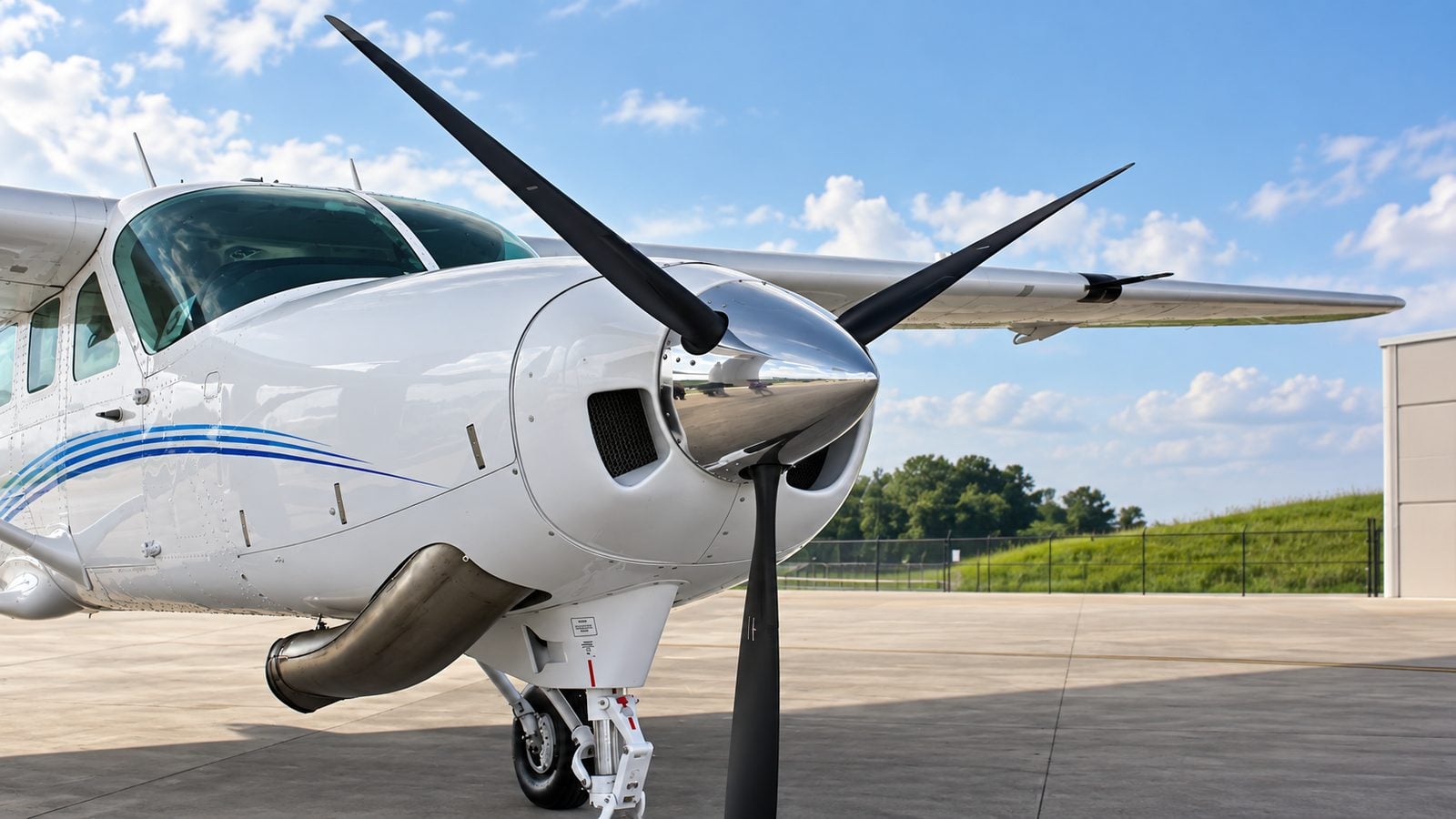
Few turboprops stay in production long enough to become a category of their own, but the Cessna Caravan has done exactly that. Textron's 2026 figures put deliveries above 3,100 aircraft into more than 100 countries, with over 25 million flight hours logged across four decades. The same airframe hauls freight in Alaska, carries medevac sleds into unimproved strips, sits on amphibious floats, and shows up in owner flown hangars as an executive island hopper. This 2026 review covers what a Caravan or Grand Caravan EX costs to buy and run, which missions each variant fits, and how the type compares with the TBM and Piper Meridian for buyers weighing all three.
Table Of Contents
- What Is the Cessna Caravan 208? Model Overview and Key Specs
- Cessna Caravan Pricing in 2026: New and Pre-Owned
- Caravan Mission Profiles: Cargo, EMS, and Personal Use
- What It Costs to Own and Operate a Cessna Caravan
- Caravan vs. TBM vs. Piper Meridian: Which Single Turboprop Fits?
- Buying a Cessna Caravan in 2026: Practical Checklist and Recommendation
- Sources
What Is the Cessna Caravan 208? Model Overview and Key Specs
Before you compare a single price or performance number, get clear on which Caravan you are looking at. The search term covers everything from a 1985 airframe to a factory fresh Grand Caravan EX, and the figures do not transfer between them.
The Caravan Family at a Glance
The Caravan is a single engine, high wing, unpressurized utility turboprop on fixed tricycle landing gear, powered by a single Pratt & Whitney PT6. Development began in November 1981, the prototype flew in December 1982, and the type was introduced in 1984. Textron's 2026 count stands at more than 3,100 delivered.
Three variants appear on the market:
- 208 Caravan. The original short airframe. Listings sometimes label it the "Short Caravan."
- 208B Grand Caravan. The stretched version and the fleet default, sold both as the Super Cargomaster freighter and as the passenger Grand Caravan.
- Grand Caravan EX. Keeps the 208B designation but adds the PT6A-140 rated at 867 shp [2], turning a McCauley four blade aluminum constant speed, full feathering propeller. Trade references put Caravan power between roughly 675 hp and over 850 hp depending on variant, and the top end is what makes the EX the choice for hot and high and jump operations.
Core Specifications by Model
Textron publishes one set of figures on its Caravan family page and another on its Grand Caravan EX page:
- Caravan family page: 8,000 lb max takeoff weight, 4,730 lb empty weight, 3,305 lb useful load, 10 to 14 max occupants (dependent on local regulations), 186 ktas max cruise, 1,070 nm max range, 2,055 ft takeoff distance, 1,234 fpm max climb [1].
- Grand Caravan EX page: 164 ktas max cruise, 813 nm max range, 3,271 ft takeoff distance (2,000 ft ground roll), 2,004 ft landing distance (873 ft ground roll), 1,212 fpm max climb, 20,000 ft max operating altitude, 59 kcas stall speed, PT6A-140 at 867 shp.
Do not read the two sets as a contradiction; they come from different pages describing different models, and the published weights should not be treated as a reconciled loading calculation either. Treat every published Caravan number as a starting point and confirm cruise, range, field performance, and weight and balance in the flight manual for the specific serial number and its installed equipment. External loads and mission modifications change the answer, and the spread is wide enough to matter in your mission planning.
Cessna Caravan Pricing in 2026: New and Pre-Owned
Pricing is where most Caravan research goes wrong, because buyers blend 208, 208B, and EX asking prices into one mental average. Separate them.
New Grand Caravan EX Pricing
For a factory new EX, request a quote from Textron with your options specified and get a delivery slot in writing before you compare it to the used market. A listed 38 hour example based in Brazil shows what a current EX looks like as advertised: cabin air conditioning, Garmin G1000 NXi avionics, a belly cargo pod, Garmin GWX 8000 weather radar, and synthetic vision, offered at "please call." Use that equipment list as a checklist when you spec your own.
Pre-Owned Asking Prices
The spread is enormous. Controller showed 40 Caravan listings in 2026 with prices from $450,000 to $3,750,000 [3]. AviaCost puts the average pre-owned price of a 208 Caravan at roughly $2,120,160 [4], with the actual figure driven by airframe hours, engine program enrollment, maintenance status, avionics upgrades, connectivity, and cabin condition.
Current listings illustrate how vintage and configuration interact:
- A 1985 Cessna 208 Short Caravan in the United Kingdom, serial 208-00040, with 15,719 hours total time in parachute configuration, advertised at $1,395,000. The listing advertises a completed annual; confirm its date and scope in the logbooks.
- A 2022 Grand Caravan EX in Uganda with 1,219 hours, air conditioning, cargo pod, and HF radio, offered turnkey at $2,995,000.
- Another EX listed at $2,400,000, and a 2016 208B EX Amphibious in Minnesota on Wipaire 8750 amphibious floats with 624 hours, price on request.
These are asking prices, not sales, but they make the point: one 1985 airframe with nearly 16,000 hours is advertised at nearly $1.4 million. Treat configuration and mission equipment as valuation considerations in their own right alongside model year, and evaluate an amphibious aircraft against float comparables rather than wheeled ones.
Market Trends and Financing
Holstein Aviation's 208 market snapshot for 2026 reports inventory down three aircraft year over year, average asking prices up approximately $231,000, and days on market up 52 percent [5]. The same snapshot counts 34 retail sales in the trailing 12 months and 23 sales through the first part of 2026. Read those together: sellers are holding asking prices, but buyers are taking longer and being more selective. If an aircraft has been sitting for months, a well supported pre-buy finding is your leverage, not the asking price trend.
On financing, shop at least two turbine specialist lenders and ask each how airframe age, total time, engine program status, and collateral value affect the loan structure they will offer on the specific Caravan you are considering. The answers, and the terms, will differ.
Caravan Mission Profiles: Cargo, EMS, and Personal Use
One type appears in so many buyer categories because the cabin and cargo door were built around loading, not speed. Each mission still has its own shopping list.
Cargo, Utility, and Float Operations
Everts Air in Alaska operates three Caravans, typically configured for nine passengers, within a network serving 11 destinations, and describes the aircraft exactly as an operator sees it: high wing, unpressurized, fixed tricycle gear. Trade references highlight the boxy, capacious cabin and the large cargo door that make loading freight and seats straightforward. The stretched 208B was sold as the Super Cargomaster for precisely this reason, and the type has a long record as a freight feeder, jump ship, and bush hauler on remote strips, islands, and unpaved runways.
Recent orders show the same breadth. The USDA added Caravans for its fight against crop damaging insects, and Indonesian operator SAM Air ordered a Caravan for cargo, logistics, passenger service, and weather modification. For a cargo buyer, prioritize a belly cargo pod, quick reconfiguration between seats and freight, and a documented history of the door and floor structure.
Amphibious Caravans are a real segment, not a novelty. The 2016 EX on Wipaire 8750 floats above is a current example, and industry commentary notes a growing number of commuter and executive configurations, including amphibious ones. Expect float installation to change speed, range, and useful load, and insist on the float specific flight manual supplement and weight and balance before you evaluate the mission.
Air Ambulance and EMS
Textron markets the Grand Caravan EX in its special missions catalog as an air ambulance platform. The EX cabin accommodates multiple dual medevac sled configurations while retaining seating for more than one nurse or passenger, and Textron positions it for missions in remote locations, adverse environments, and unimproved airstrips, from non critical transport to neonatal care. Textron and trade coverage describe the high wing as a stable platform for in flight care, the large doors as easing stretcher loading, and the ramp visibility as helping crews maneuver on congested ramps; treat those as marketing descriptions and evaluate them on a demo flight. The trade-off is the unpressurized cabin. Evaluate each patient's altitude requirements, medical equipment, weather, and routing individually, because the cabin sets a hard limit on how you can fly around them. For an EMS buyer, the EX is the variant to shop, and the conversion provenance is the first item on the records review.
Personal and Owner-Flown Use
The Caravan's appeal to owner pilots is cabin and access, not speed. Twin & Turbine's 2026 coverage of Mark Baker's Caravan ownership highlights years of utility, and the magazine's photo set of a Caravan at Big Bear Lake Airport (L35) calls out three features owners care about: easy engine access, a G1000 PFD with 3D SafeTaxi, and an air stair door. Pilots and passengers alike get an outstanding view. Charter operators use the Grand Caravan as an island hopper from the Florida Keys to the Bahamas because of its short runway requirement, and an owner flying the same routes can expect similar access, subject to configuration, operating weight, conditions, and the limitations for that airframe. Choose a Caravan for personal use when you regularly carry more than five people, need volume for gear, or fly into strips where you have checked each candidate aircraft's approved runway and surface limitations and the Caravan comes out ahead.
What It Costs to Own and Operate a Cessna Caravan
Published hourly figures for the Caravan vary by several hundred dollars, and the reason is definitional. Some sources count fuel and direct maintenance only; others load in engine reserves, crew, and fixed overhead.
Hourly Operating Cost: Reconciling the Range
| Source (model) | Basis | Figure |
|---|---|---|
| Liberty Jet (208B Grand Caravan) | Direct operating cost, 200 hrs/yr | $144,900 per year, about $725 per hour (derived) |
| AviaCost (208 Caravan) | Variable cost, 325 hrs/yr | $1,021 per hour |
| PlanePHD (208B Grand Caravan) | All in cost to own, 100 hrs/yr | $1,248 per hour, $124,800 per year |
Liberty Jet's 208B model is the most transparent. At 200 hours per year it budgets $72,300 for fuel at $7.23 per gallon (about 50 gallons per hour), $23,400 for maintenance, $24,200 for engine overhaul reserve, $20,000 for crew, landing, and handling, and $5,000 miscellaneous variable [6]. In that model fuel is roughly half the direct cost, so local Jet A price moves the number more than any other line, though utilization, reserves, and overhead drive your total just as hard. When one person quotes $700 an hour and another quotes $1,200, ask what the second figure includes before you decide either is wrong.
Fixed Costs and Total Annual Budget
Liberty Jet's fixed budget for a 208B totals $187,915 per year: crew $79,854, crew training $6,690, hangar $22,973, insurance $18,398, management $30,000, and miscellaneous fixed $30,000. An owner pilot who flies and manages the aircraft personally can strike most of the crew and management lines, which is why owner flown Caravans pencil out very differently from managed ones. Insurance depends heavily on location and pilot experience; storage cost depends on where and how you keep the aircraft.
The full Liberty Jet model lands at $332,815 per year at 200 hours (about $1,664 per hour) and $477,715 at 400 hours (about $1,194 per hour) for a crewed and managed 208B. PlanePHD's $124,800 at 100 hours rests on a different accounting basis, so do not compare it line for line. For your own budget, start with a direct cost baseline, confirm exactly which categories it includes, multiply by realistic utilization, then add only the fixed lines that match how you will actually operate. Mixing an all in figure with separate overhead double counts.
Engine and Maintenance Status
AviaCost lists engine program enrollment (JSSI, MSP Gold, or ESP) among the primary price drivers on the Caravan. That is a generic list, not a guarantee; confirm eligibility, coverage, and transfer terms for the specific engine you are buying. Budget program payments plus whatever exposure the program leaves uncovered, and treat an unenrolled PT6 with high time since overhaul as a negotiating point, not a bargain.
Caravan vs. TBM vs. Piper Meridian: Which Single Turboprop Fits?
These three share a Pratt & Whitney PT6 and almost nothing else. Buyers who cross shop them are usually still deciding what their mission actually is.
Fundamentally Different Aircraft
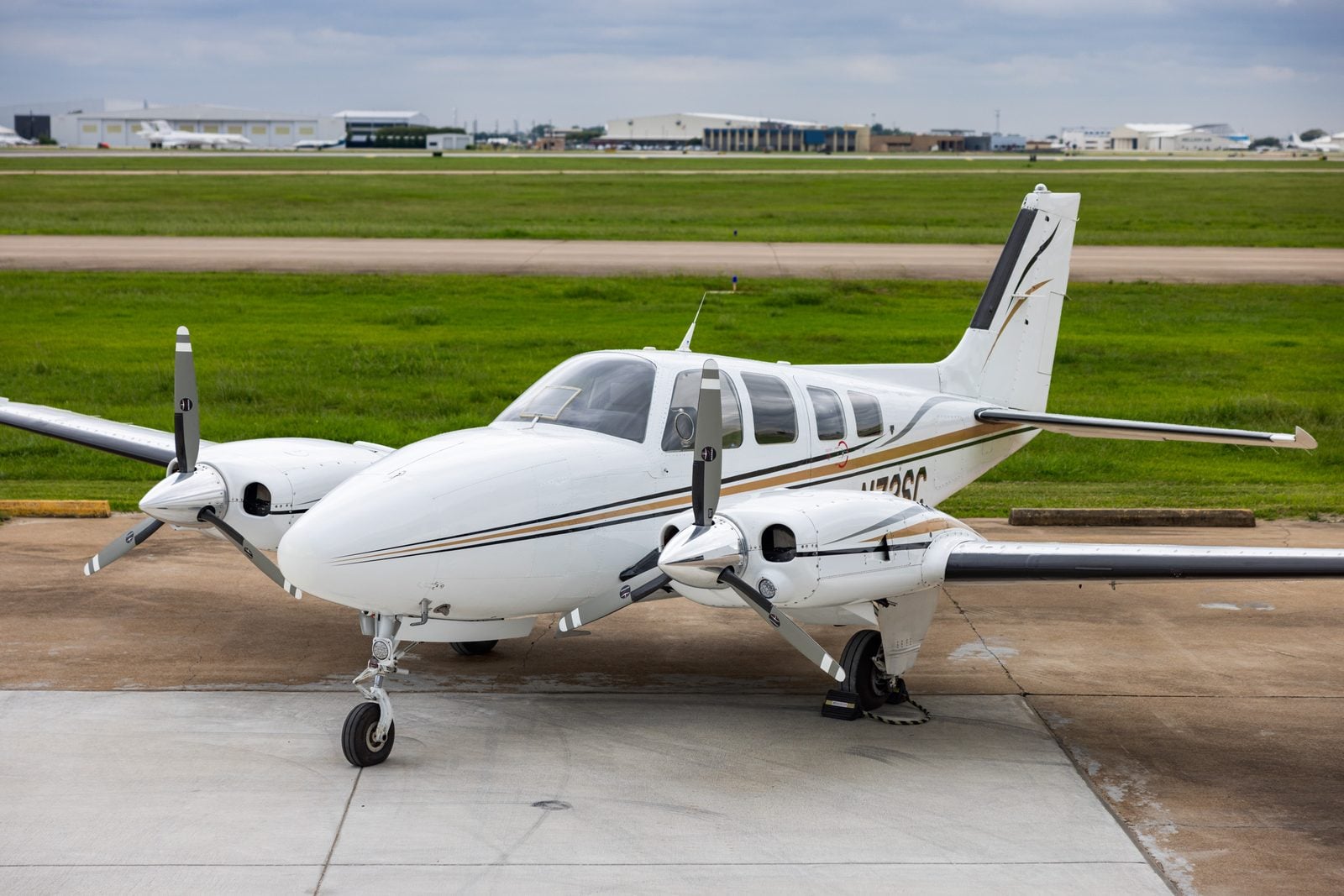
The Caravan is unpressurized, high wing, and fixed gear, with 10 to 14 max occupants depending on local regulations, a published max cruise of 186 ktas on Textron's family page, and 1,070 nm max range. The Piper Meridian is pressurized, powered by the PT6A-42A, with a normal cruise of 225 knots, 1,100 nm ferry range, 45 gallons per hour fuel burn, and a cabin measuring 3 ft 10 in high, 4 ft 2 in wide, and 12 ft 3 in long at 201 cubic feet (confirm which variant and vintage those figures describe before applying them to a specific listing). The TBM 960 and TBM 980 both fly on the 850 shp PT6E-66XT with FADEC, cruise at 330 ktas at 28,000 ft, and cover 1,730 nm at long range cruise; the 960 grosses 7,615 lb, and the 980, delivering since January 2026, is listed with Garmin G3000 Prime, Starlink Mini, a pilot door, and 100 watt USB-C at every seat.
The published figures support a clear speed advantage for the TBM and Meridian, an altitude advantage for the TBM, and pressurization on the Meridian that the Caravan lacks. Cabin volume, occupant count, useful load, and field flexibility are the Caravan's mission priorities; compare them against the specific competing aircraft and its approved runway requirements rather than assuming a ranking.
Price and Ownership Cost Comparison
- Caravan: $450,000 to $3,750,000 across current listings; roughly $2.12 million average pre-owned for a 208 per AviaCost; advertised EX examples at $2.4 million and $2,995,000.
- TBM: the 960 lists from about $4.5 million equipped and the 980 from $5.82 million [7], with a 2027 980 price approaching $6 million.
- Meridian: about $995,000 average pre-owned [8], which is why it is described as the lowest entry point into pressurized turboprop ownership.
AviaCost's variable cost figures are nearly identical for the 208 Caravan ($1,021 per hour) and the Meridian ($1,015 per hour), while the Meridian's 45 gph burn sits slightly below the roughly 50 gph implied by Liberty Jet's 208B fuel budget. Because the Meridian is faster, a per mile comparison will not track the per hour comparison; run both with the same fuel price, utilization, and mission assumptions before drawing a conclusion.
Pre-buy priorities differ too. A Meridian inspection centers on the engine borescope, pressurization test, and records review. The Caravan has no pressurization system, so shift that attention to corrosion where the records show float or coastal operation, structural inspection of the cargo door and floor, and cycle related wear where the aircraft carries a commercial history.
Decision Framework
Choose the Caravan if your mission is payload, volume, short or unimproved strips, floats, cargo, EMS, or moving more than five people. Choose the TBM or Meridian if your mission is fast personal transport for a small party over longer legs where pressurization and altitude matter. Read our TBM and Piper Meridian buyer's guides alongside this one before you request a quote on any of the three.
Buying a Cessna Caravan in 2026: Practical Checklist and Recommendation
Here is how we approach a Caravan acquisition this year.
- Name the model first. Identify the short 208 or stretched 208B airframe, then verify the engine and configuration on that serial number. The listing spread runs from $450,000 to $3,750,000, so a price without a model is meaningless.
- Audit the configuration. Parachute interiors, cargo pods, amphibious floats, air conditioning, HF radio, weather radar, and G1000 NXi all appear on current listings. Confirm every modification against the logbooks and its approval paperwork.
- Put total time in context. A 1985 airframe with 15,719 hours is advertised at nearly $1.4 million. Review the inspection history and any life limited component status before you accept that logic.
- Prioritize engine exposure. Time since overhaul, hot section history, and program status deserve more pre-buy attention than paint or interior.
- Use the clock. In Holstein's 208 snapshot, days on market are up 52 percent year over year. An aircraft that has sat may carry more negotiating room than the $231,000 rise in asking prices suggests.
- Verify the annual. An advertised annual, like the one on the UK based 208, still needs its date, scope, and remaining inspection obligations checked. It does not replace an independent pre-buy.
Our recommendation is unchanged. The Caravan's case in 2026 is a single PT6, a cabin built around a cargo door, 10 to 14 occupants depending on local regulations and installed seating, and approved field capability that puts freight, patients, or people into strips you should evaluate individually against any pressurized single you are cross shopping. Advertised EX examples sit at $2.4 million and $2,995,000, AviaCost's average pre-owned 208 is around $2.1 million, and Liberty Jet's crewed 208B model runs $332,815 a year at 200 hours (about $1,664 per hour) or $477,715 at 400 hours (about $1,194 per hour), with direct cost alone near $725 per hour. Against the TBM and Meridian, the trade is volume and versatility versus speed and pressurization. In the 208 market, asking prices are holding while aircraft sit longer, which may favor the patient, well prepared buyer.
If you are evaluating a Caravan, Grand Caravan, or EX, share the listing you are weighing and the mission you have in mind in the comments, and we will weigh in.
Sources
- One Aircraft. Every Environment. | Cessna Grand Caravan EX, Textron Aviation
- Grand Caravan EX, Cessna Aircraft, Textron Aviation
- CESSNA CARAVAN For Sale, Controller.com
- Cessna 208 Caravan | Aircraft Ownership & Operating Costs Calculator, AviaCost
- Caravan 208 Market Snapshot, Holstein Aviation
- 208B Grand Caravan Operating Costs, Liberty Jet
- Daher TBM Financing | TBM 980, TBM 960 & Pre-Owned, FLYING Finance
- Piper Meridian | Aircraft Ownership & Operating Costs Calculator, AviaCost
Disclaimer: Some articles on this site are created with the assistance of AI technology.