Aircraft Airworthiness
High Performance Aviation
What Makes an Aircraft Airworthy?
This is a question all pilots, owners, and operators ask a lot.
The CFAR’s state in § 91.7 Civil aircraft airworthiness:
(a) No person may operate a civil aircraft unless it is in an airworthy condition.
So, if you are operating a part 91 single-engine or multi-engine piston aircraft, what determines if it is airworthy? To answer this question, we will look at multiple CFAR’s.
 |
Title 14 of the CFAR’s deals with Aeronautics and Space, and Chapter 1 deals with the Federal Aviation Administration and the Department of Transportation. Under Chapter 1 Subpart C we see the FAR’s that deal with Aircraft.
Part 21-36 deals with Certification Procedures for Aircraft, Balloons, Rotorcraft, aircraft engines, fuel tanks, noise standards, Propellers, and so on. These FAR’s are what the Manufacturers of aircraft deal with when certifying a new Type Certificated aircraft.
Part 39 deals with Airworthiness Directives on Type Certificated aircraft and are regulatory, meaning they must be complied with.
Quoted from FAR 39.3: FAA's airworthiness directives are legally enforceable rules that apply to the following products: aircraft, aircraft engines, propellers, and appliances.
So, why do Airworthiness Directives exist? FAR 39.5 states: FAA issues an airworthiness directive addressing a product when we find that:
(a) An unsafe condition exists in the product; and
(b) The condition is likely to exist or develop in other products of the same type of design.
The FAA goes on to state that: Anyone who operates a product that does not meet the requirements of an applicable airworthiness directive is in violation of this section. And, If the requirements of an airworthiness directive have not been met, you violate § 39.7 each time you operate the aircraft or use the product.
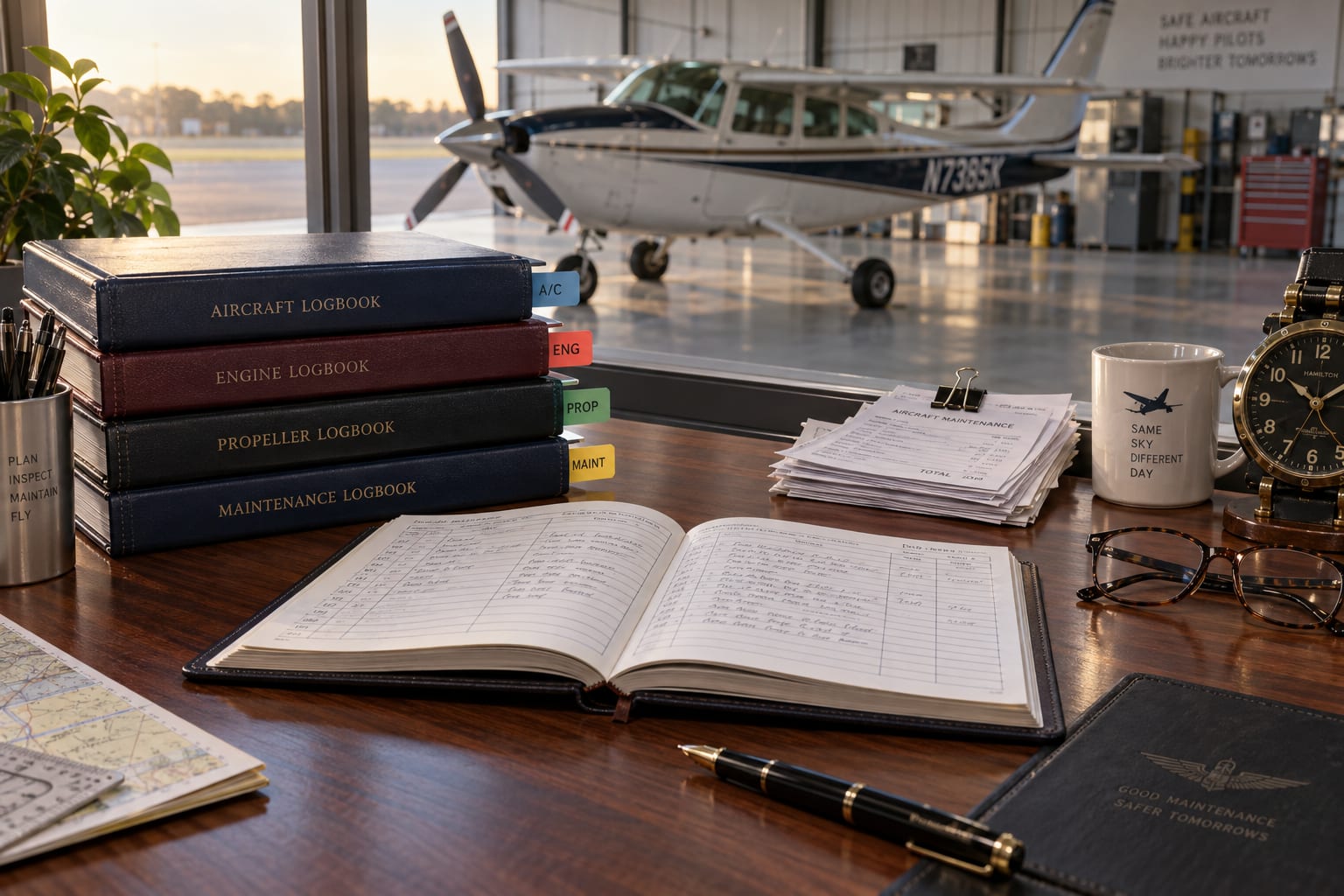
The next section that I would like to look at is FAR 43. This section deals with records, persons authorized to perform maintenance, Approval for return to service after maintenance, who can return an aircraft to service, the content of records, and so on.
Appendix A deals with what constitutes a Major Alteration/Repair, and what is preventive maintenance.
Appendix B deals with the recording of Major Repairs/Alterations.
Appendix D, this appendix is referenced by your mechanic to determine what needs to be inspected on a 100-hour or Annual. I will discuss the differences later.
Appendix E and F cover Altimeter and Transponder Text and inspections, respectively.
Part 91 Deals with General operating and flight rules. FAR 91.203 tells us what certifications are required in the aircraft including an airworthiness certificate, current registration, flight manuals or placards, and marking of instrument limitations. Part (b-d) gives instructions on where certificates need to be placed, fuel tanks in passenger compartments, and fuel venting and exhaust emissions.
FAR 91.203 gives you the required equipment and instruments for VFR and IFR flying
FAR 91.207 relates to Emergency locator transmitters.
FAR 91.213 relates to Inoperative instruments and equipment.
FAR subpart E covers Maintenance, preventive maintenance, and alterations.
FAR 91.409 covers Annuals, and 100-hour inspections, it also covers other inspection programs, but I want to focus on the Annual/100-hour inspection and what is the difference between the two.
These are the majority of the FAR’s that pertain to your aircraft to maintain it in an airworthy condition.
 |
Who is Responsible for Maintaining Compliance?
One more question that arises, pertains to who is responsible for maintaining the aircraft in an airworthy condition.
The FAA has that answer in FAR 91.403:
(a) it states that The owner or operator of an aircraft is primarily responsible for maintaining that aircraft in an airworthy condition, including compliance with part 39 of this chapter.
Next, let’s look at three other areas that are pertinent to the airworthiness of your airplane.
AD’s having mentioned Airworthiness Directives the FAA has a listing that can be found here: Airworthiness Directives (ADs) – Current Only (faa.gov). They are listed by Emergency AD’s, ADs issued in the last 60 Days, Biweekly ADs, and Current ADs by make/mode. There is also a link to look at Historical ADs here:
Supplemental Type Certificates This is a type certificate (TC) issued when an applicant has received FAA approval to modify an aeronautical product from its original design, Type Certificate. The STC, which incorporates by reference the related TC, approves not only the modification but also how that modification affects the original design. These are what manufacturers and mechanics use when installing equipment such as radios, engines, propellers, and so forth different from the TCDS. The database for approved STC’s can be found here: DIFFERENCE LIST
|
100-Hour Inspection |
Annual Inspection |
| A&P mechanic | A&P with IA |
| Scope and detail of FAR 43 App. D | Scope and detail of FAR 43 App. D |
| Check AD notes are C/W | Check AD notes are C/W |
| List of discrepancies to owner/operator | List of discrepancies to owner/operator |
| Make required log entries for return to service | Make required log entries for Annual inspection |
| Comply with FAR 91.207 ELT’s | Comply with FAR 91.207 ELT’s |
| Make sure the aircraft conforms to TCDS/STC |
This is a brief look at the differences between a 100-hour inspection and an Annual, the primary difference is returning the aircraft to service and conforming to the TCDS/STC’s. The annual inspection does not require an airworthy sign off, the owner can take the list of discrepancies and have any certified person of shop complete the list and return it to service, to make it airworthy. Other items that may need to be complied will depend on the type of flying you do, and where you fly. These items would be Pitot/Static and Transponder checks every 24 calendar months.
Hopefully, this was helpful. Again, it does not cover everything about maintenance. Make sure to check current FAR’s and manufacturers' specific data should always be consulted for your particular aircraft make and model.
Would you like more information?
Send us a message below.