Owning a general aviation aircraft is one of the most rewarding experiences a pilot can have, but it comes with real financial exposure that most new owners underestimate. Aircraft insurance isn't just a box to check before your first flight; it's a complex product that can mean the difference between a minor setback and a financial catastrophe. I've seen owners walk into their first policy purchase treating it like car insurance: shopping by price, skimming the fine print, and assuming coverage is coverage. It isn't. Before you sign a policy, here's what you actually need to understand.
Table Of Contents
- Why Aircraft Insurance Is Different From Every Other Policy You Own
- The Two Core Coverage Types Every GA Owner Must Understand
- How Insurers Evaluate You as a Pilot, and Why Your Profile Drives Everything
- Common Coverage Gaps That Catch Owners off Guard
- Factors That Influence Your Premium, and What You Can Control
- Practical Steps for Buying and Managing Your Policy the Right Way
- Conclusion: The Right Policy Starts With the Right Knowledge
- Sources
Why Aircraft Insurance Is Different From Every Other Policy You Own
GA insurance is a specialty product written in a specialty market. It does not behave like your homeowner's policy or your auto coverage, and the assumptions you bring from those products will get you into trouble.
Unlike auto insurance, where state mandates create a standardized floor of coverage, the vast majority of U.S. states do not require GA aircraft owners to carry any liability insurance at all [1]. That absence of a legal floor means the market sets its own standards, and policies vary significantly from one insurer to the next.
What makes GA insurance especially individualized is the combination of three intersecting risk factors: the hull value of the aircraft, the liability exposure the owner creates, and the specific risk profile of every pilot who flies it. Change any one of those variables and you have a materially different policy. That's not how commodity insurance works, and it's exactly why you can't approach this market the way you'd shop for renters insurance.
Hull values span an enormous range. Older piston singles, such as a 1970s or 1980s Cessna 172, might be insured for $80,000 to $120,000, while late-model or new 172s can exceed those figures considerably. A turbine single or light twin can push well into seven figures. The liability exposure from a single accident involving fatalities or property damage to third parties can exceed those hull values by a significant margin. The financial stakes are real, and the policy structure has to match them.
GA aviation insurance is written by a relatively small number of specialized insurers and underwriting syndicates. Many policies are placed through aviation-specific brokers who have access to domestic aviation markets and international syndicates such as Lloyd's of London. This is not a market where you walk into a local insurance office and get a competitive quote in 15 minutes.
Because the market is concentrated and specialized, your broker relationship matters enormously. A broker who places hundreds of aviation policies per year understands how underwriters think, what documentation strengthens your application, and which markets are most competitive for your specific aircraft and pilot profile. A general insurance agent placing their first aviation policy does not have that leverage, and you'll likely pay for that gap either in premium or in coverage quality. Treat aviation insurance as the specialty purchase it is. The cheapest quote is rarely the best policy, and in this market, the difference between policies is often found in the exclusions, not the declarations page.
The Two Core Coverage Types Every GA Owner Must Understand
Before you evaluate any policy, you need a firm grasp of the two foundational coverage components: hull coverage and liability coverage. These are distinct products that address completely different risks, and understanding how each is structured is non-negotiable.
Hull Coverage and Liability Coverage
Hull coverage pays for physical damage to the aircraft, whether that damage occurs in flight, during taxi, or while the aircraft is parked on the ramp. It is the aviation equivalent of comprehensive and collision coverage on a vehicle, but with one critical structural difference that matters far more in aviation: agreed value versus actual cash value.
With an agreed value policy, the insurer and the owner agree on the aircraft's value at the time the policy is written. In the event of a total loss, the insurer pays that agreed amount in full with no depreciation deducted. With an actual cash value (ACV) policy, the insurer pays the market value of the aircraft at the time of the loss, which may be substantially less than what you paid, what you owe on a loan, or what you've invested in upgrades and avionics.
For most GA aircraft owners, agreed value is the correct choice. Aircraft values, especially for older piston singles and twins, can be volatile and difficult to establish after the fact. If you've put $30,000 in avionics upgrades into a 40-year-old airframe, an ACV settlement may not come close to making you whole. Agreed value eliminates that ambiguity.
Pay attention to your deductibles as well. Most hull policies distinguish between in-motion and not-in-motion deductibles. The in-motion deductible applies to damage that occurs while the aircraft is taxiing, taking off, flying, or landing. The not-in-motion deductible applies to damage while the aircraft is parked, typically a lower dollar amount because the risk of catastrophic loss is lower. Know both numbers before you bind coverage.
One common misconception worth addressing directly: hull coverage does not cover engine failure due to mechanical breakdown, wear, or internal defect. If your engine throws a rod due to a lubrication failure, the engine itself is not a covered hull loss. Damage to the airframe caused by an engine failure, such as a forced landing that results in gear collapse, may be covered. The engine itself is not. Separate engine breakdown coverage exists and can be added as an endorsement, but you have to ask for it specifically.
Liability coverage is where the truly catastrophic financial exposure lives. It covers bodily injury to third parties, including passengers, people on the ground, and occupants of other aircraft, as well as property damage to structures, vehicles, other aircraft, and airport infrastructure.
When evaluating liability coverage, the structure of the limits matters as much as the total dollar amount. Policies are written either with smooth (single) limits or split limits. A smooth limit provides one combined pool of coverage for all liability claims arising from a single occurrence. A split limit policy sets separate caps for bodily injury per person, bodily injury per occurrence, and property damage.
Smooth limits are generally more favorable to the insured. In a multi-fatality accident, a split limit policy can be exhausted by bodily injury claims alone, leaving nothing for property damage, or vice versa. A smooth limit allows the full coverage amount to be applied wherever it's needed most. When comparing policies, make sure you're comparing limit structures, not just total dollar amounts.
Passenger liability deserves specific attention. Some policies limit or exclude coverage for passengers unless a specific endorsement is added. If you regularly fly with family, business associates, or anyone other than yourself, confirm that passenger bodily injury is explicitly covered under your policy. Don't assume it is.
How Insurers Evaluate You as a Pilot, and Why Your Profile Drives Everything
Your aircraft doesn't fly itself, and underwriters know that. The single most variable factor in GA insurance pricing is the pilot: specifically, who is flying the aircraft, how experienced they are, and what their history looks like.
Nearly every GA policy includes a pilot warranty, a clause that defines exactly who is approved to operate the insured aircraft. This is not a formality. If an unapproved pilot flies your aircraft, even with your explicit permission, your policy may be voided entirely for any claim arising from that flight.
Policies are generally written with either a named pilot warranty or an open pilot warranty. A named pilot warranty lists specific, approved pilots by name and certificate number. An open pilot warranty covers any pilot who meets minimum experience thresholds defined in the policy, typically expressed in total hours and hours in make and model. Open pilot warranties offer more flexibility, but they come with conditions that must be met every time the aircraft is flown by someone other than the named insured.
The practical implication: if you let a friend fly your aircraft, verify that they meet the open pilot warranty requirements before the flight, not after. If you add a new regular pilot to your operation, notify your broker and update the policy. This is not optional.
When an underwriter reviews your application, they're building a risk profile from several data points:
- Total logged flight hours
- Hours in the specific make and model of the insured aircraft
- Certificate level and ratings held (private, instrument, commercial, ATP)
- Recency and currency of flight experience
- Accident, incident, and FAA violation history
- Formal training history, including manufacturer-approved courses and recurrent training programs
Training history is often underweighted by owners when it should be actively leveraged. Completing a structured course through a manufacturer's training program or a recognized recurrent training provider signals to underwriters that you take risk management seriously. That signal translates directly into premium. High-time pilots with significant hours in the insured aircraft type and a clean history will see lower premiums and broader policy terms. Pilots transitioning into a higher-performance aircraft, particularly a complex single, a multi-engine aircraft, or a turbine, should expect scrutiny. Underwriters may require a specific training course as a condition of coverage, or they may impose a higher deductible until the pilot accumulates minimum hours in type.
If you're in a multi-pilot household or share an aircraft with a flying partner, every pilot on the policy affects the overall risk profile. Adding a low-time pilot to an existing policy on a high-performance aircraft can increase your premium meaningfully. Plan for that conversation with your broker before renewal.
Common Coverage Gaps That Catch Owners off Guard
The most expensive insurance lessons in aviation are the ones learned after a claim. Here are the gaps that consistently surprise owners who didn't read their policies carefully enough.
Standard hull policies exclude engine failure caused by mechanical breakdown, internal defect, or wear and tear. This is one of the most misunderstood aspects of GA hull coverage. The aircraft's hull, including the airframe, avionics, and control surfaces, is covered. The powerplant, as a mechanical device subject to wear, is treated differently. If you want protection against the cost of an engine failure that doesn't result in airframe damage, ask specifically about engine breakdown coverage as a separate endorsement. For owners of high-time engines approaching TBO, it's worth a serious conversation with your broker.
Most standard GA policies cover operations within defined geographic boundaries, typically the contiguous United States, Canada, and sometimes Mexico up to a specified latitude. Flying outside those boundaries without a territorial endorsement may leave you completely uninsured for both hull and liability. If you regularly fly to the Bahamas, the Caribbean, or deep into Mexico, address this before departure. Territorial endorsements must be in place before the flight. Discovering the gap after an incident is not a recoverable situation.
If your aircraft is used for any commercial purpose, including charter, compensation, hire, or rental to other pilots, without a specific commercial use endorsement, your standard personal use policy may be void for any claim arising from that use. This includes informal arrangements that might not feel "commercial" to the owner. If money changes hands in connection with a flight, discuss it with your broker before it happens.
Standard policies also exclude losses from war, hijacking, confiscation, or governmental seizure. For owners operating domestically, this is rarely a practical concern. For those flying internationally or based in politically complex regions, separate war risk coverage is available and should be evaluated.
Factors That Influence Your Premium, and What You Can Control
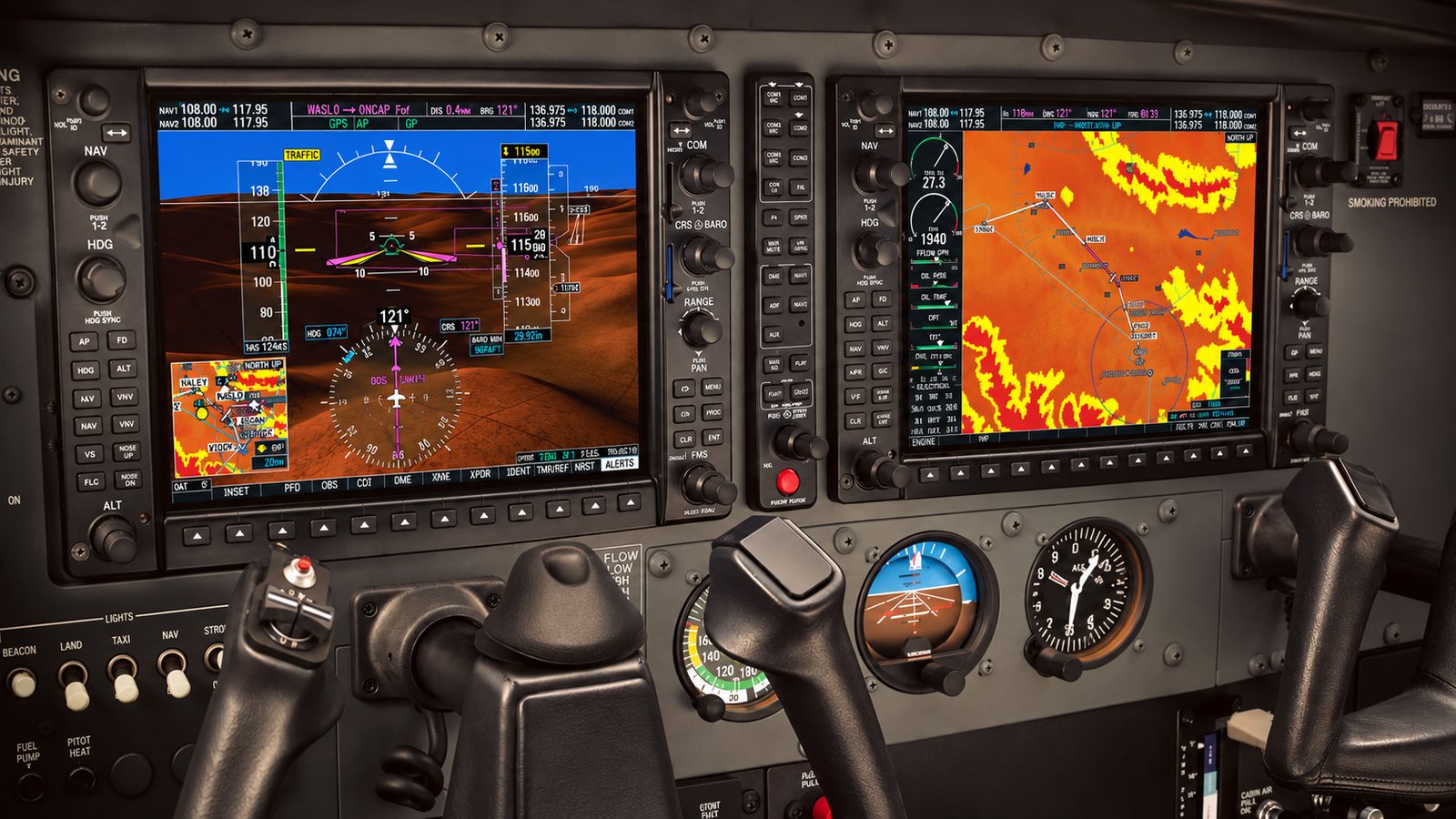
Understanding what drives your premium gives you the ability to manage it intelligently over time. Aircraft-specific factors include make, model, year, agreed hull value, avionics package, and whether the aircraft is single-engine or multi-engine. Glass cockpit aircraft often carry higher hull premiums because avionics replacement costs are substantially higher than analog panel repairs. Multi-engine aircraft carry higher premiums than comparable single-engine aircraft because both operational complexity and hull values are greater. Experimental and homebuilt aircraft are a distinct underwriting category with their own considerations; not all markets will write them, and those that do apply different criteria.
Operational factors include annual hours flown, primary use category (personal, business, training, aerial work), and where the aircraft is based. Hangaring your aircraft rather than tying it down outside is one of the simplest ways to reduce hull premium. Hail, wind, and ground vehicle incidents are meaningfully less likely when the aircraft is under cover.
The factors you can actively control over time are pilot-related: build hours, complete recurrent training, maintain currency, and keep your record clean. These are the levers that compound favorably at each renewal. Work with a specialist broker who will actively shop your profile across multiple markets at renewal rather than simply rolling your policy over.
Practical Steps for Buying and Managing Your Policy the Right Way
Aviation insurance is not a product that general insurance agents handle well. A specialist broker has direct relationships with aviation underwriting markets, understands how to position your application, and can advocate for you when a claim occurs. Ask any prospective broker directly: how many aviation policies do you place annually? Which underwriting markets do you access? Do you handle claims support in-house? The answers will tell you quickly whether you're talking to a specialist.
Before you bind coverage, read these sections of your policy in full:
- The pilot warranty clause: who is approved to fly, and under what conditions
- The definitions section: terms like "in-motion," "occurrence," and "insured" have precise meanings that affect coverage
- The exclusions section: this is where the surprises live
- All endorsements and amendments: these modify the base policy and can expand or restrict coverage significantly
- Claims reporting requirements: most policies require prompt notification, and failure to report timely can jeopardize a claim
After any incident, notify your insurer or broker as soon as possible. Do not admit fault or make statements about liability at the scene. Document everything: photographs, witness contact information, and ATC recordings if applicable. Do not authorize repairs or move the aircraft until the insurer's adjuster has inspected it. Preserving the scene and the aircraft is both a policy requirement and a practical necessity for a clean claims process.
Review your policy every year at renewal. Your aircraft's market value changes. Your pilot profile changes. Your flying changes. A policy that was appropriate 18 months ago may be under-insured, over-priced, or misaligned with how you're actually operating today. Review your agreed hull value against current market data at every renewal, update your logged hours and any new ratings or training completions, and discuss any operational changes with your broker before the renewal binds.
Conclusion: The Right Policy Starts With the Right Knowledge
Aircraft insurance is one of the most consequential financial decisions a general aviation owner makes, and consistently one of the least understood. From choosing agreed value hull coverage over ACV, to ensuring your pilot warranty accurately reflects every pilot who flies your aircraft, to knowing which exclusions could leave you exposed after an incident, the details matter enormously.
With the right knowledge and the right broker, you can build a policy that genuinely protects your aircraft, your passengers, and your financial future. Don't treat this as a commodity purchase. Treat it as the specialized risk management decision it is.
Ready to make sure your aircraft is properly covered? Work with an aviation insurance specialist to review your current policy or structure your first one correctly. The time to understand your coverage is before you need it, not after.
Sources
Disclaimer: Some articles on this site are created with the assistance of AI technology. While we work to keep our content accurate, it may contain errors or outdated information, so please verify important details before relying on them.