TBM 700 Series Aircraft: Specs, History & Buying Guide
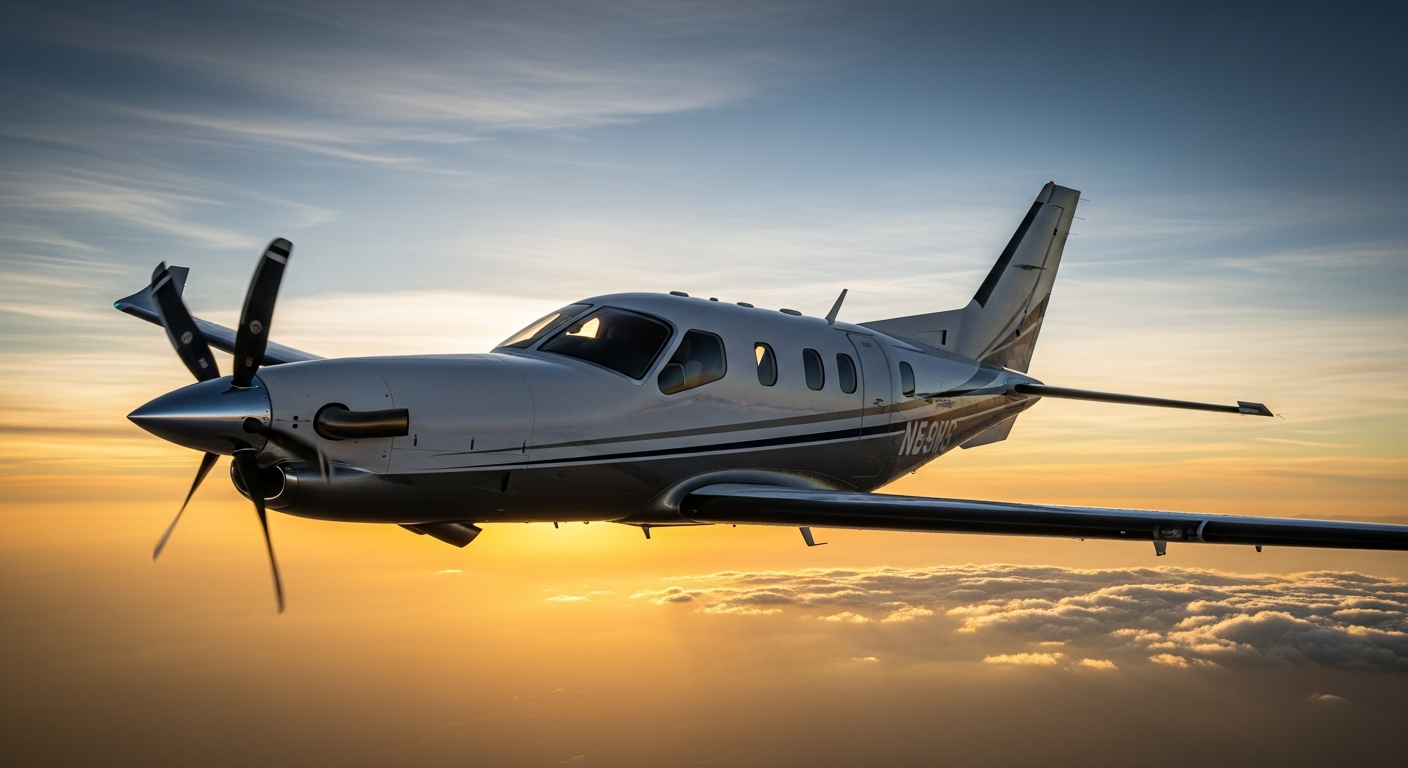
When the first TBM 700 lifted off on Bastille Day 1988, it wasn't just another turboprop. It was the first single-pilot, single-engine turboprop of its kind, and it remains the speed benchmark of the pressurized turbine-single category nearly four decades later. For owner-pilots considering a TBM 700-series aircraft today, understanding what makes this family tick requires looking beyond the marketing badges to the real technical evolution, mission capability, and ownership reality behind one of general aviation's most successful designs.
The TBM 700 family created the fast, owner-flown, pressurized turboprop-single segment rather than merely joining it. That positioning matters because it explains why the airplane still commands a liquid used market, why its performance envelope remains competitive, and why choosing the right variant within the family can mean the difference between a capable two-person speed machine and a genuine four-adult traveling airplane.
Table Of Contents
- Origins: From Mooney 301 to TBM International
- Understanding the Model Ladder: Certified Names Matter
- Certified Baseline: What Every TBM 700 Family Aircraft Shares
- TBM 700 / 700A: The Original Speed Machine
- TBM 700B: Access and Altitude
- TBM 700C1: The Bridge Aircraft
- TBM 700C2: The Payload Breakthrough
- TBM 850 / TBM700N: High-Altitude Cruise Optimization
- TBM 850 G1000: The Modern Avionics Step
- Operational Characteristics: What the TBM Demands
- Maintenance, Reliability, and the Current Airworthiness Picture
- Avionics Evolution and the Retrofit Ecosystem
- Market Reality: Fleet Size, Liquidity, and Value Drivers
- Competitive Positioning: Speed First, Always
- Choosing the Right TBM 700 Series Aircraft
- Conclusion: The Category-Defining Airplane, Still Relevant
Origins: From Mooney 301 to TBM International
The TBM story begins with the Mooney 301, which first flew in April 1983. A French consortium acquired Mooney in 1985, and by 1987 Mooney and Socata had formed TBM International to develop what would become the production TBM 700. The first prototype flew on July 14, 1988, French certification followed on January 31, 1990, and FAA certification arrived on August 28, 1990.
Mooney withdrew from the partnership after the first production delivery, leaving Socata to continue the program alone. The timing was difficult. A new luxury excise tax took effect in 1991 on the first retail sale of airplanes above $250,000, at 10 percent of the price above the threshold. While a GAO report concluded that the tax's independent effect could not be cleanly separated from the broader recession and other market forces affecting aircraft sales, the broader U.S. market backdrop was undeniably challenging for high-end single-engine aircraft in the early 1990s.
Despite those headwinds, the TBM survived. Daher reported in 2023 that it had produced 324 aircraft in the TBM 700 configuration and 338 TBM 850s. That production run speaks to the airplane's staying power in a segment where many competitors never made it past the prototype stage.
Understanding the Model Ladder: Certified Names Matter
One of the first traps for prospective TBM buyers is confusing commercial names with certified designations. The certified and commercial names are not the same, and precision matters when evaluating logbooks, ADs, and modification eligibility.
The certified model milestones are: TBM700 A on January 31, 1990; TBM700 B on November 13, 1998; TBM700 C1 on December 3, 2002; TBM700 C2 on July 14, 2004; TBM850 (certified as TBM700N) on November 28, 2005; and TBM850 G1000 on September 26, 2007.
Here's where it gets important: TBM700 C is a commercial label that covers TBM700 C1 and TBM700 C2, which are materially different airplanes. TBM850 is the commercial name for the certified TBM700N. TBM850 G1000 is still a TBM700N family airplane with later configuration changes. When you're reviewing a prebuy inspection or checking AD applicability, the certified designation is what counts.
Certified Baseline: What Every TBM 700 Family Aircraft Shares
The TBM 700 family is a low-wing, pressurized, single-turboprop airplane built mainly of conventional aluminum alloys with advanced composites in selected areas. Carbon-fiber wing leading edges and metal-bonded honeycomb empennage construction are part of the certified baseline. The control system uses conventional cable-operated controls, with both ailerons and spoilers in the system.
Minimum certified flight crew is one pilot. Maximum passenger seating is five passengers, or six passengers on certain A/B aircraft when the OPT70-25-002 seven-seat option is installed. This is why "seven seats" appears in marketing and legacy spec sheets while the certification language is tighter. The family dimensions are 41.6 ft wingspan, 34.9 ft length, 14.3 ft height, and 193.7 sq ft wing area. Cabin dimensions run roughly 13.3 ft length, 4.0 ft width, and 4.0 ft height across the family.
For A/B/C1/C2/N, certified fuel is 290.6 US gal total, 281.6 US gal usable, and 9 US gal unusable. On N aircraft with MOD70-0211-57, fuel increases to 301 US gal total and 292 US gal usable. This is one of the most important technical distinctions in later 850-market listings, and it's not universal across all 850s.
A/B/C1 share a certified takeoff weight of 6,579 lb, landing weight 6,250 lb, and ramp weight 6,614 lb. C2 and N share 7,394 lb MTOW, 7,024 lb max landing, and 7,430 lb ramp. N aircraft with MOD70-0680-10 can be approved to 7,615 lb takeoff weight. Those weight differences define the mission capability of the airplane, and they're not interchangeable across the family.
The current Type Certificate Data Sheet gives VMO 271 KCAS, VLE 180 KCAS, VFE 180 KCAS in takeoff configuration, and VFE 120 KCAS in landing configuration. A/B aircraft are 30,000-ft airplanes unless equipped with OPT70-01-026, which raises them to 31,000 ft. C1/C2/N are 31,000-ft airplanes. The published differential-pressure limit is 6.2 psi, yielding an 8,000-ft cabin at 28,500 ft, and roughly a 9,350-ft cabin at FL310 on appropriately equipped aircraft.
A/B/C1/C2 use the PT6A-64, rated in the family at 700 shp. N uses the PT6A-66D. The extra power on the 850 is available only within the later power-limitation logic and is intended for climb and cruise in the appropriate configuration rather than as a simple across-the-board takeoff-power increase.
TBM 700 / 700A: The Original Speed Machine
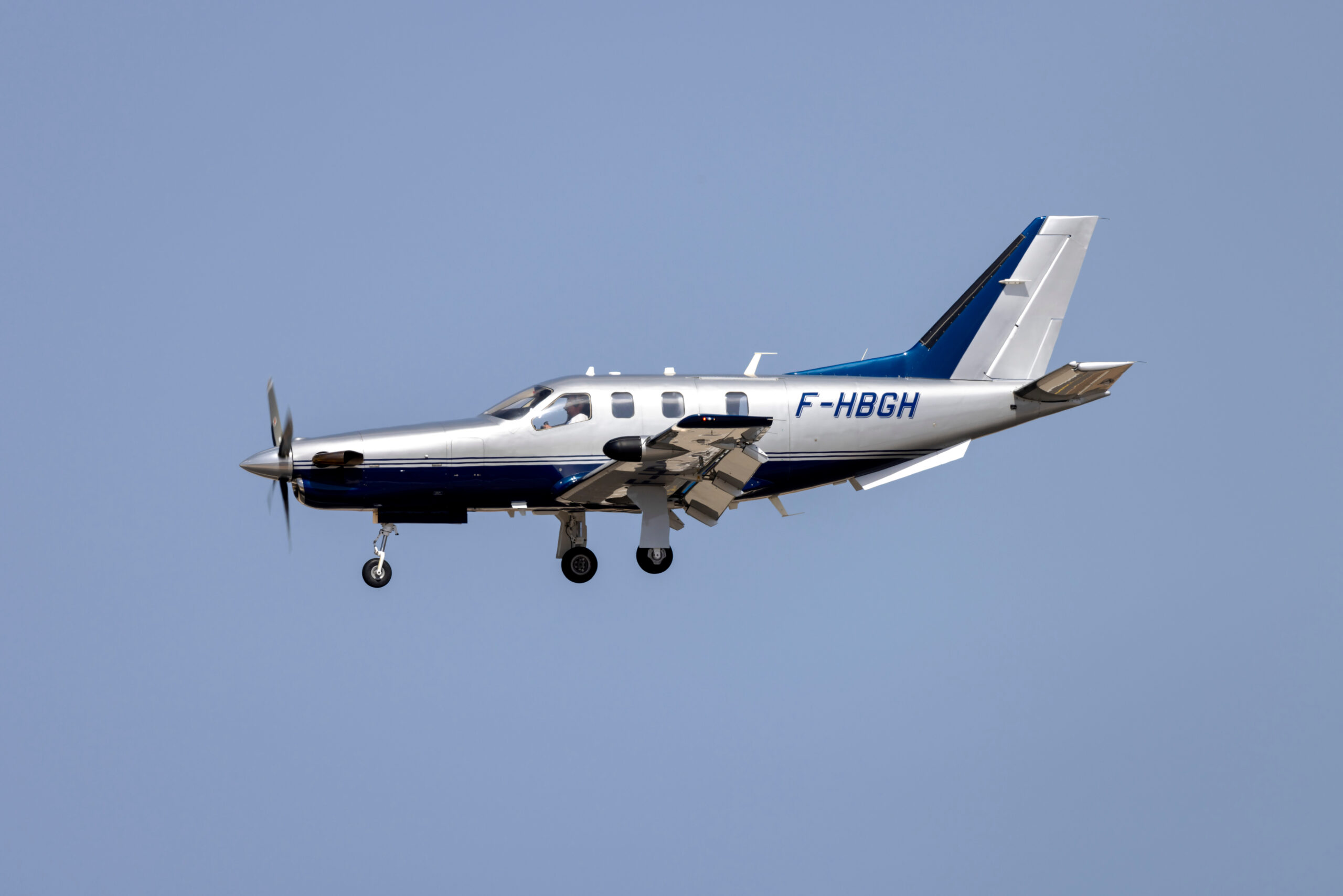
The original 700 was a PT6A-64/700-shp, 6,579-lb MTOW, 300-knot, 1,550-NM, 30,000-ft airplane with a narrow split passenger door and electro-mechanical instruments. The 700A added EHI 40 EFIS as standard from serial number 24. Period reference data from AOPA's 1991 coverage gives 300 kt max cruise, 1,378 nm range, and 2,133 ft takeoff distance over a 50-ft obstacle.
The early 700/700A established the performance envelope that would define the category for decades: genuine 300-knot cruise speeds, flight-level capability, and single-pilot accessibility. But the early aircraft also established the payload reality that would drive the need for later variants. Standard-airplane useful loads were 2,564 lb for the A and 2,447 lb for the B. With max fuel at 1,887 lb for the common 281.6-usable-gallon installation, a standard-airplane A would retain about 677 lb with full fuel and a standard-airplane B about 560 lb.
Real-world early TBMs often have useful loads closer to 2,200 lb, which implies roughly 313 lb with full fuel. That explains the split in public narratives: book-standard payload can look respectable, while realistically equipped early aircraft can become practical two-adult airplanes at max fuel. For owner-pilots evaluating early TBMs, the payload-versus-fuel trade is the single most important mission-planning consideration.
TBM 700B: Access and Altitude
The B is the first major livability upgrade in the family. The A had a narrow passenger door, about 2 ft 1.59 in wide. The B door width increased to about 3 ft 6.52 in, a change that transformed passenger loading and unloading. The B also added the optional pilot entry door, which is one of the B's most marketable usability features for owner-pilots who fly solo or with one passenger.
The B's altitude story needs precise wording. Some B-model aircraft reached 31,000 ft with gaseous oxygen, but A/B require OPT70-01-026 for 31,000-ft certification. Daher's current upgrade material shows a 31,000-ft barometric-valve upgrade for qualifying A/B airplanes with gaseous oxygen, which confirms that not every B is an FL310 airplane. Some are; some are not. For a prospective buyer, verifying the 31,000-ft configuration on an A/B is a meaningful prebuy item, especially if high-altitude operations are part of the mission profile.
The B solved access, but it didn't solve payload. The useful load remained in the same range as the A, which meant the B was still fundamentally a speed-first, payload-second airplane.
TBM 700C1: The Bridge Aircraft
The C1 is a bridge airplane and should not be blurred into the C2. The C1 remains in the earlier weight class at 6,579 lb MTOW with 61-kt Vs0, while also placing it in the later systems family. The large passenger door and the later Honeywell environmental-system baseline are part of the C1 package. In practical buyer language, the C1 is a refinement-and-systems-improvement step, but not yet the full payload breakthrough.
AOPA's 2009 comparison gives 452 lb full-fuel payload for the C1, which is better than the A/B but still not enough to make the airplane a practical four-adult, full-fuel traveler. The C1 is best understood as a systems-modernization step that kept the TBM competitive while Daher prepared the structural changes that would enable the C2.
TBM 700C2: The Payload Breakthrough
The C2 is the real inflection point in the legacy 700 family. It differs from the C1 by reinforced landing gear and associated structural parts, a jump to 7,394 lb MTOW, and a higher 65-kt Vs0. The payload implication is material: a 2005 turbine roundup cited a full-fuel payload of 895 lb for the newest C2, while a 2009 comparison showed the C2 at 804 lb full-fuel payload versus the C1 at 452 lb. The C2 also moved to 10-ply tires to handle the higher weights.
The exact full-fuel payload on a given airframe will vary with avionics, interior, and options, but the mission change is unquestionable. The C2 is the first legacy TBM where full-fuel payload becomes truly usable for multiple-adult trips. Official Daher history markets the airplane at 320 kts and 1,585 NM, but period coverage more often keeps the legacy 700 line in the 300-knot-class and focuses instead on the C2's payload gain.
For owner-pilots evaluating the legacy TBM market, the C2 is the first variant that can credibly serve as a four-adult traveling airplane without forcing constant fuel-versus-payload compromises. That capability drives a meaningful value premium in the used market.
TBM 850 / TBM700N: High-Altitude Cruise Optimization
The TBM 850 is the commercial name for the certified TBM700N. Compared with the C2, the N adds the PT6A-66D, a power-limitation system, a two-port bleed-air system, modified torque/ITT indication, and a reinforced engine mount. The airframe remains aerodynamically identical, and the extra 850-hp-class capability is intended for climb and cruise in clean configuration, not as a blanket takeoff-power increase.
Earlier 700s could touch 300 KTAS in the mid-twenties but might fall into the 250-to-260-knot range near the ceiling. The 850 could maintain 300-plus knots at more weights and altitudes. Handbook-standard conditions show about 320 knots at 26,000 ft and about 315 knots at 31,000 ft as fuel flow dropped. That is why the 850 is best described as a high-altitude cruise optimization rather than a runway-performance rewrite.
A 2006 factory-hosted data card lists 7,394 lb MTOW, 4,670 lb typical empty weight, 1,378 lb max payload, 873 lb payload with max fuel, 31,000-ft ceiling, 2,840-ft takeoff runway, 19 minutes to 30,000 ft, 320 kts at 30,000 ft, 252 kts long-range cruise at 31,000 ft, 1,365 nm IFR range in high-speed cruise, 1,519 nm IFR range in long-range cruise, and 2,430-ft landing runway. Those numbers represent the mature capability of the legacy TBM family before the G1000 step.
The 850 is the 320-knot-class high-altitude evolution of the TBM concept. For owner-pilots who routinely operate in the flight levels and want to maintain speed at altitude, the 850 delivers a materially different mission profile than the earlier 700s.
TBM 850 G1000: The Modern Avionics Step
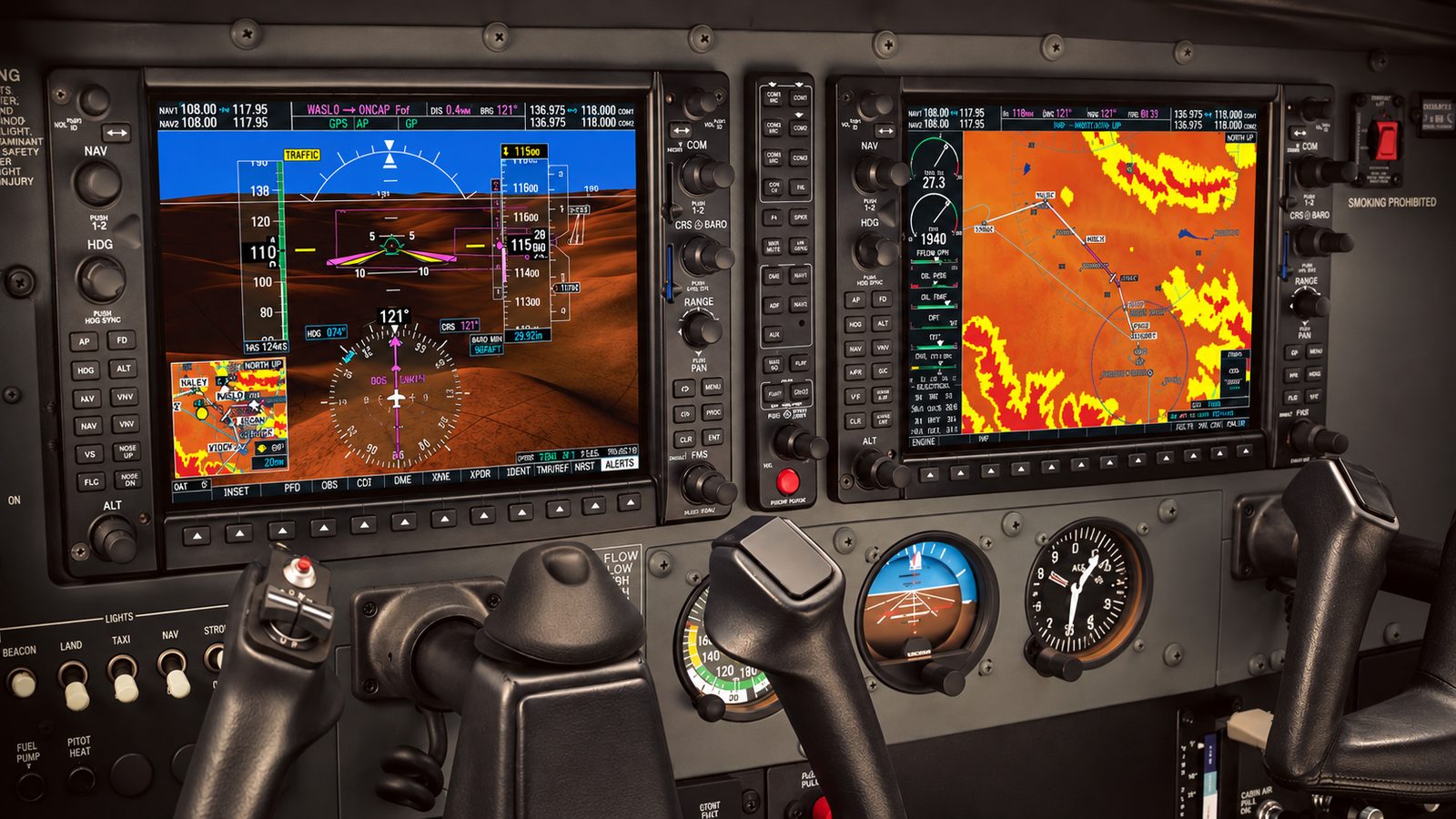
The G1000 version differs from the earlier 850 by the Garmin G1000 suite and, on later-equipped aircraft, 292 USG usable fuel. The first U.S. deliveries arrived in January 2008. The TBM-specific G1000 package included interactive electrical/fuel/anti-ice schematics, electronic checklists, automatic pressurization scheduling, and plain-English CAS messages. The G1000 step is therefore both an avionics change and, on later-equipped aircraft, a fuel-capacity change.
AOPA's 2008 data sheet gives 4,589 lb standard empty, 1,443 lb max useful, 292 gal usable fuel, 320 kt / 1,410 nm at max cruise power at 26,000 ft, 252 kt / 1,585 nm at economy cruise at 31,000 ft, 2,840 ft takeoff over a 50-ft obstacle, and 2,430 ft landing distance.
The G1000 also brought the GFC700 autopilot, which materially reduced workload compared with the older KFC325. For owner-pilots evaluating the used market, the G1000 step is the dividing line between legacy avionics and modern integrated systems. Training at SimCom was five days, six if it was the pilot's first turbine aircraft, with another two to three days of G1000-specific work being prudent.
Daher still supports legacy modernization. Current factory material shows a G1000 NXi retrofit for G1000-equipped TBM 850s, TBM 900s, and some modernized TBM 700s, improving boot times, data handling, chart display, readability, and connectivity. Those official upgrade paths materially affect legacy-aircraft value.
Operational Characteristics: What the TBM Demands
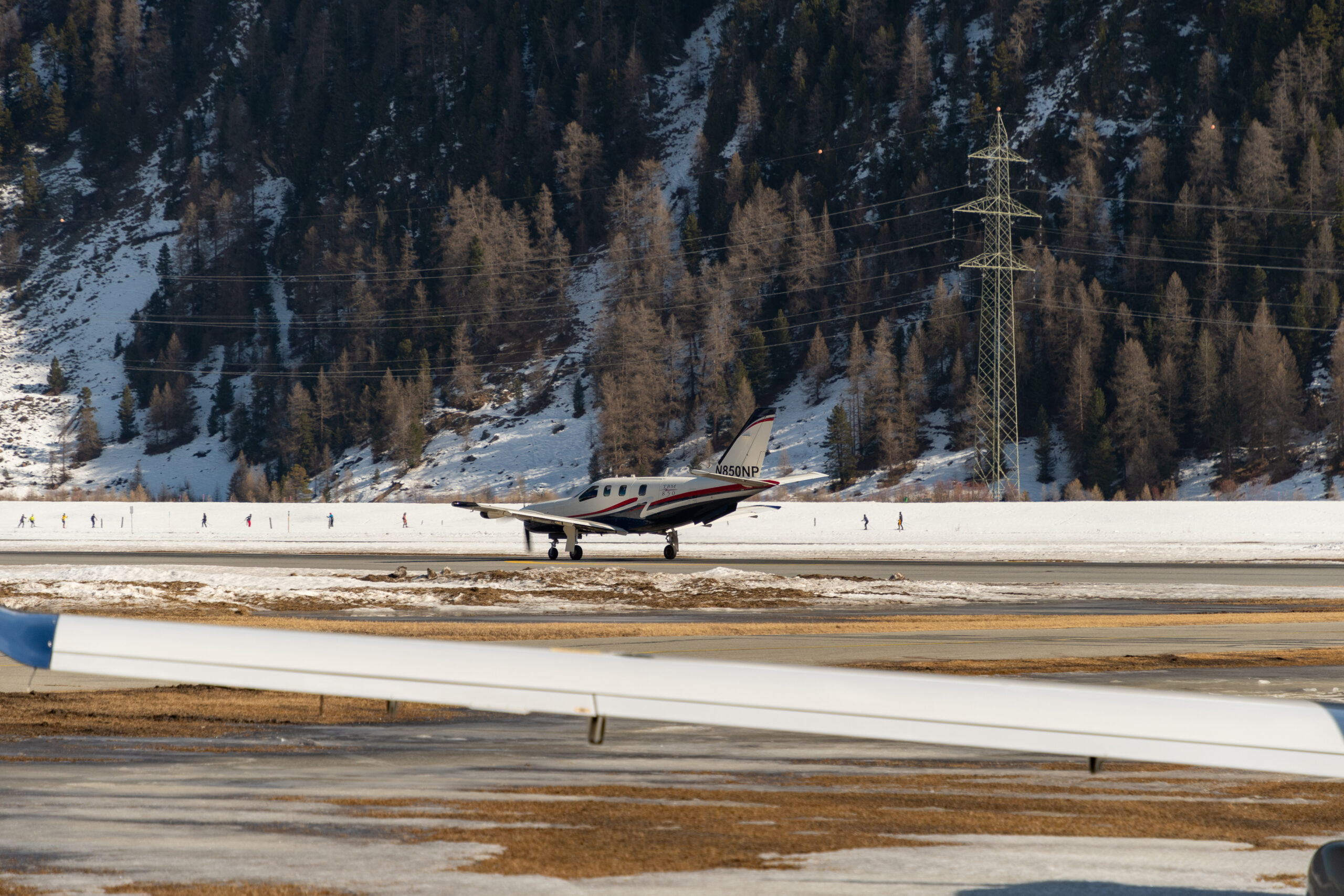
The TBM family's handling and training burden should be described as approachable but not casual. EASA classifies the airplane as a Non-complex High Performance Aeroplane (HPA) and notes differences training requirements across the family. Differences and familiarization courses run roughly five hours, while more complex initial training paths for advanced avionics are substantially larger.
A BEA safety study reviewing 36 accidents through March 2010 highlighted a recurring loss-of-control pattern involving a bank to the left during low-speed arrival and go-around scenarios when power was increased rapidly in landing configuration. The TBM does not reward abrupt, poorly coordinated low-speed power application near the ground. That's not sensationalism; it's discipline. The airplane's speed, power, and light wing loading demand smooth, coordinated technique, especially in the arrival and departure phases.
Landing technique data is unusually specific in the TBM. The prop arc sits only 8.15 inches above the ground with the airplane at rest. The parked attitude is only about 1.7 degrees nose-up, and the preferred touchdown pitch attitude is roughly 4 to 7 degrees nose-up, with 3 degrees treated as a practical minimum. Final approach in the TBM 700/850 family is typically in the 80-to-85-knot range depending on weight. Those numbers matter because the TBM's low prop clearance makes landing technique more consequential than in many piston singles.
The airplane also carries speed deep into the arrival. Gear and first-notch flaps can be used around 178 KIAS, and the current Type Certificate Data Sheet backs the general point with 180 KCAS limits for gear extension and takeoff-configuration flaps. That makes the TBM easier to keep fast in terminal areas than many newcomers expect, but it also means energy management on arrival requires planning.
Loading matters to handling. Baggage capacity is modest compared with piston twins and especially the PC-12. The center of gravity tends aft, and ballast in the nose baggage area may be needed with heavy passenger loads. The TBM is a speed-first traveler, not a volume hauler.
Maintenance, Reliability, and the Current Airworthiness Picture
The PT6 family remains one of the strongest pillars of the TBM concept. Pratt & Whitney states that the PT6 family has powered more than 155 aircraft types and accumulated more than 500 million flight hours since 1963. That does not make the TBM cheap to own, but it does explain why buyers accept a single engine at FL300 in this class.
Owners commonly report annual maintenance in the $20,000 to $40,000 range, which is far above piston-single expectations even when the per-mile utility remains compelling. A 2006 factory-hosted 850 data card listed the PT6A-66D at 3,000-hour TBO, maturing to 3,500 hours. That's a period reference point rather than a universal current planning number for every aircraft, but it gives a sense of the engine's maturity and service interval.
The current AD picture matters in any serious ownership discussion. In 2025, the FAA adopted an AD for reports of inner flap actuator drive-nut wear, requiring cleaning, lubrication, play checks, and replacement or terminating-action nuts as needed. Another 2025 AD required POH emergency-procedure revisions because some smoke and fire procedures could not be fully accomplished from the flight deck.
Effective February 12, 2026, the FAA superseded the old vertical-stabilizer-fitting AD, continuing repetitive inspection requirements and allowing improved corrosion-resistant fittings as an optional terminating action. A 2026 TBM prebuy should therefore be treated as a configuration-and-compliance audit, not merely an engine and cosmetics inspection.
There is also an important historical stabilizer item in the lineage. In 2014, the FAA adopted an AD stating that installation of shims on the outboard hinge fittings of the horizontal stabilizer had been introduced as standard from MSN 162, and that aircraft with that final design could discontinue repetitive inspections. On earlier airplanes, verifying whether the terminating modification was actually accomplished is a meaningful prebuy and logbook item.
Avionics Evolution and the Retrofit Ecosystem
Legacy factory TBMs started in the BendixKing / EFIS 40-50 / KFC325 era. Many used aircraft now combine factory configurations with retrofit Garmin equipment, which means "TBM 700" is not a single avionics category in the market. For prospective buyers, the panel state often matters more than the serial number.
Daher still supports legacy modernization. Current factory material shows a 31,000-ft barometric-valve upgrade for qualifying A/B aircraft with gaseous oxygen, and Daher announced a G1000 NXi retrofit for G1000-equipped TBM 850s, TBM 900s, and some modernized TBM 700s. Those official upgrade paths materially affect legacy-aircraft value, and they're worth verifying during the evaluation process.
A meaningful aftermarket development arrived in 2025: FAA approval for Blackhawk's XP66D engine upgrade for the TBM 700 series, replacing the PT6A-64 with a PT6A-66D and claiming 22 minutes to FL310 instead of 28, plus cruise up to 303 KTAS. That is an aftermarket performance path, not factory lineage, but it matters in the current used market. For owners of early A/B/C1 aircraft, the Blackhawk upgrade offers a potential path to 850-class performance without moving to a later airframe.
Market Reality: Fleet Size, Liquidity, and Value Drivers
Elliott Jets' Winter 2026 market report characterized both the TBM 700-series market and the TBM 850 market as balanced. The TBM 700 series bucket (700A/700B/700C2) showed 19 listings, 266 aircraft in fleet, 7.1% on market, and 31 sales in 2025. The TBM 850 segment showed 23 listings, 319 aircraft in fleet, and 7.2% on market. That is a mature, liquid legacy turboprop market rather than a stranded one.
For asking-price context, Hangar67's rolling 12-month TBM 700 Group report showed an average asking price of $1,229,500, with a low of $1,049,000 and a high of $1,445,000. This is asking-price data, not transaction data, but it is a useful public bracket. Value swings are driven heavily by avionics, RVSM status, maintenance history, and damage history.
The most important value drivers are: A/B versus C2 versus 850 mission fit; engine condition and program status; panel generation and retrofit quality; 31,000-ft eligibility on A/B; 281.6- versus 292-usable-gallon configuration; current AD compliance; and meaningful factory-supported upgrades such as NXi or the barometric-valve upgrade. In this market, serial number and mod status often matter more than the badge alone.
For prospective buyers, the practical takeaway is that a well-maintained, properly equipped early TBM can deliver compelling value if the mission fits the payload envelope, while a poorly maintained later aircraft can become a money pit regardless of the badge. The TBM market rewards due diligence.
Competitive Positioning: Speed First, Always
The TBM's historical niche remains clear when compared with current competitors. Piper's M500 is published at 260 KTAS, 1,000 nm, and 30,000 ft, with 170 usable gallons and a 500-shp PT6A-42A. Pilatus' PC-12 PRO is published at 290 KTAS, 1,765 nm, 2,485-ft takeoff distance, and configurable seating up to nine passengers, with explicit short and rough-field emphasis.
The TBM 700 family therefore remains the speed-first choice in the segment, with the PC-12 as the volume and utility choice and the M500 as the lower-power, lower-speed entry point. For owner-pilots who prioritize cruise speed and flight-level capability over cabin volume or short-field performance, the TBM remains the category benchmark.
That positioning has held for more than three decades, and it continues to define the used-market value proposition. The TBM is not the right airplane for every mission, but for the mission it was designed to fly (fast, high, and efficient), it remains the standard.
Choosing the Right TBM 700 Series Aircraft
The big practical divide in the legacy market is not "old versus new," but A/B/C1 versus C2 versus 850, because payload and mission utility change materially across those steps. A legacy TBM's real market value often depends more on mod status, fuel configuration, and panel state than on the marketing badge alone.
For prospective buyers, the decision tree is straightforward:
If you're flying primarily solo or with one passenger, and you prioritize speed and flight-level capability over payload, an A/B with good maintenance history, modern avionics, and 31,000-ft certification can deliver compelling value. Verify the useful load against your realistic empty weight, and plan your missions around the fuel-versus-payload trade.
If you're flying with multiple adults regularly and you want full-fuel flexibility, the C2 is the first variant that can credibly serve that mission without forcing constant compromises. The C2's 7,394-lb MTOW and reinforced gear make it a different airplane operationally, and the market recognizes that difference.
If you routinely operate in the flight levels and you want to maintain 300-plus-knot cruise speeds at altitude, the 850 is the high-altitude cruise optimization that justifies the step up from the C2. The PT6A-66D and the power-limitation system deliver a materially different mission profile, especially on longer legs where time-to-climb and cruise efficiency matter.
If you want modern integrated avionics and you're willing to pay for it, the G1000 850 is the most capable legacy TBM before the 900-series step. The GFC700 autopilot, the integrated systems displays, and the factory-supported NXi upgrade path make the G1000 850 a credible long-term ownership platform.
In every case, the prebuy should be treated as a configuration-and-compliance audit. Verify AD compliance, verify mod status, verify fuel configuration, verify panel state, and verify engine program status. The TBM market rewards due diligence, and it punishes buyers who chase a low price without understanding what they're buying.
Conclusion: The Category-Defining Airplane, Still Relevant
The TBM 700 family created the fast, owner-flown, pressurized turboprop-single segment, and it remains the speed benchmark of the category nearly four decades later. That's not marketing; that's the operational reality of 300-to-320-knot cruise speeds at flight levels, delivered in a single-pilot, single-engine package that owner-pilots can realistically fly and maintain.
The family's developmental logic is clear: the B solved access, the C2 solved payload, and the 850 solved high-altitude cruise relevance and set up the modern Garmin path. For prospective buyers, understanding that progression is the key to choosing the right variant for the mission.
The TBM is not the right airplane for every mission. It's not a volume hauler, it's not a short-field performer, and it's not a casual airplane. But for the mission it was designed to fly (fast, high, and efficient), it remains the standard. The used market is liquid, the factory still supports legacy aircraft, and the PT6 remains one of the most proven powerplants in aviation history.
For owner-pilots considering a TBM 700 series aircraft, the opportunity is real. The airplane delivers on its promise, the market is mature, and the value proposition remains compelling for the right mission. Just do the homework, verify the configuration, and understand what you're buying. The TBM rewards preparation.
Disclaimer: Some articles on this site are created with the assistance of AI technology and may