Piper M-Series turboprop comparison
Table of Contents
- Understanding Piper's single-engine turboprop evolution
- Piper Meridian (PA-46-500TP) - The original single-engine turboprop
- Piper M500 - The Meridian's modern successor
- Piper M600 - Twin-engine capability in single-engine form
- Piper M700 - The flagship single-engine turboprop
- Direct performance comparison matrix
- Operating cost analysis and ownership economics
- Pilot training and transition considerations
- Mission profile analysis - Choosing the right aircraft
- Market analysis and purchase recommendations
Understanding Piper's single-engine turboprop evolution
From Meridian to M700: The development timeline and what changed
Piper launched the PA‑46 turboprop era with the Meridian (PA‑46‑500TP), delivering the first examples in late 2000 as the company adapted the Malibu/Mirage fuselage for a 500‑horsepower turbine and pressurized, cabin‑class capability. Over time, the Meridian evolved into the M500; the M600 arrived with a new wing and more power; and in 2024, the M700 Fury became the flagship. The M700 received FAA type certification on February 29, 2024, with deliveries beginning in April 2024, and its primary hardware changes versus the M600/SLS are a larger Pratt & Whitney PT6A‑52 engine and a five‑blade composite Hartzell propeller (the five‑blade was optional on the M600/SLS). All PA‑46 models have been built in Vero Beach, Florida [1][6].
The M600 marked the biggest single leap over the Meridian/M500. Piper designed an all‑new wing that carries 90 more U.S. gallons of fuel than the Meridian/M500, enabling a large range increase and higher weights, and it introduced Garmin’s G3000 flight deck to the PA‑46 line—first in class for a single‑engine turboprop [2][3][4][5]. In short: same basic fuselage architecture, but the M600 adds fuel, range, payload, and avionics capability [2][4].
By 2024, Piper pushed the concept again with the M700 Fury: more power, higher top speed, and refined handling to accommodate the horsepower increase [1][6].
Where did pricing land along the way? At introduction in 2015, list prices were approximately $1.16 million for the M350 (piston), $2.26 million for the M500, and $2.82 million for the M600 [3][12]. A 2025 market report places typical base pricing around $2,325,000 for a mid-year M500 and $3,029,000 for a mid-year M600 SLS. More recently, published figures have reflected the M‑Class stratification with higher list prices for the M600 and M700 than the M500, consistent with their performance and avionics [10].
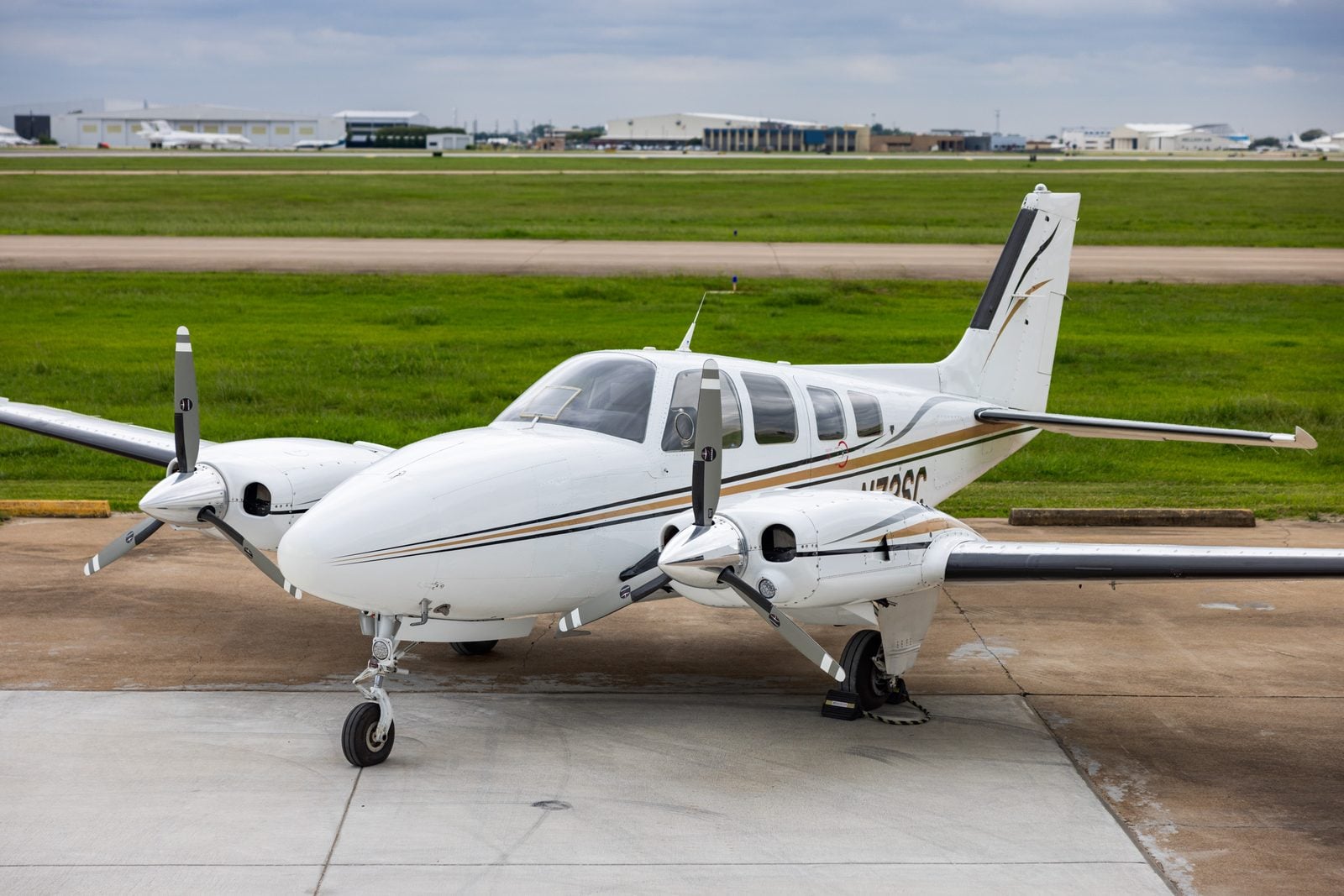
Why these four models matter for SR22T owners
If you’re flying an SR22T today, you’re planning fuel and weather around an unpressurized, single‑engine piston. Moving to a PA‑46 turboprop buys you:
- Pressurization and true weather flying capability (more time above the ice and bumps).
- Cruise speeds at or above 260 KTAS starting with the M500 [2][3][10].
- A step‑change in range with the M600 (about 1,300 nautical miles with reserves at typical long‑range settings; up to 1,484 nm at endurance settings) [5][8].
- Higher VMO and descent capability in the M600 versus the M500 (250 KIAS vs 188 KIAS) to stay high longer and save fuel [3].
- The latest avionics ecosystems—G1000 NXi in the M500 and G3000 in the M600/M700—bringing jet‑class integration and automation to the cockpit [3][7][11][13].
From a cost perspective, the M500 is the entry point to turbine reliability and speed; the M600 adds range, payload, and G3000; and the M700 pushes performance and safety automation to the top of the line. That’s the strategic ladder you should align to mission and budget [2][3][4][5][10][11][12].
Piper Meridian (PA-46-500TP) - The original single-engine turboprop
Engine and propeller systems
Piper’s PA‑46‑500TP Meridian launched with a 500‑horsepower turbine up front—giving it a 260‑knot max cruise capability at a lower fuel burn than some aftermarket conversions and establishing the performance envelope that the M500 would later refine [6]. In practical terms, 260 KTAS is a reasonable planning number for the Meridian/M500 airframe under typical cruise conditions [2][6][10]. For mission planning, Meridian pilots often cite roughly 1,000 nm possible with power pulled back and higher altitudes; treat that as a capability bound that depends on conditions and configuration [2][5].
Performance specifications
Avionics and equipment: verify, don’t assume
Meridian avionics packages vary widely across its production run and the retrofit choices owners have made. Some earlier aircraft have been upgraded; others remain in legacy configurations. When you shop, verify the exact avionics suite and upgrades on the serial number you’re evaluating—this is a major driver of utility and supportability on a 15–20+ year airframe [9].
- Confirm WAAS/LPV capability, radar, and datalink weather specifics as installed (options and retrofits vary) [9].
- Assess autopilot integration and modernization level as part of your recurrent risk profile [9].
- Budget for avionics modernization if needed; it can be money well spent relative to the acquisition price delta versus an M500.
Cabin and payload: right‑sized for most missions
The Meridian established the familiar PA‑46 cabin: aft airstair, club seating, and an executive feel in a compact footprint. While payload specifics vary by aircraft and equipment, remember that the major payload/range step‑ups were engineered into the M600 (not the Meridian). If your mission regularly demands full seats and long legs, weigh a move directly to the M600. If you’re carrying one to three people most days, the Meridian’s cabin works—and the turbine reliability is the step change you came for [2][5][8].
Recommendation for Meridian shoppers: make avionics condition and engine program status your first two sort keys. The rest of the airplane is proven and predictable; those two items shape your operating reality [9].
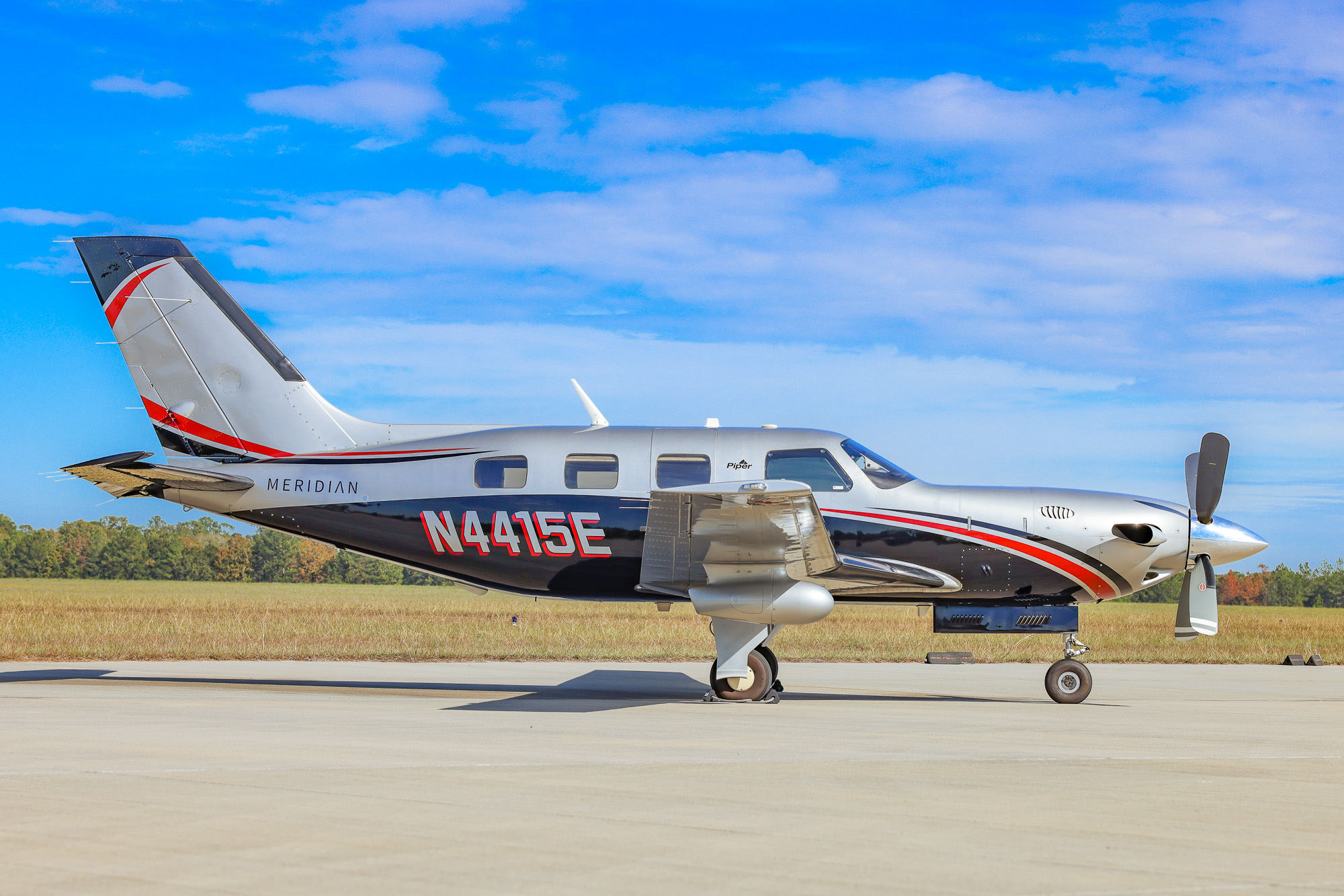
Piper M500 - The Meridian's modern successor
Powerplant upgrades and improvements
The M500 is the current‑generation version of the Meridian concept—same essential performance, a thoroughly modernized flight deck, and refinements that make it the most affordable entry into the new‑build PA‑46 turbine family [3][4].
The M500 pairs a Pratt & Whitney PT6A‑42A rated at 500 shp with a Hartzell four‑blade propeller—a combination that delivers the familiar 260‑knot max cruise headline [10]. For buyers stepping out of an SR22T, this is the speed and turbine reliability you’re chasing, without the acquisition and step‑up costs that come with the M600 and M700 [2][3][10].
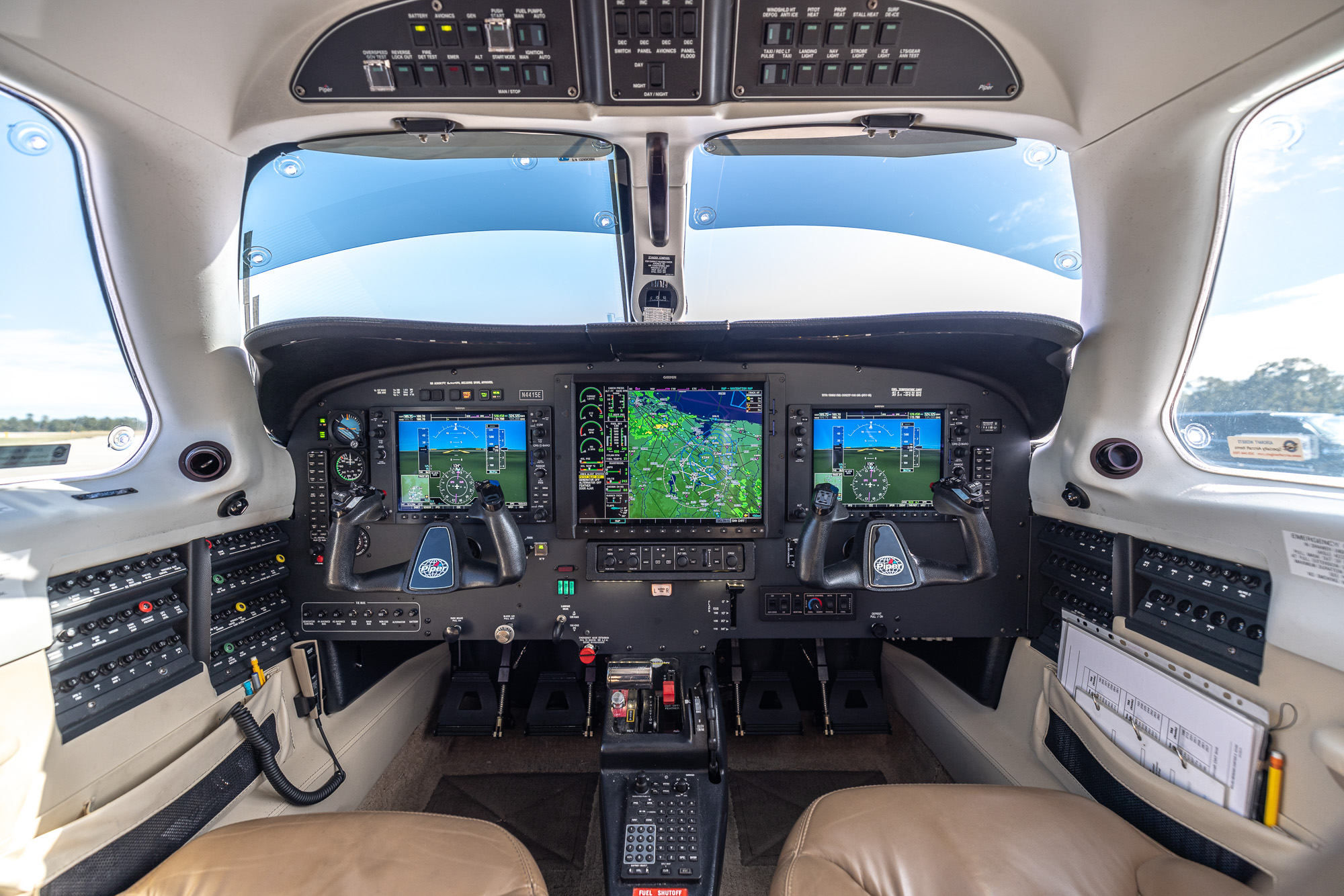
Avionics revolution - Garmin G1000 NXi
The M500 ships with the Garmin G1000 NXi integrated flight deck—current‑generation displays, processing speed, and feature set in a package that’s familiar to many glass‑cockpit pilots [13]. If you’re moving from a Perspective+ SR22T, the transition to NXi is a gentle learning curve; I’d still plan a structured initial turbine transition course, but your glass cockpit flows will carry over well [13].
Structure, systems, and cabin refinements
The M500 shares the PA‑46 fuselage and airstair experience with its siblings; interior fit and finish are high‑end but simpler than the M600’s. Both M500 and M600 feature executive leather interiors, USB charging, LED lighting, and hardwired Bose headsets up front; the M600 expands the interior palette (four interior options vs two on the M500) and offers six USB ports [4]. Both aircraft carry onboard Garmin weather radar; the M600’s radar pod is integrated into the wing for reduced drag, while the M500’s pod mounts below the wing [4].
Performance and economics in context
- Max cruise: plan around 260 KTAS [2][3][10].
- Range: at high altitudes with power pulled back, roughly 1,000 nm is achievable; the M600’s wing change adds a step‑up here [2][5].
- Price context: typical base pricing around $3.29M for a 2023 model in Q3 2025.
My recommendation: If most of your trips are 300–800 nm with two to three people and bags, and you’re upgrading primarily for turbine reliability and weather capability, the M500 is the value play. If your mission profile includes frequent 1,000–1,300‑nm legs, skip directly to the M600 [2][3][5].
Piper M600 - Twin-engine capability in single-engine form
The wing, the fuel, the weights
- New wing carrying 90 more U.S. gallons of fuel than the Meridian/M500 [2][4][5][8].
- Max gross weight increase to 6,000 lb—about a 900‑lb boost over the M500 [5].
- Aviation Consumer reported a 958‑lb higher gross weight and roughly 100 more pounds in the cabin with full fuel compared to the M500 [2].
- Useful load jumped to around 2,400 lb from approximately 1,698 lb in the M500 (configurations vary) [4].
Those changes translate directly to utility. With the seats full of 170‑lb passengers, the M600 still offers nearly 1,000 nm of range—a practical leap over the M500 [2].
Engine and performance
The M600 retains the PT6A‑42A architecture, but at a higher rating in this application. It’s a 600‑shaft‑horsepower installation that puts real thrust behind the bigger wing and higher weights [8]. The M600’s published capabilities include a maximum range up to 1,484 nm at maximum endurance power settings and approximately 1,300 nm with reserves in typical long‑range cruise planning [8][5].
- VMO increases to 250 KIAS in the M600 versus 188 KIAS in the M500, which lets you descend faster, stay high longer, and reduce block times and fuel burn [3].
- Maximum landing weight and zero‑fuel weight limits deserve attention in your loading scheme. Aviation Consumer cites an M600 maximum landing weight of 5,800 lb and a zero‑fuel weight of 4,750 lb—numbers that drive how you plan heavy‑cabin legs [2].
Avionics: Garmin G3000
The M600 was the first single‑engine turboprop to adopt Garmin’s G3000, with a three‑screen 12‑inch display setup and touchscreen controllers—bringing light‑jet‑class integration into the PA‑46 [2][3][7]. In practice, the G3000’s workflow and integration reduce pilot workload and make single‑pilot IFR more manageable when you discipline your procedures [7].
- Upscale cabin with executive touches, cupholders, USB charging, and fold‑out tables [7].
- Aft airstair door (46 x 24 inches) [7].
- A 20‑cu‑ft baggage compartment behind the aft seats, placarded to 100 lb [7].
Warranty coverage on the M600 has also been strong relative to the segment: five‑year/1,500‑hour airframe and seven‑year/2,500‑hour engine warranties [7][8].
Recommendation: If you need real 1,200–1,400‑nm legs with a meaningful cabin load, the M600 is where the PA‑46 comes into its own. The wing, fuel, weight, avionics, and VMO gains deliver tangible mission flexibility [2][3][5][8].

Piper M700 - The flagship single-engine turboprop
Powerplant and handling refinements
The M700 pushes the single‑engine PA‑46 platform to its current limits—more power, higher speeds, and the latest safety automation on the G3000 flight deck [1][10][11].
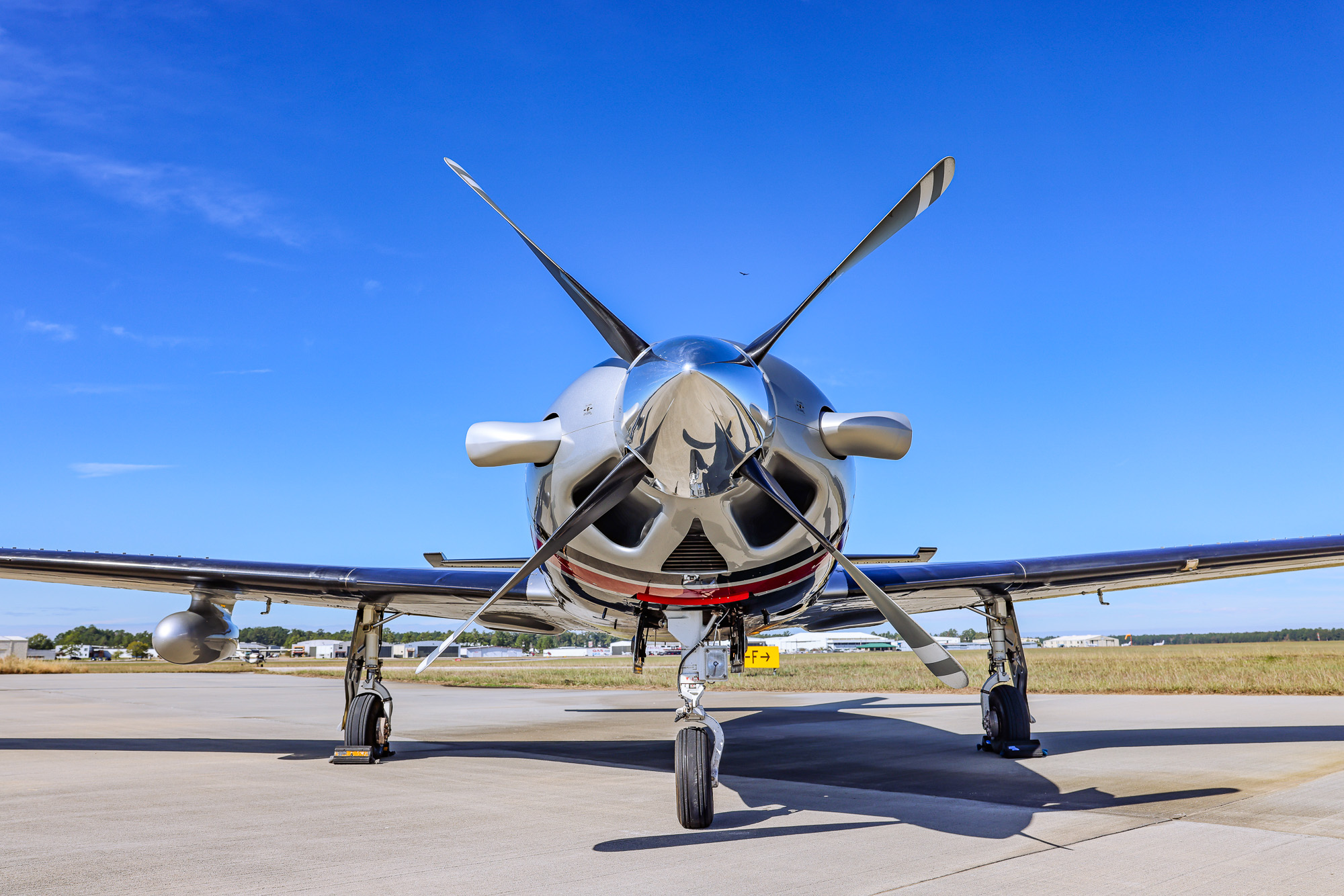
The M700 moves up to a Pratt & Whitney PT6A‑52 and a five‑blade composite Hartzell propeller—hardware changes that distinguish it from the M600/SLS [1]. With more power comes handling work: Piper added a Gurney flap on the left side of the rudder trim tab and increased rudder travel to achieve the desired stability—small but meaningful aerodynamic tweaks when you bolt on more horsepower [6].
Avionics and safety technology
The M700 retains the G3000, and layers on automation and connectivity: Piper highlights the HALO Safety System with Emergency Autoland and PlaneSync connectivity for remote status and avionics updates via 4G LTE or Wi‑Fi [11].
Recommendation: If your mission and budget demand the fastest PA‑46, and you want the highest level of integrated safety automation available in the lineup, the M700 is the answer. The M600 remains the range/payload value; the M700 is the performance and tech leader [10][11].
Direct performance comparison matrix
Speed and range analysis
- M500: max cruise around 260 KTAS [2][3][10].
- M600: max cruise increases (published figures vary by configuration), but the mission‑defining difference is range—about 1,300 nm with reserves at typical long‑range settings; up to 1,484 nm at endurance settings [5][8].
- M700: max cruise around 301 KTAS with a climb rate around 2,048 fpm [10].
For SR22T owners, the big decision is whether your mission demands the M600’s fuel and range. If your typical round trips are 600–900 nm one‑way with alternate requirements and winter winds, the M600 gives you reserve margin you’ll use. If most flights are sub‑800 nm with straightforward alternates, the M500’s 260‑knot speed might be all you need [2][3][5].
Payload and fuel flexibility
- Useful load: M600 around 2,400 lb vs M500 about 1,698 lb (configuration dependent) [4].
- Fuel capacity: M600 carries 90 more U.S. gallons than the Meridian/M500—this is the enabler for the range/payload win [2][4][5][8].
- Cabin with full fuel: Aviation Consumer noted roughly 100 lb more in the cabin with full fuel in the M600 vs the M500 [2].
Practically, this means you can launch with full tanks, six people, and still plan a meaningful leg in the M600. In an M500/Meridian, you’ll do more fuel‑payload tradeoffs to hit the same distances [2][4][5].
Operational envelope details that matter
- VMO: M600 at 250 KIAS vs M500 at 188 KIAS. Staying in the flight levels longer before a fast descent saves fuel and time; it also improves your weather flexibility and ATC handling in busy airspace [3].
- Weights: Maximum landing weight and zero‑fuel weight planning are important as you push cabin loads. Aviation Consumer cited 5,800 lb MLW and 4,750 lb ZFW on the M600—factor them into your load manifests on longer legs [2].
Operating cost analysis and ownership economics
You should expect higher fixed and direct operating costs compared to your SR22T—insurance, training, turbine maintenance programs, and fuel price exposure all go up with these airframes. Instead of quoting a DOC that won’t apply to your specific field prices and utilization, I recommend this disciplined approach.
- Acquisition and depreciation: Align budget to realistic list prices and historical context. For reference, public figures place the M500 near $2.0–$2.5M base and the M600 around $2.2–$2.85M; current published pricing reflects the M‑Class stratification with higher list prices for M600 and M700 than M500 [3][4][10][12].
- Warranty and reserves: The M600’s five‑year/1,500‑hour airframe and seven‑year/2,500‑hour engine coverage are meaningful when modeling early‑life costs; factor similar warranty or program status on the M500/M700 you’re considering [7][8].
- Training and insurance: Budget annual recurrent training as part of your fixed costs; G1000 NXi or G3000 familiarity reduces training friction and may help with premiums, but underwriters will price to your experience and recency [7][13].
- Engine programs: Decide upfront whether you want to enroll the PT6 on a program or self‑insure with reserves; your utilization drives the math.
- Avionics: The M600/M700’s G3000 carries different lifecycle considerations than the M500’s G1000 NXi; include software/maintenance planning in your model [3][7][11][13].
Bottom line: Model costs for your utilization and home fuel prices, and resist the temptation to generalize DOCs that don’t apply to your flying.
Pilot training and transition considerations
Moving into a PA‑46 turboprop is a systems and judgment upgrade as much as a performance upgrade. Here’s the approach I recommend to SR22T pilots.
- Start with a formal initial turbine course tailored to your model (M500 vs M600/M700). Make it scenario‑heavy in the flight levels: high‑altitude weather decisions, ice, descents to meet crossing restrictions, and abnormal procedures.
- Lean into your avionics: If you’re buying an M500 with G1000 NXi, your SR22T glass cockpit workflow carries over smoothly. If you’re moving to the M600/M700’s G3000, plan additional time in the touchscreen ecosystem; many light jets use G3000, and the integration pays dividends in single‑pilot IFR [7][13].
- Build a safety net around your first season: set personal minimums for takeoff/landing performance margins, winds, and alternates. Use the turbine’s strengths—pressurization and climb performance—to avoid the worst ice and ride, but don’t shortcut your weather discipline.
- For the M700 buyer: understand and train realistically for automation. HALO Emergency Autoland is a remarkable safety net, but it should complement, not replace, your stick‑and‑rudder and IFR discipline [11].
Mission profile analysis - Choosing the right aircraft
Regional business (300–800 nm)
- M500: The sweet spot. You’ll cruise at 260 KTAS, climb smartly into the flight levels, and turn same‑day trips with turbine reliability. Avionics familiarity (G1000 NXi) shortens the learning curve and reduces training friction [2][10][13].
- M600: Adds flexibility if you frequently need to stretch to 1,000+ nm with reserves or want the faster descents and VMO advantage for ATC efficiency [3][5][8].
Recommendation: If you rarely push beyond 800 nm, choose M500 unless payload or winter alternates regularly push you into tight reserves—then the M600 earns its keep [2][3][5].
Family and personal travel
- Cabin: All PA‑46s deliver a comfortable, pressurized cabin and a real airstair experience. The M600/M700 interiors feel more upscale and add conveniences like USB saturation and fold‑out work tables; the M600’s airstair is 46 x 24 inches, with a 20‑cu‑ft, 100‑lb baggage compartment behind the aft seats [4][7].
- Range planning: With family and bags, the M600’s extra fuel and useful load dramatically reduce compromises [2][4][5].
- Safety automation: If your partner would value the reassurance of Emergency Autoland, the M700 includes the HALO Safety System [11].
Recommendation: If long vacations or cross‑country family trips are a core use case, the M600 is the most forgiving choice. Choose the M700 if you want the same range/payload advantages, more speed, and the latest safety automation [5][7][10][11].
Cross‑country and long‑distance missions
- M600: The long‑range leader with about 1,300‑nm capability at typical settings and up to 1,484 nm at endurance settings. For consistent coast‑to‑coast legs with one stop and reserve margin, this is the practical choice in the PA‑46 family [5][8].
- M700: Adds speed and climb—useful for weather avoidance and block time—but evaluate whether its speed gain over the M600 translates to material mission/value for your routes and winds [10].
Recommendation: If you’re picturing regular 1,100–1,400‑nm legs with meaningful cabin load, buy the M600 or M700. If those trips are rare, the M500’s acquisition savings likely outweigh occasional fuel stops [2][5][8][10].
Market analysis and purchase recommendations
New aircraft pricing and availability
- As of 2025 a new M500 sits around $2.73M; The M600 around $3.9M.
- Published recent figures reflect higher pricing for the M600 and M700, with the M700 at the top of the line. Align to current quotes for the exact model year and options you want [10].
Advice: Treat these figures as context, then work with dealers to confirm current lead times and configured pricing for your slot.
Pre‑owned market: Meridian focus
If you’re pursuing a Meridian, avionics due diligence is critical. Older aircraft may carry legacy panels; many have been upgraded, but the specifics vary. Confirm exactly which avionics are installed (including WAAS status and autopilot integration), and weigh upgrade costs as part of your acquisition model [9].
My model‑by‑model recommendation
- Meridian: Best turboprop value if you want a pressurized PA‑46 and will buy on condition. Prioritize avionics modernization and engine program status; plan performance around 260 KTAS and roughly 1,000‑nm missions with conservative reserves [2][6][9].
- M500: Ideal for 300–800‑nm business missions. You get turbine reliability, 260‑knot cruise, and G1000 NXi integration at the most accessible acquisition cost in the new‑build PA‑46 family [2][10][13].
- M600: The upgrade for range, payload, and VMO—about 1,300‑nm capability with reserves, a 90‑U.S.‑gallon fuel increase, higher gross weight, and G3000 integration. If your trips regularly demand 1,000–1,400 nm or you value cabin‑with‑full‑fuel flexibility, this is the sweet spot [2][3][4][5][7][8].
- M700: The flagship for speed and safety automation—301‑KTAS class, powerful climb, and HALO Emergency Autoland with G3000. Choose it if the extra performance and safety tech deliver tangible value on your routes and block times [1][6][10][11].
Conclusion
If you’re stepping up from an SR22T, think in tiers. The M500 is your entry into 260‑knot turbine travel with modern NXi avionics [2][10][13]. The M600 transforms your mission flexibility with fuel, range, payload, VMO, and G3000 capability [2][3][5][7][8]. The M700 pushes the envelope on speed and automation with PT6A‑52 power, a five‑blade prop, and HALO Autoland [1][10][11]. The Meridian remains the pre‑owned gateway if you buy on condition and equip smartly [6][9]. Align each model to your real trips—distances, alternates, passengers, and fields—not just the brochure speeds. Run the numbers, fly the profiles in training, and buy the airframe that makes your routine days easy and your worst days safer.
Frequently asked questions
What is the major difference between the Piper M500 and M600?
Is the Piper M700 Fury significantly faster than the M600?
Which Piper single-engine turboprop is best for mostly 500 nm missions?
Does the Piper M600 have Garmin Autoland?
How does insurance pricing compare for an M500, M600, and M700?
Sources
- Press - pmopa
- Piper M600: More of Everything - Aviation Consumer
- Best in class - AOPA
- M600 / M500 - Spotting the differences - Muncie Aviation Company
- M600 tops Piper product line - AOPA
- We Fly: Piper M700 Fury - FLYING Magazine
- Piper M600 Review | Business Jet Traveler
- The M-series steps it up - AOPA
- Piper Meridian Turboprop Buyer's Guide - AvBuyer.com
- A Closer Look At The 3 Piper M-Class Aircraft In Production
- Which Personal Piper Aircraft is Right for You? | Plane Comparison
- Piper Aircraft Launches Three New M-Class Products
- Aircraft Overview: Piper M-Class | Aviation Week Network

We promise we don't send spam