Your aircraft's paint job is more than aesthetics. It's the first thing people see on the ramp, a layer of corrosion protection, and a direct reflection of how you care for your investment. With so many paint styles trending across the GA community right now, choosing a direction can feel overwhelming. Whether you're refreshing a tired Cessna 172 or customizing a brand-new experimental, this guide breaks down the most popular general aviation paint schemes owners are choosing today and what to consider before you commit to a single brushstroke.
Table Of Contents
- Why Your Aircraft Paint Style Choice Matters More Than You Think
- Classic Two-Tone Stripes: the Timeless Standard in GA Aircraft Paint Schemes
- Modern Graphic Schemes: Bold, Custom, and Increasingly Popular
- Retro and Vintage Schemes, Minimalist Designs, and How to Choose
- How to Choose the Right Paint Style for Your GA Aircraft
- Conclusion: the Right Paint Scheme Fits Your Aircraft and Your Plans
- Sources
Why Your Aircraft Paint Style Choice Matters More Than You Think
Most owners approach a repaint thinking about color first and consequences second. That's understandable. Color is exciting. But before you fall in love with a gradient fade or a bold asymmetrical graphic, you need to understand what's actually at stake when you choose an aircraft paint scheme.
Paint is your aircraft's primary defense against corrosion, UV degradation, moisture intrusion, and environmental damage. A well-maintained finish keeps aluminum skin protected and slows the kind of oxidation that turns a routine annual into an expensive repair conversation. Beyond protection, paint condition is one of the first things a serious buyer evaluates when they walk up to an aircraft. A faded, cracked, or poorly executed scheme signals deferred maintenance even if the engine logs are immaculate. That visual impression directly affects what a buyer is willing to pay.
There's also a practical side to color and visibility. High-contrast schemes improve conspicuity in the air and on the ground. Certain color combinations photograph better for listing photos, which matters more than you'd expect in today's online aircraft marketplace. Poor choices, including low-contrast designs, colors that fade quickly in UV-heavy climates, or schemes that are nearly impossible to touch up after a hangar rash repair, create headaches that compound over the life of the aircraft.
A full aircraft repaint is a significant investment of both money and time. Depending on aircraft size, surface condition, and design complexity, professional GA repaint costs vary widely across the industry. That's not a decision you want to revisit in three years because you chased a trend that dated quickly or chose a scheme that's impossible to blend after bodywork. Design complexity is one of the biggest cost drivers. Every additional color, gradient, geometric shape, or custom graphic adds labor hours. A two-tone stripe job on a Cessna 172 is a fundamentally different project than a wrapped-nose fade with asymmetrical side graphics on the same airframe. The time you invest in planning your design before you hand the aircraft to a paint shop is some of the most valuable time in the entire process.
Classic Two-Tone Stripes: the Timeless Standard in GA Aircraft Paint Schemes
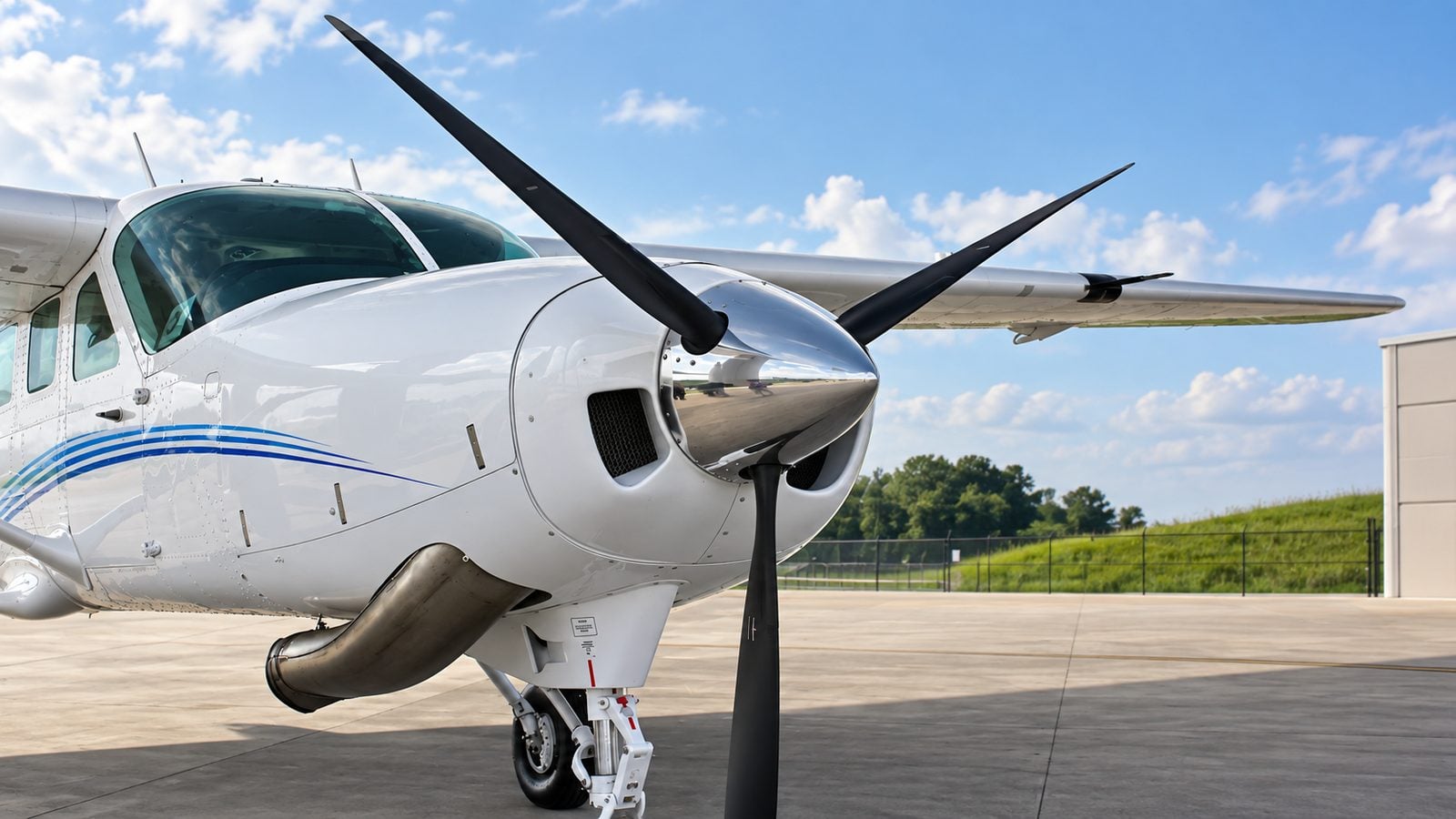
If you've spent any time on a GA ramp, you know this look. Horizontal speed stripes running the length of the fuselage, a white or cream base, and two contrasting accent colors. It's the scheme that defined American general aviation from the 1960s through the 1990s, and it remains one of the most widely used paint styles in the fleet today for good reason.
The classic stripe formula is straightforward: a light base color (almost always white or off-white) with one or two bold accent stripes running horizontally from nose to tail. Factory schemes from Cessna, Piper, Beechcraft, and Mooney leaned heavily on this format, and the result is a look that reads immediately as a well-kept aircraft. The stripes provide visual length and speed, the white base reflects heat, and the contrast reads clearly from a distance. This is also one of the most forgiving schemes when it comes to execution. A competent paint shop can mask and spray a two-tone stripe job efficiently, which keeps labor costs in check. The geometry is simple enough that color matching after a repair is achievable without a full repaint.
Resale is a big part of why owners keep coming back to this style. Buyers are familiar with it, it photographs well, and it doesn't polarize the way a bold custom graphic can. A well-executed stripe scheme on a Cessna, Piper, or Beechcraft looks appropriate. It fits the aircraft's identity, and that matters when your buyer pool includes people who want a capable airplane, not a rolling art project. Simple schemes also age more gracefully. When the paint starts to show its years, a classic stripe looks patina'd rather than outdated. A trendy graphic from 2018 can look exhausted by 2025 in a way that a clean two-tone stripe never does.
The classic stripe formula also has enough room to modernize without abandoning its identity. Common variations include angled swoosh stripes that taper toward the tail, adding a sense of motion. Color blocking at the nose or tail, a contrasting panel that anchors the design, is another popular update. Some owners opt for a single bold stripe instead of two, which reads as cleaner and more contemporary while staying within the same visual language. These variations let you personalize without abandoning the timeless appeal of the format.
Modern Graphic Schemes: Bold, Custom, and Increasingly Popular
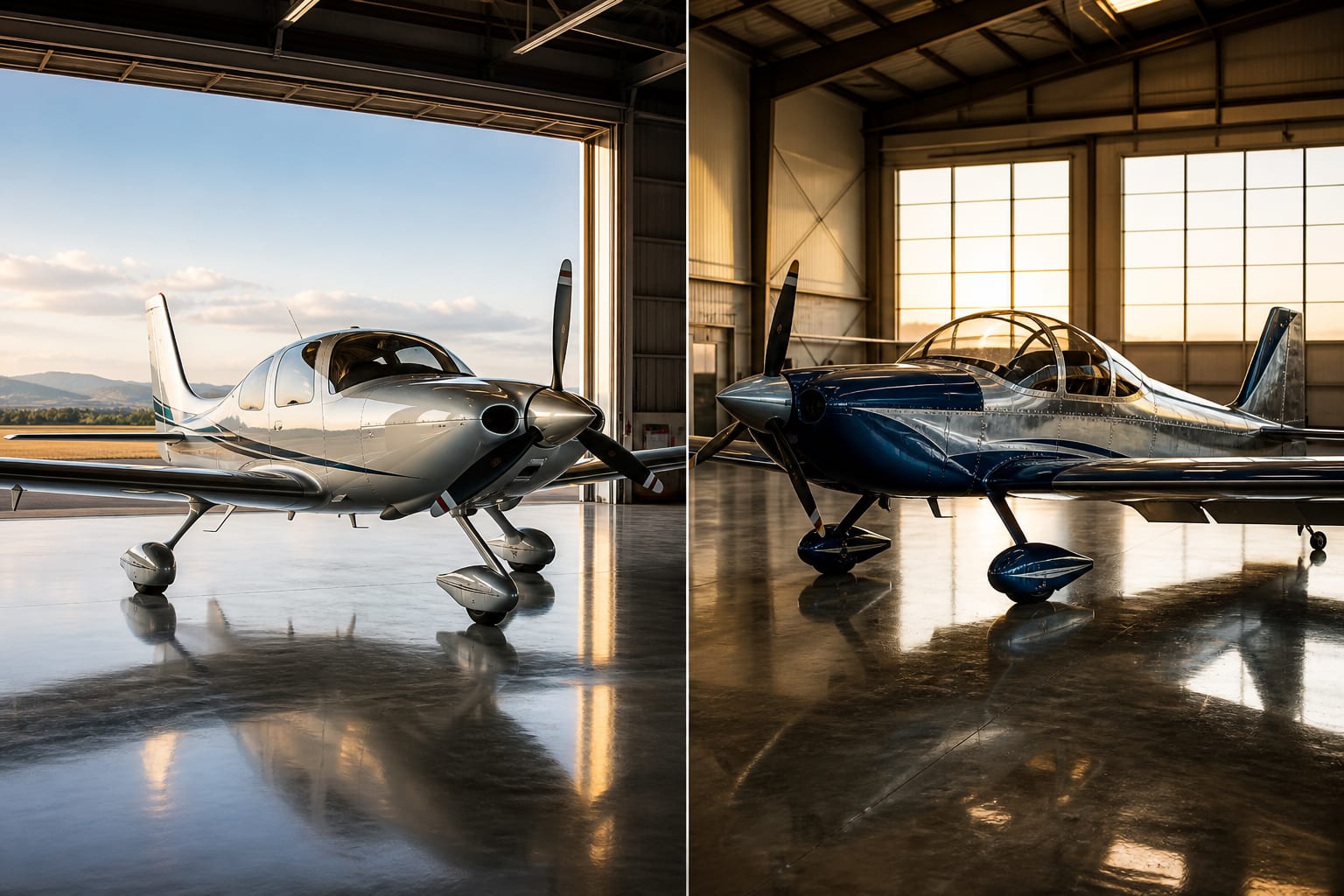
Walk the flight line at AirVenture or Sun 'n Fun and you'll see exactly where GA aircraft paint design is heading. Geometric shapes, gradient fades, wrapped noses, and asymmetrical designs are showing up on everything from Van's RV-7s to certified Cirrus SR22s. The influence of automotive and motorsport paint culture is unmistakable, and owners who want their aircraft to stand out are leaning into it hard.
Modern graphic schemes break from the horizontal stripe formula entirely. Instead of running color from nose to tail in a predictable band, these designs use geometric shapes, abstract forms, and deliberate contrast to create something that reads more like art than aviation livery. The experimental and homebuilt community has been the proving ground for this style, since experimental aircraft owners have maximum creative freedom and often invest significant personal time in the build itself. Increasingly, certified aircraft owners are bringing the same energy to their repaints.
A few specific styles are dominating the current conversation in GA paint design:
- Wrapped-nose designs: A dark or contrasting color wraps around the cowling and fades or transitions back along the fuselage. This gives the aircraft a purposeful, aggressive look from the front and is one of the most popular modern treatments right now.
- Gradient and fade effects: One color transitions smoothly into another along the fuselage length. When executed well, this is stunning. It also requires a highly skilled painter and is one of the hardest schemes to touch up after repairs.
- Asymmetrical designs: Different graphic treatments on each side of the aircraft. This is a show-quality choice that signals serious investment in the design process.
- Matte and gloss combinations: Mixing matte accents with a gloss base (or vice versa) creates textural contrast without adding color complexity. This trend is migrating from automotive culture and is appearing more frequently on high-end experimental builds.
Modern graphic schemes are not the right choice for every owner or every aircraft. The labor hours required for complex geometric masking, gradient work, or asymmetrical designs push costs significantly higher than a comparable stripe job. More critically, these schemes are difficult to repair seamlessly. If you take hangar rash on a panel sitting in the middle of a gradient fade, blending the repair is a genuine challenge, sometimes requiring a partial repaint of a large section to maintain visual continuity.
Before committing to a complex design, request a digital mockup from your paint shop. Ask whether they can render the scheme on your specific airframe before any paint is mixed. This step is not optional for complex graphics. Fuselage curves and panel breaks can distort a design that looked perfect on a flat digital canvas, and discovering that problem after the aircraft is in the booth is an expensive lesson.
Retro and Vintage Schemes, Minimalist Designs, and How to Choose
Not every owner wants to push forward. A significant and growing segment of the GA community is looking backward deliberately, and the results on the ramp are genuinely impressive. Retro and vintage aircraft paint schemes are having a clear moment, driven by nostalgia, type-club culture, and the enduring appeal of classic aircraft aesthetics.
For owners of classic aircraft types, including Piper Cubs, Aeroncas, Stearmans, vintage Bonanzas, and early Cessna 170s and 180s, a period-correct scheme isn't just a style choice. It's a statement of respect for the aircraft's history. There's real pride in the classic aircraft community around getting the details right: the correct colors, the correct pinstriping weight, the correct registration font for the era. Type clubs are often the best starting point for owners researching factory-original specifications. Paint manufacturers including Sherwin-Williams offer specialized aerospace coating systems for general aviation applications, and their color tools can assist in matching historical references [1].
The retro paint world covers several distinct aesthetics worth knowing:
- "Golden Age" schemes: Inspired by 1930s and 1940s aviation, featuring earth tones, chrome or polished metal accents, serif lettering, and a general sense of craftsmanship. These look exceptional on tube-and-fabric aircraft.
- Military-inspired: Olive drab base colors, insignia markings, and invasion stripes. Popular on warbird replicas and experimental builds with a military silhouette.
- Factory-original restoration: Owners research and replicate the exact scheme their specific aircraft wore when it left the factory. This is a serious undertaking and a point of significant pride.
- 1970s "disco era" schemes: Warm earth tones including brown, burnt orange, tan, and gold that were standard fare on factory Cessna, Piper, and Beechcraft aircraft through the mid-1970s. These are cycling back into fashion in a way that feels genuinely fresh rather than dated.
At the opposite end of the complexity spectrum, minimalist aircraft paint schemes are gaining real traction. A single well-chosen color with minimal striping or accent work can command the ramp in a way that a busy graphic scheme sometimes can't. This approach is particularly popular in the experimental community, where owners often have strong design sensibilities and want the aircraft's form to speak for itself. It's also a practical choice for owners who want a consistent, maintainable look over the long term. Touch-ups on a solid color scheme are far more manageable than repairs on a complex graphic.
White remains the most practical base color for heat management, particularly in warmer climates. Darker colors including charcoal, navy, and deep green absorb significantly more solar heat, which can affect cabin temperature on the ground and may affect paint longevity in high-UV environments. This is worth factoring into your color decision if you're based in the Southwest or fly regularly in intense sun. When you remove graphic complexity, finish quality becomes paramount. A minimalist scheme on a mediocre paint job has nowhere to hide. Two-part polyurethane systems are standard for most professional GA paint work and deliver the hardness and gloss retention that minimalist schemes demand. Registration numbers, aircraft names, and any lettering take on outsized visual importance in a minimalist design. Font selection and placement deserve real consideration because they're no longer background elements competing with stripes and graphics.
How to Choose the Right Paint Style for Your GA Aircraft
You've seen the options. Now the question is which direction actually makes sense for your specific aircraft, your budget, and your long-term plans.
Start with your aircraft type and mission. Experimental builders have the broadest creative latitude. Certified aircraft owners should verify any regulatory considerations around markings and registration display before committing to a design. High-visibility colors matter significantly more for aircraft used in training environments or flown in busy airspace. A bold, high-contrast scheme isn't just aesthetically interesting on a flight training aircraft. It's operationally smart. Working aircraft including floatplanes, agricultural aircraft, and survey planes have durability priorities that differ fundamentally from show aircraft.
The single most practical question you can ask before choosing a paint style is whether the scheme can be touched up realistically after a hangar rash repair. If the answer is no, or even "maybe, but it's complicated," weigh that against the visual appeal of the design. Schemes that are difficult to repair tend to look progressively worse over time as spot repairs accumulate and fail to blend. A buyer looking at a five-year-old aircraft with a clean two-tone stripe scheme sees a well-maintained airplane. A buyer looking at a five-year-old aircraft with a partially repaired gradient fade sees a problem.
Work with your paint shop early and often. Bring your ideas, bring reference images, and ask for a digital mockup before you sign off on anything. That's where you'll discover that the swept graphic you loved on a low-wing RV-8 doesn't translate to the fuselage shape of your high-wing Cessna, or that the color you chose reads differently on aluminum than it did on screen. Ask to see examples of similar schemes on similar aircraft. Ask explicitly how design complexity affects the final quote.
| Style Type | Relative Complexity | Touch-Up Ease |
|---|---|---|
| Classic two-tone stripe | Low | High |
| Solid/minimalist | Low-Medium | High |
| Modern graphic/geometric | Medium-High | Medium |
| Gradient/fade | High | Low |
| Full custom/asymmetrical | Very High | Low |
Conclusion: the Right Paint Scheme Fits Your Aircraft and Your Plans
There's no universally correct answer to which GA aircraft paint style is best. Classic two-tone stripes remain the gold standard for resale appeal and long-term practicality. Modern graphic schemes deliver maximum visual impact for owners willing to invest in complexity. Retro and vintage designs reward research and craftsmanship. Minimalist schemes make a quiet statement that ages exceptionally well. The right choice aligns with your aircraft type, your budget, your maintenance reality, and what you actually want to see on the ramp every morning.
Most owners spend too little time in the design phase and too little money in the execution phase. A quality repaint executed by an experienced aircraft paint shop is a long-term investment. Treat the planning process with the same seriousness you'd bring to an avionics upgrade or an engine overhaul, because the consequences of getting it wrong are just as expensive to correct.
Start the conversation with an experienced aircraft paint shop early, bring clear reference images, and don't commit to a design until you've seen a digital mockup on your specific airframe. The time you invest in planning will pay off every time you pull your aircraft out of the hangar.
Sources
Disclaimer: Some articles on this site are created with the assistance of AI technology.