Garmin has built its reputation on pushing the boundaries of what general aviation pilots can expect from a glass cockpit, and the newly announced G2000 PRIME is their most ambitious step yet for high-performance piston aircraft. For owners and operators already flying behind an integrated flight deck, this announcement raises an immediate and practical question: what does PRIME actually mean for how you plan, navigate, and fly? Here is a detailed breakdown of everything confirmed so far, what it means for your cockpit, and what questions you should be asking right now.
Table Of Contents
- What Is the Garmin G2000 PRIME?
- Key Features and Capabilities of the G2000 PRIME Integrated Flight Deck
- Which Aircraft Will Be Compatible With the G2000 PRIME?
- What G2000 PRIME Means for the GA Avionics Market
- G2000 PRIME vs. the Current G2000: What Actually Changes?
- Timeline, Pricing, and How to Stay Informed
- Conclusion
What Is the Garmin G2000 PRIME?
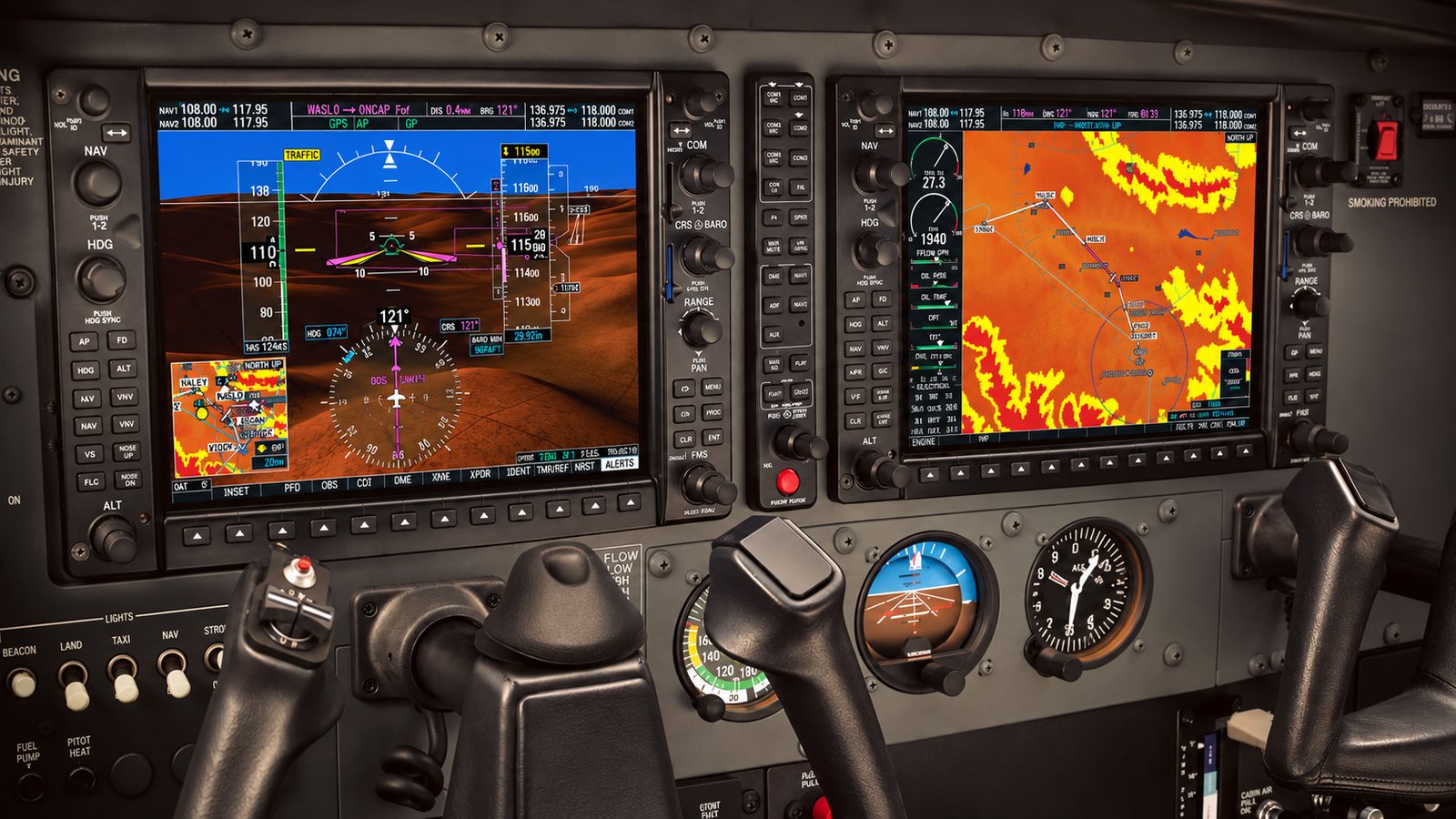
If you have been flying a high-performance piston single or twin over the past decade, there is a solid chance you have spent time behind a G2000. The original G2000 was Garmin's integrated flight deck purpose-built for that segment, sitting squarely between the entry-level G1000 NXi and the more capable G3000 and G5000 platforms found in turboprops, light jets, and larger cabin aircraft. It gave pilots a genuinely capable glass cockpit with integrated autopilot, dual displays, and a touchscreen controller interface (via the GTC 580) that retained physical knobs and buttons alongside the touch input.
The G2000 found a home in aircraft like the Piper M-Series (M350, M500, M600), giving those platforms a level of flight deck sophistication that was previously out of reach for piston aircraft buyers. It was a meaningful step up from a retrofit panel build, offering the kind of deep systems integration that only an OEM installation can deliver.
That baseline matters now because understanding what the G2000 was makes it much easier to appreciate what PRIME changes and how significant those changes actually are.
The PRIME designation is not a minor software update. Garmin introduced G2000 PRIME as a new premium integrated flight deck for high-performance Class I and II piston and electric aircraft [1]. The name carries specific meaning in Garmin's product hierarchy: the company previously launched G3000 PRIME for Part 23 turboprops, and the G2000 PRIME directly inherits technologies developed for that platform [2]. What that means in practice is a genuine architectural step forward, not an incremental refinement. Garmin is cascading next-generation hardware, processing capability, and software features from its higher-tier platforms down into the GA piston segment, which is exactly the kind of strategy that has historically driven the most meaningful avionics improvements for working GA pilots.
At this stage, G2000 PRIME is positioned as an OEM integrated system. Retrofit STC availability has not been officially announced as part of this initial release.
Key Features and Capabilities of the G2000 PRIME Integrated Flight Deck
Display, Interface, and Navigation Upgrades
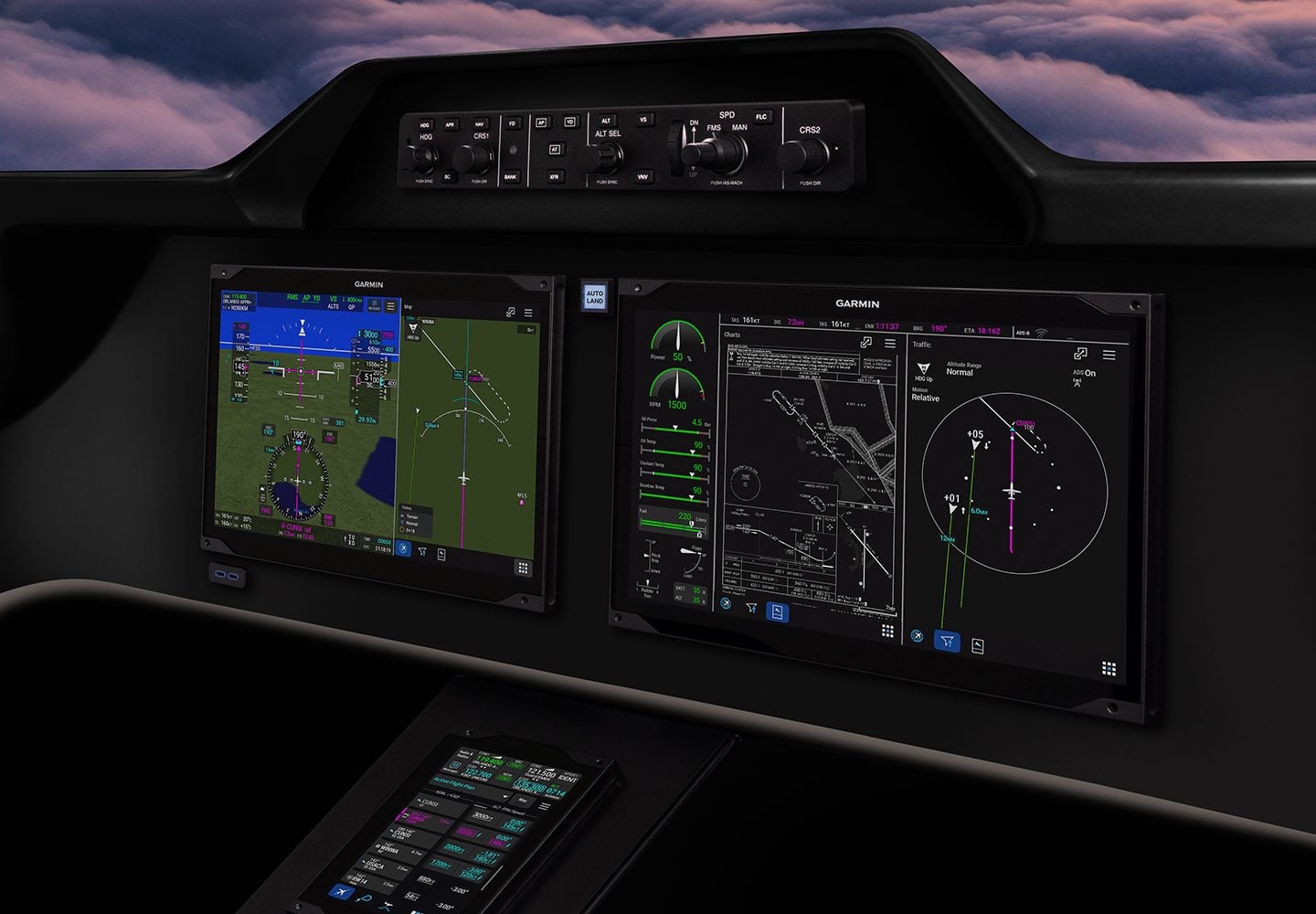
The display upgrade is not subtle. G2000 PRIME features large 14-inch primary flight displays and 7-inch secondary displays across a fully all-touchscreen interface, with multi-touch input and hand-stabilization technology [2]. That is a substantial increase in screen real estate over the legacy G2000's 10.6-inch GDU 1060 displays, and it matters more than the raw numbers suggest. Larger primary displays in high-task phases of flight, particularly during instrument approaches in IMC, complex departure procedures, or high-density airspace transitions, directly reduce the cognitive load of information scanning. You spend less time hunting for data and more time managing the aircraft.
The hand-stabilization capability deserves particular attention. Any pilot who has tried to manage a touchscreen in moderate turbulence will immediately understand why this matters. Garmin's implementation is designed to reduce inadvertent inputs when working the screen with an unsteady hand, a real-world problem that pure touchscreen interfaces have always struggled with in airborne environments. The all-touchscreen architecture also removes the traditional bezel buttons and knob-heavy interface of older integrated avionics. That is a workflow change requiring intentional transition training, but the tradeoff in ergonomics and display clarity is well worth it for pilots willing to invest in learning the new interface properly.
On the navigation side, G2000 PRIME brings enhanced processing power and faster connectivity to the GA piston cockpit. What that translates to practically is more responsive flight planning, smoother database operations, and tighter integration with Garmin's broader ecosystem. The system supports graphical flight planning directly on the moving map, streamlined procedure management, and smart checklists, reflecting the workflow improvements pilots have come to expect from Garmin's higher-tier platforms. For pilots regularly flying instrument procedures into busy terminal areas or mountainous terrain, these are not cosmetic improvements. They directly affect workload at the moments it matters most.
Automation, Safety Systems, and Emergency Features
This is where G2000 PRIME makes its most significant statement. Garmin confirmed that the system supports Autoland, Smart Glide, and Emergency Descent Mode. Autoland, a capability until recently reserved for Garmin's turboprop and light jet platforms, is now part of the G2000 PRIME feature set for high-performance piston aircraft. In a single-pilot piston aircraft where incapacitation risk is a genuine operational consideration, having that capability integrated at the factory level is a meaningful safety advancement.
Smart Glide provides intelligent engine-out glide management, automatically identifying suitable airports and optimizing the aircraft's glide to the best available option. Emergency Descent Mode handles automatic pressurization emergency response for high-altitude operations, though it is worth noting that this feature applies specifically to pressurized variants within the Class I and II piston category. Not every G2000 PRIME-equipped aircraft will be pressurized, so EDM relevance depends on the specific airframe.
The broader safety picture here is worth stepping back to appreciate. The inclusion of Autoland, Smart Glide, and Emergency Descent Mode in a piston-class integrated flight deck represents Garmin's clearest signal yet that the gap between GA safety capability and the business aviation tier is narrowing. Smart Glide alone changes the calculus of single-engine operations over inhospitable terrain. Autoland changes the risk profile of single-pilot IFR operations in a way that no amount of additional training or equipment previously could.
That said, experienced pilots transitioning to G2000 PRIME should invest in genuine proficiency with these systems, understanding both how to use them and how to maintain manual flying skills alongside them. Automation is a tool, not a replacement for aeronautical decision-making.
Which Aircraft Will Be Compatible With the G2000 PRIME?
This is the most pressing question for current aircraft owners, and the honest answer right now is that specific OEM partnership announcements and certification timelines are still emerging. What Garmin has confirmed is that G2000 PRIME is designed for high-performance Class I and II piston and electric aircraft. That scope covers the segment where the original G2000 made its home, high-performance singles and light twins in that same performance envelope.
The distinction between OEM factory installations and aftermarket STC retrofits matters here. An OEM installation is integrated and certified as part of the aircraft's type certificate, shipping from the factory installed and approved. An STC retrofit requires an independent FAA certification process for an existing airframe, which adds time and cost. Most major Garmin platform launches follow a consistent pattern: OEM certification comes first, and STC retrofit approvals for existing airframes follow later, sometimes months, sometimes years.
If you are flying a current-generation G2000-equipped aircraft today, the realistic near-term path is to watch for STC announcements from Garmin and authorized dealers. Do not assume that airframe compatibility with a similar feature set means an STC will be available quickly. Contact your Garmin dealer directly, register your interest, and get on the notification list for STC development news specific to your aircraft model.
The electric aircraft inclusion in the G2000 PRIME specification is worth noting separately. Garmin is clearly positioning this platform not just for the existing GA fleet but for the emerging class of electric and hybrid-electric aircraft entering certification, which speaks to the forward-looking design intent of the system.
What G2000 PRIME Means for the GA Avionics Market
Garmin's Cascade Strategy and What It Signals
Garmin's approach to avionics innovation follows a consistent and deliberate pattern: develop next-generation technology at the top of the product line, prove it in demanding certification environments, then cascade it down to GA-accessible platforms. The G3000 PRIME for Part 23 turboprops came first, and G2000 PRIME is explicitly built on that foundation. Phil Straub, Garmin's executive vice president and managing director of aviation, described the response to PRIME flight decks as "incredibly enthusiastic" and confirmed the company's intent to bring that next-generation technology to high-performance light GA aircraft.
That strategy tells you something important about where integrated avionics are headed over the next decade. Features that pilots flying King Airs and light jets have taken for granted are moving into the piston segment on a compressed timeline. If you are making a new aircraft purchase decision in the next few years, the avionics generation of the aircraft you are buying deserves serious weight in that analysis.
What Experienced Pilots Should Be Asking Right Now
Training is the first question any experienced pilot should raise when evaluating a new integrated flight deck. Transitioning to an all-touchscreen, PRIME-architecture system from an older G2000 or G1000-era panel is not just a matter of learning button locations. The workflow philosophy is different, the automation suite is deeper, and the safety systems require genuine proficiency to use effectively. Invest meaningful time in ground training, simulator sessions where available, and dual instruction before flying the system in IMC or high-workload environments.
For IFR pilots, currency and proficiency on a new platform are separate concerns. You may be legally current on instruments, but proficiency on a new avionics suite, particularly one with Autoland and expanded automation, requires deliberate practice. Build that proficiency before you need it.
On the resale and insurance side, aircraft receiving major avionics upgrades of this caliber generally see positive valuation impact, though the specific effect depends on the aircraft model, market conditions, and how cleanly the installation is documented. Talk to your aviation insurance broker before any major avionics commitment. Some underwriters have specific requirements or may adjust premiums based on system capability and pilot training completion.
G2000 PRIME vs. the Current G2000: What Actually Changes?
Here is a direct comparison of confirmed specifications versus the legacy platform:
| Feature Area | Current G2000 | G2000 PRIME |
|---|---|---|
| Primary Display Size | Dual 10.6-inch displays | Dual 14-inch displays |
| Interface | Touchscreen controllers with physical knobs | All-touchscreen, multi-touch |
| Hand Stabilization | Not available | Confirmed |
| Processing Power | Standard | Enhanced |
| Autoland | Not available | Confirmed |
| Smart Glide | Not available | Confirmed |
| Emergency Descent Mode | Not available | Confirmed (pressurized variants) |
| Electric Aircraft Support | Not applicable | Confirmed |
| Retrofit STC | Existing (legacy platform) | Not yet announced |
The summary is straightforward: G2000 PRIME is not an evolutionary update. The display technology, processing architecture, safety feature set, and interface philosophy represent a genuine generational step. The honest question for pilots evaluating an upgrade is not whether PRIME is better, it clearly is, but whether the specific improvements align with how you actually fly. If your operations are day-VFR and benign, the Autoland and emergency automation features will not factor into your daily experience. If you fly single-pilot IFR regularly, particularly over terrain or at night, the safety stack in PRIME changes the risk calculus in a meaningful way.
Timeline, Pricing, and How to Stay Informed
Specific pricing and certification timelines have not been detailed in the initial announcement materials. Garmin's official press release at garmin.com is your most reliable starting point for current information as certification progresses. Authorized Garmin dealers are the right point of contact for aircraft-specific compatibility questions and to register interest in retrofit STC availability.
For certification tracking, the FAA STC database is the authoritative source for approval milestones. Do not rely solely on third-party coverage for fast-moving certification news. Sign up directly for Garmin's aviation newsletter and follow your authorized dealer for the most current updates.
If you are in active aircraft acquisition discussions and the presence of a PRIME-generation flight deck is a factor in your decision, that conversation belongs in your next meeting with your aircraft broker or dealer. Make sure any new aircraft you are evaluating has a clear avionics upgrade path documented as part of the deal.
Conclusion
The G2000 PRIME announcement gives GA pilots a genuine reason to pay attention, whether you are planning a new aircraft purchase, evaluating an upgrade, or simply tracking where the industry is headed. Autoland, Smart Glide, 14-inch primary displays, and a fully integrated all-touchscreen architecture in a piston-class flight deck is not incremental progress. It is a meaningful redefinition of what a GA cockpit can be. As certification progresses and early OEM installations accumulate flight hours, the real-world performance picture will sharpen considerably.
For now, gather the confirmed facts, connect with an authorized Garmin dealer to understand your specific aircraft's compatibility and upgrade path, and make sure any avionics decision aligns with how you actually fly and what your operations genuinely demand. The technology is impressive. Make sure your decision to pursue it is equally well-informed.
Have questions about the G2000 PRIME or evaluating an avionics upgrade for your aircraft? Drop them in the comments. We will update this article as Garmin releases additional certification and pricing details.
Sources
Disclaimer: Some articles on this site are created with the assistance of AI technology.