As an Amazon Associate I earn from qualifying purchases.
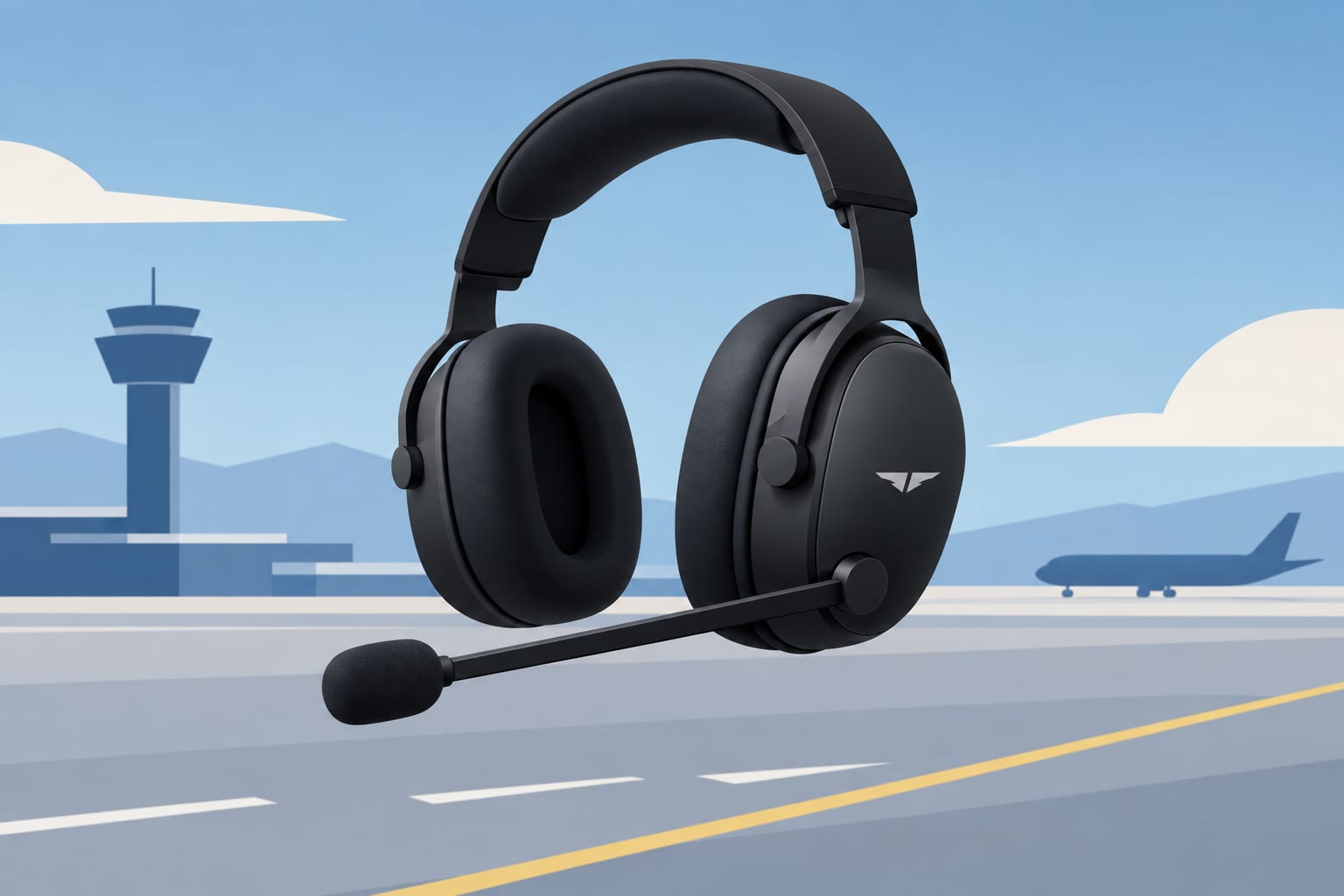
If you're choosing between today's two flagship active noise-reducing (ANR) headsets, you're deciding between Bose's refined comfort engineering and Lightspeed's pilot-safety innovation. For most pilots, especially those flying piston singles or twins, the Lightspeed Delta Zulu edges ahead thanks to its built-in carbon-monoxide detection and personalized HearingEQ, features that directly address cockpit safety and long-term hearing health.
Table Of Contents
- At a Glance
- Active Noise Reduction
- Comfort and Clamping Force
- Bluetooth and Controls
- Standout Features
- Who Should Buy Which
- Bottom Line
At a Glance


| Dimension | Bose A30 | Lightspeed Delta Zulu |
|---|---|---|
| Active Noise Reduction | Three selectable ANR modes | Active noise cancellation |
| Comfort & Clamping | ~20% lower clamping force than A20 | Over-ear design, Kevlar-core cable |
| Weight | Not specified | Not specified |
| Bluetooth & Controls | Bluetooth + aux input; Tap Control for talk-through | Bluetooth + aux input |
| Standout Features | Three noise modes; tap-to-hear-through; FAA TSO-C139a certified | Built-in CO detection with alerts; HearingEQ personalized profile; adjustable EQ |
| Power | Battery (type not specified) | Rechargeable battery or AA |
| Value Tier | Premium flagship | Premium flagship |
Active Noise Reduction
The Bose A30 offers three selectable ANR modes, letting you dial noise cancellation to your mission, full ANR for IFR single-pilot operations, a medium setting for shared cockpits, or a lighter mode when you want more ambient awareness during pattern work. This granular control is Bose's answer to pilots who've asked for situational flexibility beyond simple on/off.
The Lightspeed Delta Zulu provides active noise cancellation without explicitly stating multiple modes, but Lightspeed's flagship ANR has always been competitive with Bose in real-world cockpit testing. The practical difference: the A30 gives you a dial to tune; the Delta Zulu prioritizes set-it-and-forget-it effectiveness paired with features that matter beyond the noise floor.
Edge: Bose A30 for pilots who want selectable ANR intensity; Lightspeed Delta Zulu for those who prefer Lightspeed's proven ANR philosophy and care more about the CO detection that comes with it.
Comfort and Clamping Force
The Bose A30 delivers roughly 20 percent lower clamping force than the previous-generation A20, a meaningful improvement for pilots flying multi-hour cross-countries or all-day instruction. Lower clamping pressure reduces headband fatigue and makes the headset more tolerable for pilots who wear glasses or prefer a looser fit.
The Lightspeed Delta Zulu uses an over-ear design and a Kevlar-reinforced cable, but Lightspeed has not published clamping-force data. Anecdotally, Lightspeed headsets have long been favored by pilots seeking plush ear seals and a softer grip, but without the specific 20-percent claim, the A30's documented reduction gives it a measurable advantage in this category.
Edge: Bose A30 for quantified, lower clamping force and extended-wear comfort.
Bluetooth and Controls
Both headsets offer Bluetooth audio and auxiliary input, so you can stream music, take phone calls, or connect a secondary audio source without a tangle of adapters.
The Bose A30 adds Tap Control, a capacitive touch interface on the ear cup that lets you instantly enable talk-through mode for quick conversation with a lineman or passenger without removing the headset. This is faster and more intuitive than toggling a physical switch.
The Lightspeed Delta Zulu does not list a similar tap-to-hear feature, relying instead on conventional controls. Where it does differentiate is power flexibility: the Delta Zulu accepts either a rechargeable battery or standard AA cells, so you're never grounded by a dead proprietary pack.
Edge: Bose A30 for the tap-control convenience; Lightspeed Delta Zulu for power-source redundancy.
Standout Features
Lightspeed Delta Zulu: Built-In Carbon-Monoxide Detection and HearingEQ
The Lightspeed Delta Zulu Delta Zulu's most significant feature is integrated carbon-monoxide detection with both audible and visual alerts. CO poisoning is a documented, underreported hazard in piston-aircraft cabins, and having a detector built into your headset means one less piece of gear to mount, battery-check, and panel-certify. This is a genuine safety differentiator, no other flagship headset integrates CO monitoring.
The Delta Zulu also includes HearingEQ, a personalized hearing profile that compensates for your individual hearing curve, plus adjustable EQ for tailoring audio to your preference. For aging pilots or those with noise-induced hearing loss, HearingEQ can make radio calls clearer and reduce listening fatigue.
Bose A30: Three Noise Modes, Tap Control, and TSO Certification
The Bose A30 counters with its three selectable ANR modes and Tap Control for instant situational awareness, features that give you more real-time control over your acoustic environment. The A30 is also FAA TSO-C139a certified, a formal stamp of approval that some operators and flight departments require.
Edge: Lightspeed Delta Zulu for built-in CO detection and personalized hearing compensation, features that address safety and health, not just comfort. Bose A30 for TSO certification and refined user-interface touches.
Who Should Buy Which
Choose the Lightspeed Delta Zulu if you:
- Fly piston singles or twins where carbon-monoxide risk is real
- Want a headset that doubles as a certified CO detector, eliminating redundant gear
- Have hearing loss or want personalized EQ to improve radio clarity
- Prefer the flexibility of AA battery backup in remote or backcountry strips
Choose the Bose A30 if you:
- Need FAA TSO-C139a certification for commercial operations or flight-school use
- Fly in environments where selectable ANR modes improve situational awareness (busy pattern work, shared cockpits)
- Value lower clamping force for all-day instruction or long cross-countries
- Want the fastest path to talk-through mode via capacitive tap control
Bottom Line
Both headsets represent the pinnacle of ANR engineering in 2026, and either will serve you well. The Lightspeed Delta Zulu earns the edge for most pilots because its built-in carbon-monoxide detection and HearingEQ address safety and long-term hearing health, mission-critical factors that go beyond noise cancellation alone. If you fly piston aircraft or log high hours, the Delta Zulu's integrated CO monitoring is a feature you'll appreciate every flight. The Bose A30 remains the choice for operators who require TSO certification or who prioritize Bose's industry-leading comfort engineering and tap-to-hear convenience, but for the broadest cross-section of owner-pilots, the Delta Zulu's safety-first feature set makes it the more compelling flagship.
Disclaimer: Some articles on this site are created with the assistance of AI technology.