As an Amazon Associate I earn from qualifying purchases.
Water and sediment contamination in aviation fuel poses one of the most preventable threats to flight safety. Every responsible pilot knows that proper fuel sampling during preflight inspection isn't optional, it's a critical step that can reveal contamination before it reaches your engine. The fuel tester you choose becomes an extension of your safety checklist, and selecting the right one matters more than many pilots initially realize.
Table Of Contents
- What To Look For In A Fuel Tester
- Top Recommendation: GATS Jar Fuel Tester
- Using Your Fuel Tester Effectively
- Before You Fly: Making Fuel Testing Part Of Your Routine
- Why Proper Fuel Testing Equipment Matters
What To Look For In A Fuel Tester
Before diving into specific products, understand the key features that separate adequate fuel testers from truly useful ones:
Capacity matters for efficiency. Standard fuel testers hold 3-4 ounces, requiring multiple trips to drain sumps completely on aircraft with larger fuel systems. A 12-ounce capacity lets you sample multiple sumps without constantly walking back to dispose of fuel, streamlining your preflight routine.
Material construction affects longevity. Clear materials let you inspect fuel samples visually, while chemical-resistant plastics ensure your tester won't degrade from repeated exposure to 100LL or Jet-A.
Drain valve compatibility is essential. Your tester must fit the quick-drain valves on your specific aircraft. Most general aviation aircraft use standard fittings, but verify compatibility with your make and model.
Reusability versus disposal. While disposable cup-style testers exist, reusable models reduce waste and prove more economical over time.
Top Recommendation: GATS Jar Fuel Tester
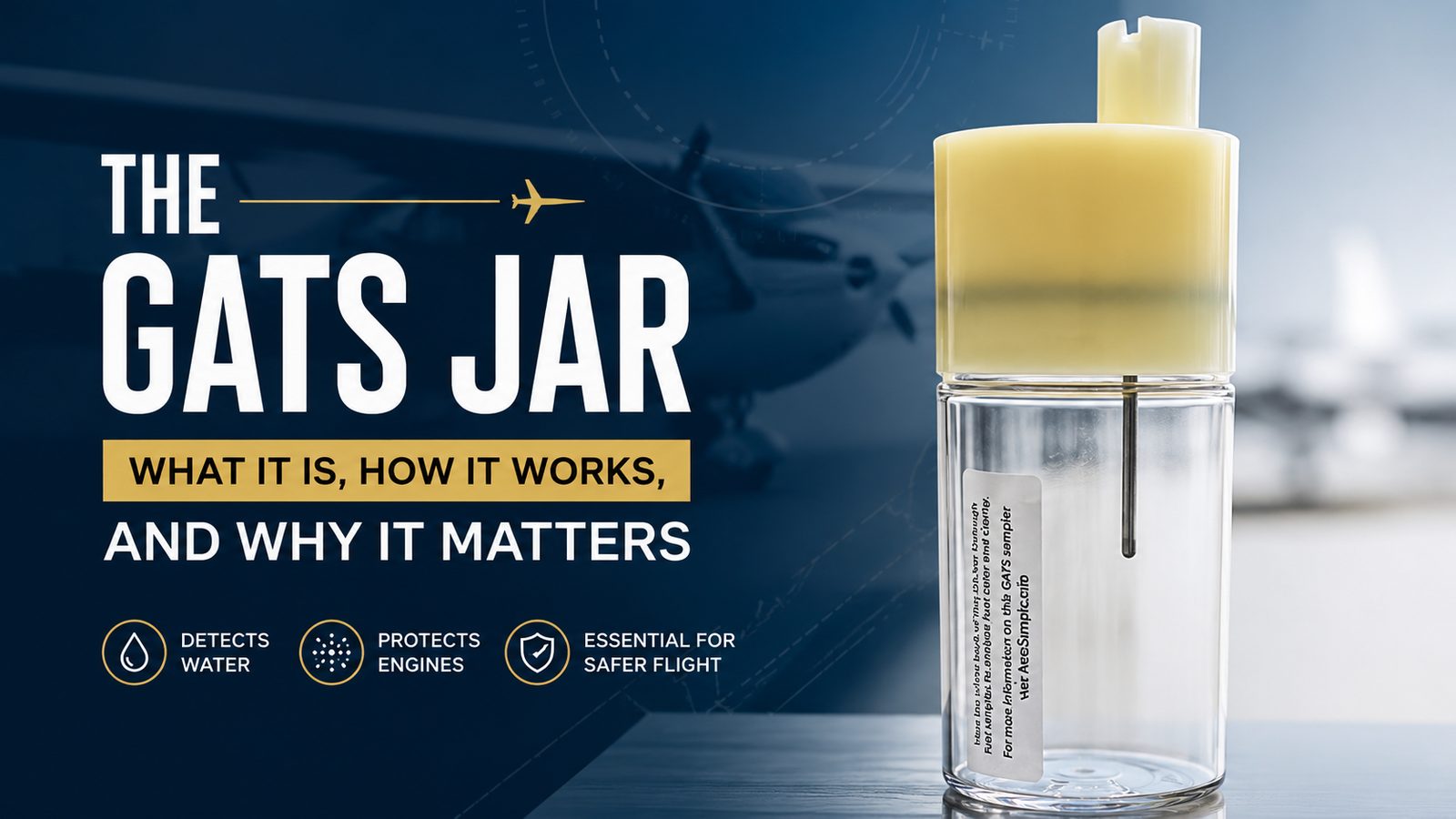
For most pilots flying single-engine and light twin aircraft, the GATS Jar Fuel Tester (12oz) represents the most practical choice for everyday preflight inspections. This fuel tester addresses the two most common frustrations pilots face: inadequate capacity and the hassle of fuel disposal.
Why the 12-ounce capacity changes your preflight routine: If you've used standard 3-4 ounce testers, you know the drill, sample a sump, walk to dispose of clean fuel, return to the aircraft, repeat. With a 12-ounce jar, you can sample three to four sumps consecutively before needing to dispose of fuel. On a Cessna 172 with thirteen sump drains, this capacity difference saves several minutes and reduces the physical back-and-forth that makes thorough fuel checks tedious.
The integrated screen system: The GATS Jar includes a filtering screen that separates water from fuel. After collecting samples, you can pour the fuel back into your tank through the screen, which captures water and sediment while allowing clean fuel to return to your aircraft. This feature addresses both environmental concerns and the practical reality that disposal options aren't always convenient on the ramp.
Material and construction: The clear, fuel-resistant plastic body lets you inspect samples under natural light, making it easier to spot the telltale shimmer of water droplets or the discoloration that indicates contamination. The screw-on cap creates a secure seal for transport or temporary storage of contaminated samples you want to show a mechanic.
Fitting compatibility: The GATS Jar comes with a universal quick-drain adapter that fits most Cessna, Piper, Beechcraft, and Cirrus aircraft. The molded plastic probe is firm enough to depress spring-loaded valves but flexible enough to create a good seal, minimizing spills during sampling.
Best for: Single-engine and light twin pilots who want to streamline preflight inspections while maintaining the option to recycle clean fuel. Particularly valuable for pilots based at airports where fuel disposal isn't immediately accessible from the tie-down area, or for those who want to minimize fuel waste during training flights when you're sampling multiple times per day.
Using Your Fuel Tester Effectively
Regardless of which fuel tester you choose, proper technique ensures you're actually catching contamination:
Sample from every sump drain. Your POH specifies drain locations, typically at the lowest point of each tank and at the fuel strainer/gascolator. Water is heavier than fuel and settles at low points.
Take adequate samples. Draw at least four ounces from each sump to ensure you're pulling from below any water layer. A quick half-ounce squirt won't reveal contamination that's settled at the bottom of the sump.
Look for the interface. Water appears as distinct globules or a separate layer beneath the fuel. In the tester, water settles to the bottom within seconds. Learn what clean fuel looks like in your tester so you can spot abnormalities.
Check after weather events. Rain can introduce water through faulty fuel cap seals. Cold overnight temperatures followed by warm days can cause condensation in partially-filled tanks. Be especially vigilant after these conditions.
Don't rush. The five minutes spent on thorough fuel sampling is time well invested. Contamination is easier to catch on the ground than to deal with at 500 feet AGL.
Before You Fly: Making Fuel Testing Part Of Your Routine
Fuel contamination checks belong in that crucial "before you fly" window where you're methodically working through your preflight inspection. Unlike cockpit flows or startup procedures, fuel testing can't be rushed or abbreviated. Building an efficient system matters:
Position your fuel tester where it's consistently accessible, many pilots keep it in the same pocket of their flight bag or clipped to their preflight checklist. If you fly multiple aircraft, verify that your tester fits the drain valves on each type before you're standing on the ramp wondering why the adapter won't seat properly.
In cold weather, be aware that water in fuel may not settle as quickly. Give samples a few extra seconds in the tester to fully separate. In hot weather, be mindful that fuel evaporates quickly from an open tester, don't leave samples sitting while you walk around the aircraft.
Why Proper Fuel Testing Equipment Matters
The consequences of inadequate fuel sampling extend beyond the inconvenience of a precautionary landing. Water in fuel systems can cause:
- Engine roughness or failure when water reaches the carburetor or fuel injection system
- Ice formation in fuel lines and filters when ambient temperatures are at or below freezing
- Corrosion in fuel system components over time
A reliable fuel tester is inexpensive insurance against these risks. Unlike many aviation purchases where you're balancing performance against cost, fuel testers are uniformly affordable, your decision is really about which features make your preflight inspection more thorough and efficient.
The GATS Jar's combination of capacity and fuel-recycling capability makes it the practical choice for most pilots, but the fundamental requirement remains the same: use a fuel tester that encourages you to sample thoroughly every time you fly. A tool that's awkward or inconvenient becomes a tool you'll be tempted to use hastily.
Your preflight inspection protects every flight. The right fuel tester ensures that protection includes one of the most critical safety checks you'll perform.
Disclaimer: Some articles on this site are created with the assistance of AI technology.