You've mastered your Cirrus, you're flying regularly, and the pull toward more speed, more range, and more capability has become hard to ignore. The single-engine turboprop world offers two compelling paths forward: the refined, high-performance TBM family and the approachable, cost-conscious Piper PA-46 turboprop lineup, which includes the Meridian, M500, and the more capable M600. Before you sign anything, here's what every Cirrus pilot should understand about how these aircraft actually compare and which one fits the way you fly.
Table Of Contents
- Why Cirrus Owners Are a Natural Fit for the Turboprop Step-Up
- Meet the Contenders: TBM and Piper PA-46 Turboprops at a Glance
- Performance Comparison: Speed, Range, and Altitude Capability
- Ownership Costs: Acquisition, Operating, and Maintenance
- Cockpit, Avionics, and the Pilot Experience
- Which Aircraft Is Right for You?
- Making the Right Move
Why Cirrus Owners Are a Natural Fit for the Turboprop Step-Up
There's a reason the SR22 and SR22T have become the de facto feeder aircraft for the single-engine turboprop market. The SR22 platform puts owner-pilots into a genuinely sophisticated, glass-panel, high-performance aircraft without requiring a type rating. By the time most Cirrus owners are ready to move on, they've accumulated hundreds of hours in Garmin Perspective or Perspective+ cockpits, they're comfortable with single-engine IFR operations, and they've developed a serious owner-flown mindset. That background translates directly into the turboprop world.
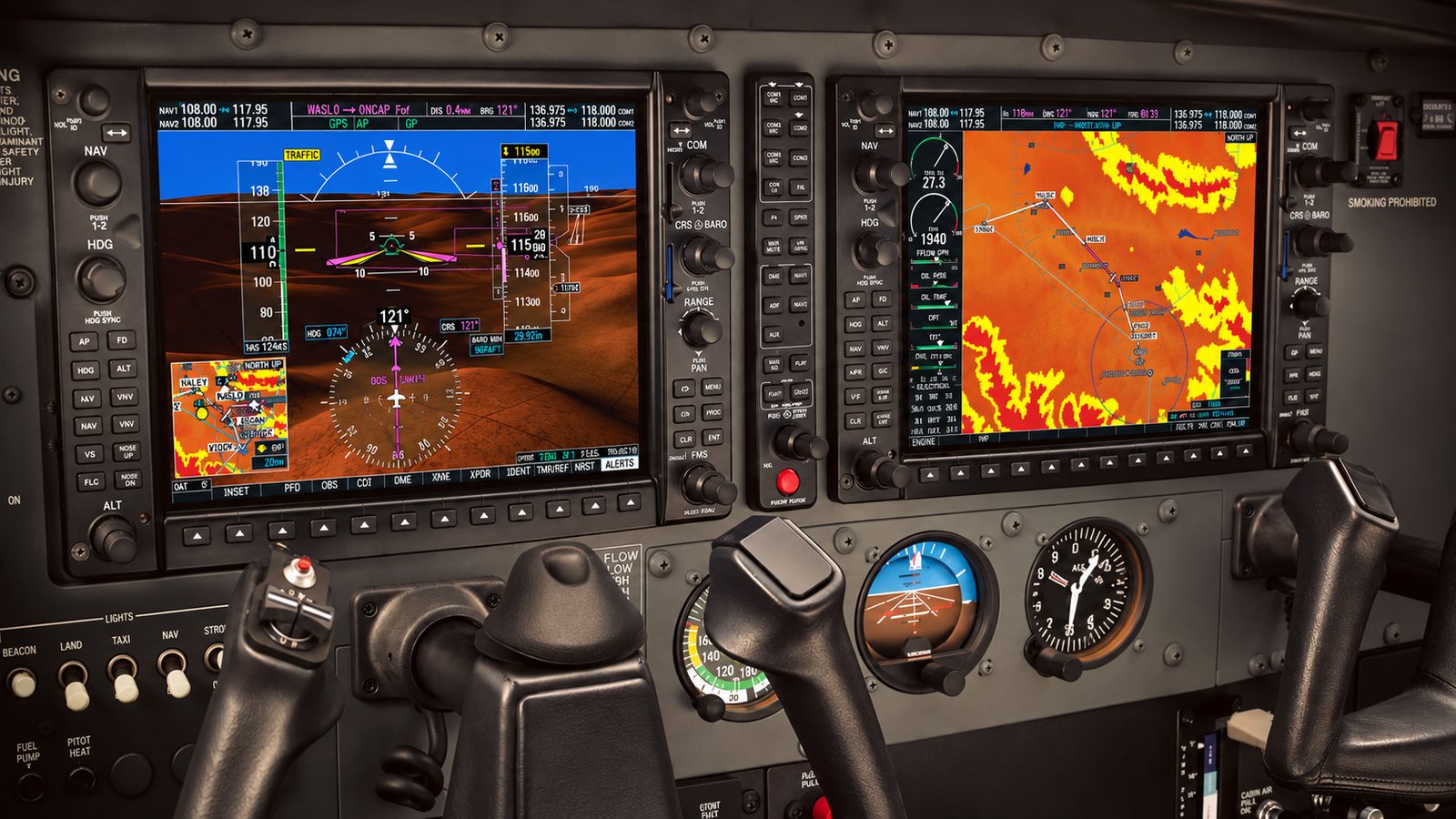
The shared DNA is real. Garmin avionics proficiency carries over immediately. The G1000 NXi found in the Piper M500 and the TBM 900-series will feel familiar the first time you sit in the left seat. (Earlier TBM variants, including the 700 and 850, used earlier Garmin suites rather than the NXi designation, so factor that in when evaluating older used examples.) The single-engine comfort you've built in the Cirrus is also an asset, though the turboprop environment demands a recalibration of what "single-engine" means when you're at FL250 with passengers aboard.
What I consistently see in this transition is that Cirrus pilots arrive with strong avionics proficiency but limited turbine time [1]. That gap matters. It affects training requirements, insurance underwriting, and how aggressively you can negotiate your initial policy. Plan for it rather than be surprised by it.
The most significant operational shift isn't the engine itself; it's the altitude. A pressurized turboprop puts you in the flight levels, where you're above most convective weather, riding smoother air, and operating with a meaningfully different set of tools than you had dodging buildups at 17,500 feet. Turbine engine management is a different discipline as well. You're now thinking in terms of ITT (inter-turbine temperature), torque, and prop RPM rather than manifold pressure and mixture. The PT6 engine family that powers both the PA-46 turboprops and the TBM line is extraordinarily reliable, but it rewards pilots who understand its operating envelope and respect its limits.
The financial reality shifts sharply too. Fuel burn, maintenance reserves, and engine overhaul costs are all materially higher than what you're managing on an SR22T. Insurance underwriters will likely require a structured mentor pilot program before they'll offer reasonable rates. Attempting to navigate this purchase market without expert guidance is, as one firm that works this pipeline regularly puts it, "the fastest way to acquire a money pit" [1]. None of that should discourage you. It should prepare you.
Meet the Contenders: TBM and Piper PA-46 Turboprops at a Glance
The Piper PA-46 Turboprop Family
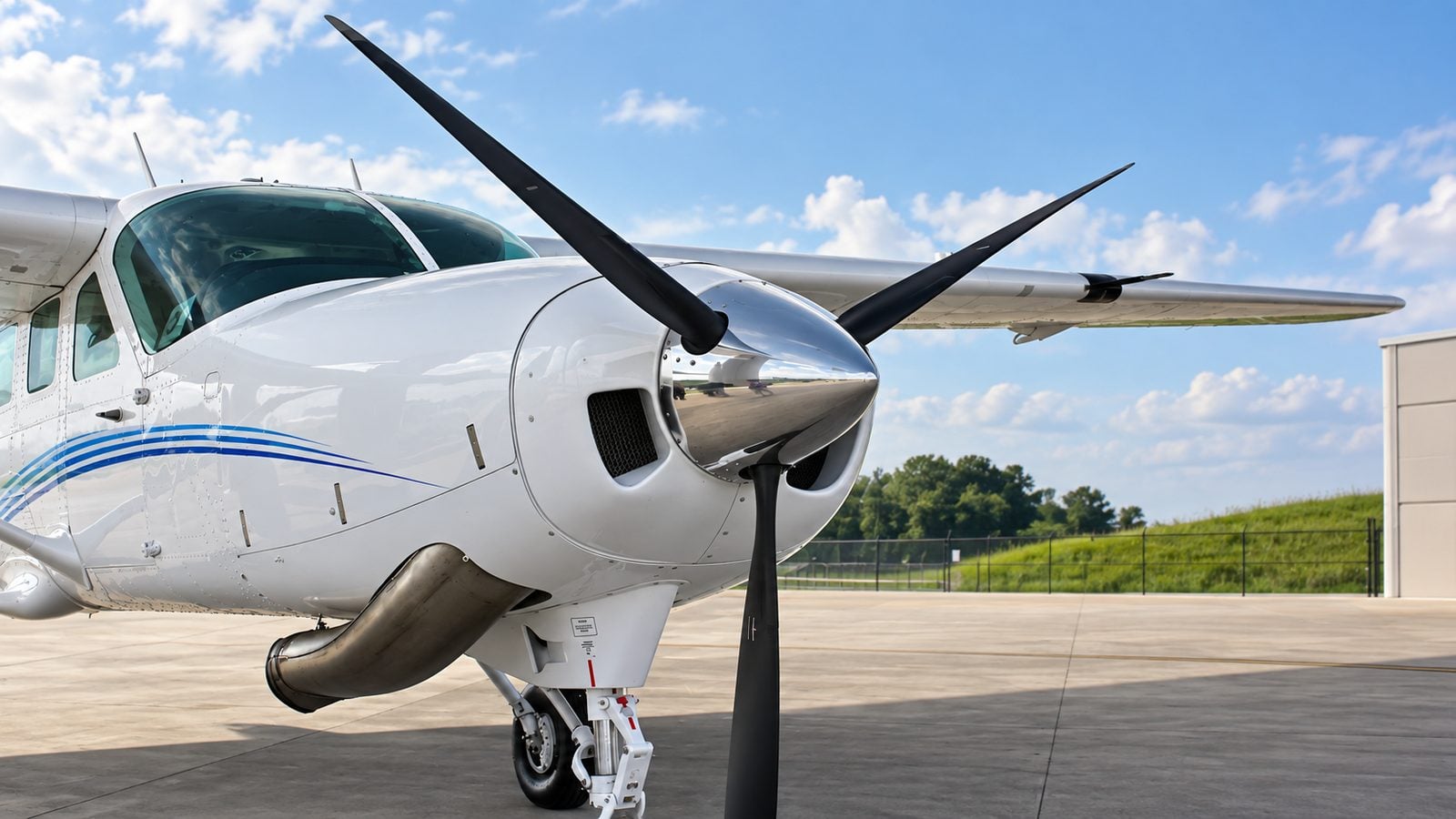
The PA-46 turboprop line evolved from the piston Malibu and Mirage airframe, a pressurized, owner-flown platform that Piper had been refining since the mid-1980s. That heritage is both a strength and a context-setter: the PA-46 turboprops carry forward a well-understood, well-supported structure with a large installed fleet and a robust maintenance network.
The PA-46-500TP Meridian, produced from 2000 through approximately 2015, was the original PA-46 turboprop. Powered by the Pratt & Whitney Canada PT6A-42A, it brought pressurized turbine performance to the owner-flown market at a price point that made turboprop ownership accessible to a broad segment of serious GA pilots. For a Cirrus owner, the Meridian represents a natural transition: pressurized cabin, straightforward systems, and no overwhelming learning curve [1]. Used Meridians now represent some of the most affordable turboprop entry points in the market.
The Piper M500 (2015 to present) is the direct evolution of the Meridian, featuring updated Garmin G1000 NXi avionics, a revised interior, and minor performance refinements. For practical purposes, it is the modern continuation of the Meridian line. If you're comparing a late-model used Meridian to a used M500, the avionics upgrade is the most meaningful differentiator.
The Piper M600 (2017 to present) is a different conversation entirely. Powered by the Pratt & Whitney Canada PT6A-52, the M600 offers meaningfully more power, speed, range, and useful load than the M500. It uses the Garmin G3000 avionics suite and, in its M600/SLS variant, includes the Garmin Autoland (HALO) emergency autoland system, the first FAA-certified emergency autoland system on a production aircraft. That safety differentiator is significant for single-pilot IFR operations. The M600 competes more directly with mid-range TBM variants than with the M500, and that changes the competitive framing of this comparison considerably.
All three PA-46 turboprop models share airframe heritage, which means parts commonality, a familiar handling profile across the family, and a well-established service network.
The TBM Family
The TBM line originated as a French-American collaboration between SOCATA (now Daher) and Piper Aircraft in the late 1980s, with Piper contributing a fuselage cross-section that bears a clear resemblance to the PA-46. The TBM 700 entered service in 1990, and the line has evolved continuously through the 850, 900, 930, 940, and current 960.
The TBM has built its reputation on one primary claim: it is the fastest single-engine turboprop in production. The TBM 960 cruises at approximately 330 knots true airspeed at altitude. Earlier variants like the TBM 700 and 850 cruise in the 280 to 300 knot range, with the 900-series stepping up meaningfully from there.
Avionics vary significantly across the TBM fleet. The 700 series used a variety of avionics that varied by production year and configuration rather than a unified Garmin suite; the 850 used earlier Garmin suites; the 900-series introduced the G1000 NXi; the 940 and 960 feature the Garmin G3000 along with autothrottle capability and Garmin's Electronic Stability and Protection (ESP) system. These are meaningful differences when you're evaluating a used TBM against a new or recent M600. The used TBM market spans an enormous price range, and understanding where you're buying within that spectrum is critical.
Performance Comparison: Speed, Range, and Altitude Capability
Speed is where the TBM has historically dominated this comparison, and it's worth being precise about what that means in practice. The TBM 960 cruises at approximately 330 knots; the M500 cruises at approximately 260 knots; the M600 steps up to approximately 274 knots. That gap between the M500 and the TBM 960 is roughly 70 knots, which is meaningful on any leg over 400 nm.
On a 600 nm leg, the M500 at 260 knots takes roughly 2 hours and 19 minutes. The TBM 960 at 330 knots covers the same distance in about 1 hour and 49 minutes. That's 30 minutes per leg. For a pilot flying 50 hours a year on medium-length trips, the time savings are real but not transformative. For a pilot flying 150 to 200 hours a year on longer missions, they compound into something significant.
The M600 narrows that gap to roughly 56 knots versus the TBM 960. It's not a tie, but it's no longer a rout, and when you factor in the M600's other advantages (Autoland, G3000, PT6A-52 power), the performance trade-off becomes a more balanced decision.
Coming from an SR22T, you're used to cruising around 185 to 195 knots TAS at altitude. Every aircraft in this comparison represents a substantial upgrade. The question isn't whether the upgrade is worth it on speed alone, but which speed tier matches your actual mission.
Range and fuel burn tell an equally important story. The Meridian and M500 carry approximately 170 gallons of usable fuel, while the TBM carries approximately 280 gallons [2]. The M500 delivers approximately 1,000 nm range with IFR reserves; the M600 extends that meaningfully further; the TBM 960 offers approximately 1,730 nm range. On practical terms, the M500 requires a fuel stop on missions the M600 and TBM complete nonstop, and that fuel stop has real cost and time implications.
The M500 burns approximately 40 to 42 gallons per hour at cruise; TBM variants burn in the 50 to 55 gallons per hour range [2]. The higher TBM fuel burn, combined with its higher acquisition cost, results in a higher cost per nautical mile: approximately $3.27 per nautical mile for the TBM 850 versus $2.28 per nautical mile for the Piper Meridian, a difference of roughly 30% [2].
If your typical mission is 400 to 600 nm, the M500's economics are compelling. If you're regularly flying 800 nm or more, the TBM's range advantage starts to offset the higher per-mile cost by eliminating fuel stops and delivering the mission faster.
All three platforms are pressurized, which is the foundational upgrade from your Cirrus. The M500 and M600 are both certified to 30,000 feet; TBM variants are certified to 31,000 feet, with the 940 and 960 capable of climbing there faster than any competing single-engine turboprop. For weather avoidance, altitude is leverage. If you've spent time in your Cirrus threading between buildups at 17,000 feet, you know exactly how valuable that margin is.
Ownership Costs: Acquisition, Operating, and Maintenance
The acquisition cost spectrum across these platforms is wide enough to be a primary decision driver. New aircraft pricing shifts regularly with market conditions and configuration, so treat any figures here as directional rather than definitive; always confirm current pricing directly with Piper and Daher before budgeting. What's consistent is the relative positioning: the M500 is the most accessible entry point, the M600 occupies the middle tier, and the TBM 960 carries the highest acquisition cost in this category.
The used market is where most buyers make their decision. Used Meridians, particularly pre-2010 examples, represent some of the most affordable turboprop entry points available. Used M500s occupy a higher tier. Early TBM 700 and 850 examples can overlap with used Meridian pricing, while TBM 900-series aircraft command a meaningful premium reflecting their avionics, performance, and demand. The M600 used market is still developing given its relative youth, but early indications suggest strong value retention driven by its performance tier and the HALO Autoland feature.
Pre-buy inspection is non-negotiable on any of these aircraft. Insist on having it performed by a shop with specific type experience. The consequences of skipping or shortcutting this step on a high-value turboprop are severe, and the cost of a thorough inspection is trivial relative to the exposure you're accepting without one.
Operating costs across all three platforms are substantially higher than what you're managing on an SR22T. Fuel burn, maintenance, engine reserve, insurance, and hangar costs all scale up significantly. Engine overhaul reserve deserves specific attention. The PT6A-42A powering the Meridian and M500 carries a published TBO in the 3,600-hour range; TBO figures for the PT6A-52 and TBM-specific PT6 variants differ by engine model, so verify the specific figure for any aircraft you're seriously evaluating against Pratt & Whitney Canada's published data. Overhaul costs for these engines are substantial and should be factored into your monthly reserve from day one, whether you're flying or not.
Insurance for a transitioning Cirrus pilot will carry a premium until you've accumulated meaningful turbine PIC time. Most underwriters will require a structured mentor pilot program with a type-qualified instructor before issuing a solo endorsement. Budget for that training as part of your first-year operating cost, and treat it as an investment rather than an obstacle.
The TBM line has historically demonstrated strong resale value, driven by its performance reputation, active owner community, and consistent demand. The Meridian and M500 used market is liquid and well-established, with enough examples trading regularly that pricing is transparent and pre-buy resources are readily available. That liquidity is an advantage for buyers and sellers alike.
Cockpit, Avionics, and the Pilot Experience
Your Garmin proficiency from the Cirrus is a genuine asset in any of these cockpits. The M500 and TBM 900-series both use the Garmin G1000 NXi, the same fundamental architecture you know from Perspective and Perspective+. Switching to either of those cockpits will feel like an evolution, not a revolution.
The M600 and TBM 940/960 both step up to the Garmin G3000, which offers larger touchscreen displays and a more capable integrated avionics environment. The learning curve from G1000 NXi to G3000 is real but manageable. Plan for focused ground training and sim time before your first solo IFR flight in either aircraft.
The M600/SLS HALO Autoland system deserves a dedicated discussion. It is the first FAA-certified emergency autoland system on a production aircraft: when activated under defined conditions, it autonomously navigates to a suitable airport, configures the aircraft for landing, communicates with ATC, and executes a full landing with no pilot input required. For single-pilot IFR operations, which describes virtually every Cirrus owner reading this, that capability is a meaningful safety backstop that no other aircraft in this comparison currently offers in the same form.
The TBM 940 and 960 feature autothrottle and Garmin ESP (Electronic Stability and Protection), which provides envelope protection against inadvertent unusual attitudes. These are valuable automation features, though they stop short of the full autoland capability the M600/SLS provides.
The PA-46 turboprop cabin is comfortable for four passengers on trips up to two to three hours, with a club seating configuration that works well for business travel. The TBM cabin is similarly sized, reflecting the shared fuselage cross-section heritage. TBM interiors on the 900-series and later are finished to a high standard that matches the aircraft's price point. Neither platform will be mistaken for a light jet in cabin volume, but for the typical Cirrus owner flying one to three passengers on regional and cross-country missions, both are genuinely comfortable.
Turboprop cabins are louder than jets. Set that expectation clearly with your passengers before the first flight. Quality noise-canceling headsets are standard equipment for a reason.
Single-pilot workload in all three aircraft is manageable for a well-trained, current instrument pilot. The PA-46 turboprops have a well-deserved reputation for docile handling and predictable systems. The TBM demands more respect for its performance envelope, particularly during takeoff and initial climb, but rewards proficient pilots with a genuinely capable cross-country machine. Type-specific training through SimCom (for PA-46 turboprops) or through Daher's factory training and FlightSafety programs (for TBM) is not optional. It's the foundation of safe operation in either aircraft.
Which Aircraft Is Right for You?
Choose the Piper M500 (or Used Meridian) If...
The M500 and Meridian make the most sense when cost efficiency and transition smoothness are your primary objectives. If your typical missions are 400 to 600 nm or less and speed is less critical than economics, the M500 delivers the full turboprop experience at the most accessible price point. The G1000 NXi cockpit is the smoothest possible avionics transition from a Cirrus Perspective, and that familiarity has real value in the early months of turboprop ownership when you're building turbine time and developing new operational habits. If you fly fewer than 150 hours per year and want to minimize fixed costs while still accessing the flight levels, the M500 or a well-selected used Meridian is the right answer.
Choose the Piper M600 If...
The M600 is the most interesting aircraft in this comparison for a specific buyer profile: the Cirrus owner who wants meaningfully more performance than the M500 offers, wants to stay within the PA-46 family ecosystem, and values the HALO Autoland safety system as a top-tier differentiator. If you regularly fly missions of 600 to 900 nm, want more range and altitude performance without stepping to TBM pricing, and fly single-pilot IFR over challenging terrain or in IMC regularly, the M600 makes a compelling case. The Autoland system is a genuine safety argument, not a marketing feature, and it deserves serious weight in your evaluation.
Choose the TBM If...
Speed and range are your primary mission drivers. If you regularly fly legs of 800 nm or more, want to maximize altitude and weather avoidance capability, and your budget supports the higher acquisition and operating costs, the TBM delivers class-leading performance that no PA-46 turboprop matches. The 940 and 960 autothrottle and ESP features are meaningful automation advantages for pilots who want the most capable single-engine turboprop cockpit available. The TBM also has the strongest resale value track record in this category, which matters if you anticipate moving up again in five to seven years. If you're flying 200 or more hours per year on long cross-country missions and the economics of higher operating cost are justified by time savings and mission capability, the TBM is the right aircraft.
The Honest Questions to Ask Before You Decide
Before you commit, answer these honestly:
- How many hours per year do you realistically fly? Below 100 hours annually, the economics of any of these platforms are difficult to justify without a compelling business or personal mission case. Fixed costs accrue regardless of how often you fly.
- What does your typical mission actually look like? Pull your last 12 months of flight logs and calculate your average leg length. If 80% of your trips are under 500 nm, the M500's economics are hard to beat. If you're regularly flying 800 nm or more, the TBM's range and speed start to justify the premium.
- Is the Autoland safety system a meaningful factor? If you fly single-pilot IFR regularly over challenging environments and want the most advanced safety backstop available in a single-engine turboprop, the M600/SLS HALO system is currently unique in this category. That's not a minor spec difference; it's a fundamental capability distinction.
Making the Right Move
The Cirrus-to-turboprop upgrade is one of the most rewarding transitions in owner-flown aviation and one of the most consequential financial decisions you'll make as an aircraft owner. The difference between the right aircraft and the wrong one isn't always obvious from spec sheets and video walkthroughs. It shows up in your first annual inspection, your insurance renewal, and whether the aircraft actually fits the missions you fly.
If you're seriously evaluating the TBM, M600, M500, or Meridian as your next aircraft, the right first step is a structured consultation with a broker or advisor who works this specific market regularly, someone who can evaluate your mission profile, your financial parameters, and your operational background before pointing you toward a specific type and a specific aircraft. The right turboprop is out there for you. Make sure you find it before someone else sells you the wrong one.
Sources
Disclaimer: Some articles on this site are created with the assistance of AI technology.