Terms of Use and Website Disclaimer

by HPA | May 6, 2010

Effective Date: June 23, 2026

Welcome to the website of High Performance Aviation, LLC (“HPA,” “we,” “us,” or “our”). These Terms of Use and Website Disclaimer (“Terms”) govern your access to and use of our website and the information, content, and services made available through it. By accessing or using our website, you agree to these Terms. If you do not agree, please do not use our website.

Use of Our Website

You may use our website for lawful purposes only. You agree not to use the website in any way that could damage, disable, or impair the site, interfere with another party’s use of it, or attempt to gain unauthorized access to any part of the site or its related systems.

Informational Purpose Only

The content on our website, including aircraft listings, articles, news posts, guides, and other materials, is provided for general informational purposes only. It does not constitute professional, legal, financial, tax, or aviation advice, and it should not be relied upon as a substitute for consultation with qualified professionals.

Aircraft Listings and Information

Aircraft listings and related details on our website, including descriptions, specifications, pricing, equipment, photographs, logbooks, maintenance history, and availability, are provided for general reference and may change at any time without notice. Aircraft may be subject to prior sale, and listed information may contain errors or omissions or may become outdated.

We do not guarantee the accuracy, completeness, or current availability of any aircraft listing or its specifications, pricing, equipment, logbooks, maintenance records, or history. Any purchase, sale, or other decision should be made only after your own independent verification, including a physical inspection, a records review, and any pre-purchase evaluation you consider appropriate.

Articles, News, and Educational Content

Articles, blog posts, news, and other educational content reflect general information and opinions as of the date written. We do not guarantee that this content is accurate, complete, or current, and we are not responsible for actions taken based on it.

No Warranties

Our website and its content are provided “as is” and “as available,” without warranties of any kind, whether express or implied, to the fullest extent permitted by law. We do not warrant that the website will be uninterrupted, error free, secure, or free of harmful components.

Limitation of Liability

To the fullest extent permitted by law, High Performance Aviation, LLC and its members, officers, employees, and agents will not be liable for any direct, indirect, incidental, or consequential damages arising out of or related to your access to or use of, or inability to use, our website or any content on it.

Intellectual Property

Unless otherwise noted, the content on our website, including text, graphics, logos, images, and layout, is owned by or licensed to High Performance Aviation, LLC and is protected by applicable intellectual property laws. You may not copy, reproduce, distribute, or create derivative works from our content without our prior written permission.

Third-Party Links

Our website may contain links to third-party websites or resources. We provide these links for convenience only and do not control or endorse, and are not responsible for, the content, products, services, or practices of any third-party website. Accessing third-party websites is at your own risk.

Privacy

Your use of our website is also governed by our Privacy Policy, which explains how we collect and use information. Please review it to understand our practices.

Changes to These Terms

We may update these Terms from time to time. Changes take effect when we post the revised Terms on this page with an updated Effective Date. Your continued use of our website after changes are posted means you accept the updated Terms.

Governing Law

These Terms are governed by the laws of the State of Texas, without regard to its conflict of laws principles. Any dispute relating to these Terms or our website will be subject to the jurisdiction of the state and federal courts located in Texas.

Contact Us

If you have questions about these Terms, please contact us:

High Performance Aviation, LLC
10200 Dorbandt Rd #23A
Conroe, TX 77303
Phone: +1.866.227.8149

Talk With Us Today!

Buying or selling aircraft shouldn’t be difficult. Our three-step plan helps you successfully get results, quickly and painlessly.

Subscribe

We promise we don’t send spam

About the Author

Brandon Ray

Aviation advisor and aircraft broker who helps clients navigate aircraft ownership, operations, and transactions with clarity and confidence

Follow Us

Related Posts

Flight Planning & Fuel Calculations

Flight Planning & Fuel Calculations

How much fuel does the airplane you are flying hold? This is a very important question that most pilots take for granted. Let’s keep things simple and use a Cessna Skyhawk for example. It holds 53 usable gallons of fuel. At an average cruise power setting, the airplane burns roughly 9 gallons an hour. That all adds up to approximately 5 hours and 48 minutes of fuel till the tanks run dry. Let’s say that you own the airplane and you and a co-worker fly it 4 days a week for work. With both of you in the front seats, you can take full fuel and don’t have to worry about weight and balance. The trip takes about four and a half hours, there and back, so you never have to worry about filling up until you get back home.

Stored Flight Plan-1

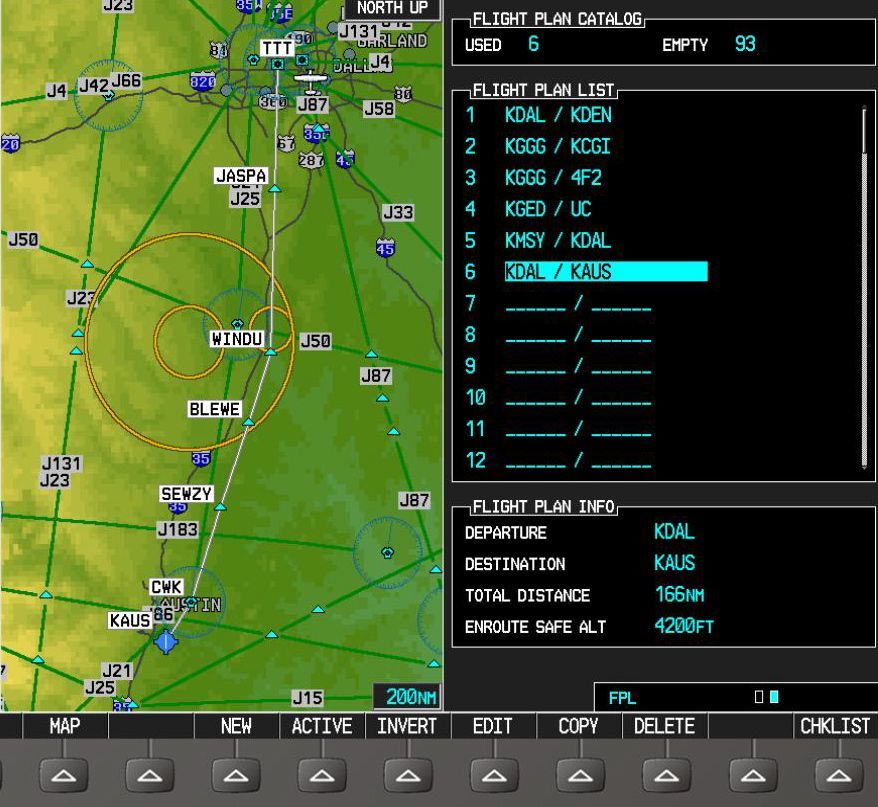
Flight Plans in the G1000

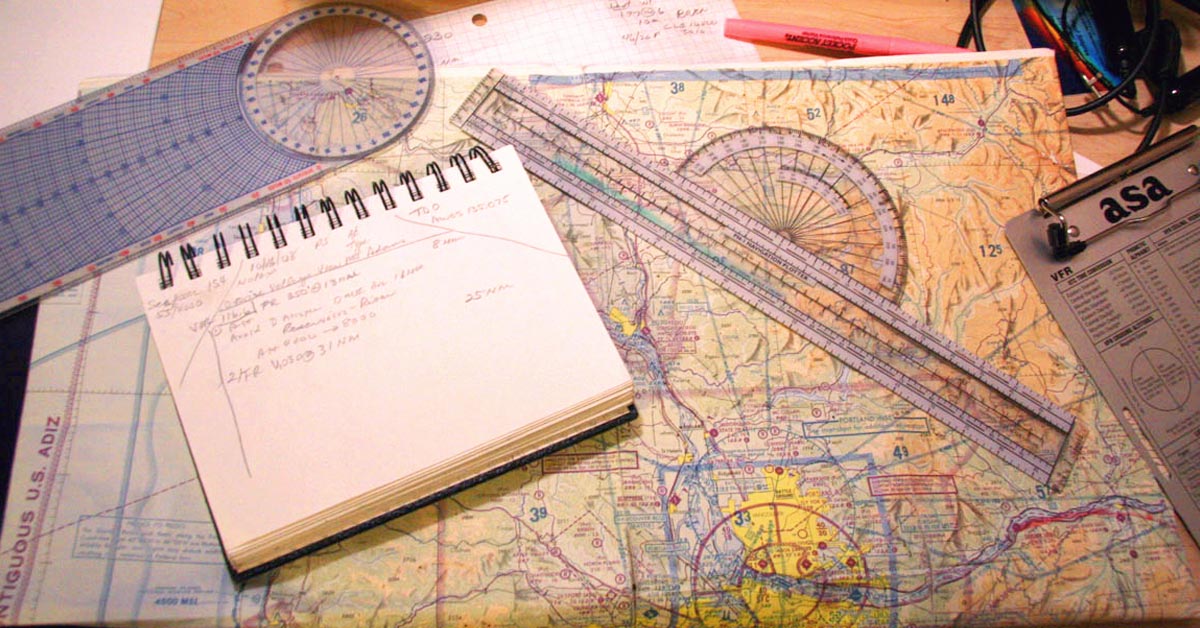
For you pilots out there, think back to your student pilot days. Think to that point between the first solo and the check ride. That point where you knew how to land safely (sort of), but you still had some more to learn. This is known as the cross country phase. During the cross country phase, every student pilot has to sit down and do a ground block with his instructor to learn how to create a cross country flight plan. It seemed quite complex at the time, what with drawing a course line and handling this overly complicated slide rule known as an E6B. Then there was the navigation log complete with ground speed and fuel calculations. It all seemed a little overwhelming, and that was before your instructor informed you that you had to figure all that out while flying!

Flying in the Clouds

IFR Flying With the G1000

Flying by reference to instruments is a challenge that, once mastered, can be one of the ultimate pleasures in flying. Whenever a private pilot is in the pattern and, all of a sudden, another pilot comes over the radio with a snappy tone: “November Eight Bravo Bravo, visual, 23,” doesn’t envy pour into the blood? Being able to fly IFR has numerous advantages. One is the ease of planning. When working on a VFR cross country, once he figures out where he is going, a pilot has to break out his plotter, mark the course, possibly change sectionals, pick out check points, figure out the headings, do some E6B calculations, and then some. When planning an IFR cross country, victor airways are already outlined on the low en-route chart, so all the pilot has to do is figure out which one to use. The best part is, the headings on the charts already take magnetic variation into account! Plus, a GPS direct clearance makes everyone’s job easier…

Uses of the KAP 140 Autopilot (Part II)

Uses of the KAP 140 Autopilot (Part II)

Jeff had just purchased his new Cessna Skylane, complete with a G1000 and a KAP 140 autopilot. Jeff was not completely comfortable with a G1000, but he had decided to splurge and go for the G1000, 182T NAV III model with a KAP 140 autopilot. He had scheduled some lessons for the following week to become more proficient…

KAP 140 Autopilot

An Overview of the KAP 140 Autopilot (Part I)

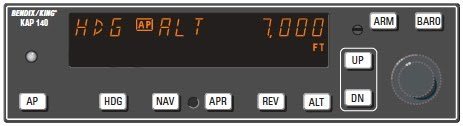
How many pilots out there have uttered curses under their breath trying to work the KAP 140 autopilot? The KAP 140 is great when it does what a pilot wants it to do, but sometimes, getting it to cooperate is a pain. Even the most experienced pilots still have gripes with this particular autopilot. It just does not work sometimes. Hopefully, after these next two articles, pilots will not be tempted to tear the autopilot out and drop it out the window from 6,000 feet.

Unique IFR Approaches From Around the World

Unique IFR Approaches From Around the World

There are always those approaches that instrument pilots are proud to have attempted and actually made it through. Theoretically, an instrument pilot should be able to perform any instrument approach, but some are a little tougher than others. Some are also more fun than others. Here are a few below that could give an IFR pilot an experience and a story.