The Complete WACO Aircraft Buyer's Guide: From Classic Heritage to Modern YMF-5C Excellence
Table of Contents
- Introduction - Why WACO Aircraft Captures Aviation Hearts
- The Rich Heritage of WACO Aircraft - A Century of Innovation
- Current WACO Model Lineup - Modern Classics for Today's Pilots
- Technical Deep Dive - Engineering Excellence in Modern WACO Aircraft
- Performance Characteristics and Flying Experience
- Ownership Costs and Financial Considerations
- Market Analysis - WACO Aircraft Availability and Trends (2008-2024)
- Competitors and Alternative Aircraft Comparison
- Pre-Purchase Inspection and Buyer's Checklist
- Ownership Experience and Community
- Future Considerations and Market Outlook
- Conclusion - Making Your WACO Aircraft Decision
Introduction - Why WACO Aircraft Captures Aviation Hearts
When someone asks what makes a modern WACO such a compelling choice, it boils down to this: it delivers the romance of the Golden Age with the predictability of a handcrafted, modern-certificated airplane. The company builds the YMF-5 in Battle Creek, Michigan, with more than 6,000 hours of labor in each airframe—high-touch craftsmanship that shows in the fit, finish, and tactile flying qualities. These airplanes are offered with VFR or IFR certification, day or night, with your choice of traditional round gauges or a full glass cockpit. And there are more than 150 owners across the globe, which says a lot about the way WACO has balanced heritage and reliability [1].
In this WACO aircraft buyer’s guide, I’ll walk you through the brand’s heritage, the current lineup with a focus on the YMF-5C, the technical details that matter, realistic performance, ownership costs, and how to assess the market. I’ll also give you a practical pre-buy checklist and specific guidance for pilots stepping into a tailwheel radial biplane. If you’re exploring classic aircraft ownership and you want the modern biplane aircraft that still turns every preflight into an occasion, WACO belongs at the top of your shortlist [1].
The Rich Heritage of WACO Aircraft - A Century of Innovation
The Original WACO Legacy (1919-1947)
WACO’s roots run back to 1919, when the Weaver Aircraft Company of Ohio began producing airplanes that would define the era. Over 28 years, WACO produced more than 60 different aircraft models and became a leading manufacturer during the Golden Age of Aviation. That prolific output and broad type diversity are why the WACO name is still shorthand for American aviation heritage [1].
The Modern Revival (1980s–present)
The YMF lineage dates back to 1930s open-cockpit biplanes. The modern rebirth of the design took shape in the late 1980s, when new-production YMF-5 aircraft returned to the market—faithful to the originals in spirit but updated for contemporary certification, reliability, and support [12]. Today, WACO continues that philosophy in Battle Creek: handcrafted, limited-run aircraft built to order with modern systems and safety, while preserving the classic lines and flying experience that make a WACO a WACO [1].
Current WACO Model Lineup - Modern Classics for Today's Pilots
WACO YMF Series Overview
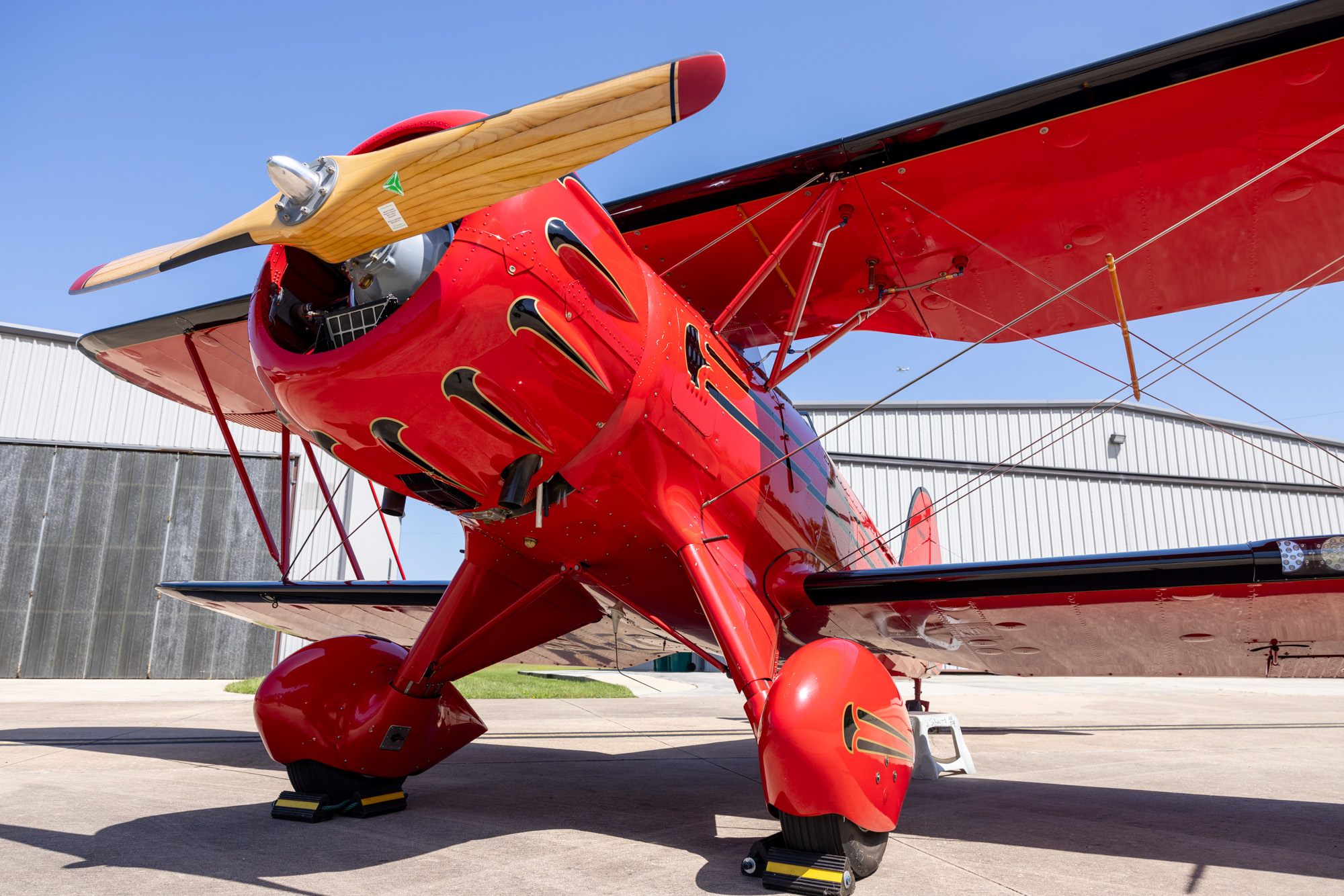
The YMF series is the core of WACO’s modern lineup: open-cockpit, fabric-covered biplanes powered by Jacobs radial engines, designed for pilots who value tactile flying and timeless aesthetics. Current production emphasizes customization—traditional gauges or full glass, VFR or IFR day and night—so you can tailor the airplane to your mission, whether that’s personal adventure, dual-cockpit sightseeing, or premium flight experience rides [1][2].
WACO YMF-5C - The Flagship Model
- Engine: Jacobs R-755 series radial, commonly 275 hp in YMF-5C configurations geared to sightseeing and ride operations [2].
- Fuel: Long-range capacity of 72 gallons is available/installed on many aircraft—helpful for cross-country ferrying or full-day ride operations [7][8]. Base fuel on earlier or differently equipped examples may be lower; 48 gallons is a commonly published standard capacity, so verify total usable fuel on the aircraft you’re evaluating [11].
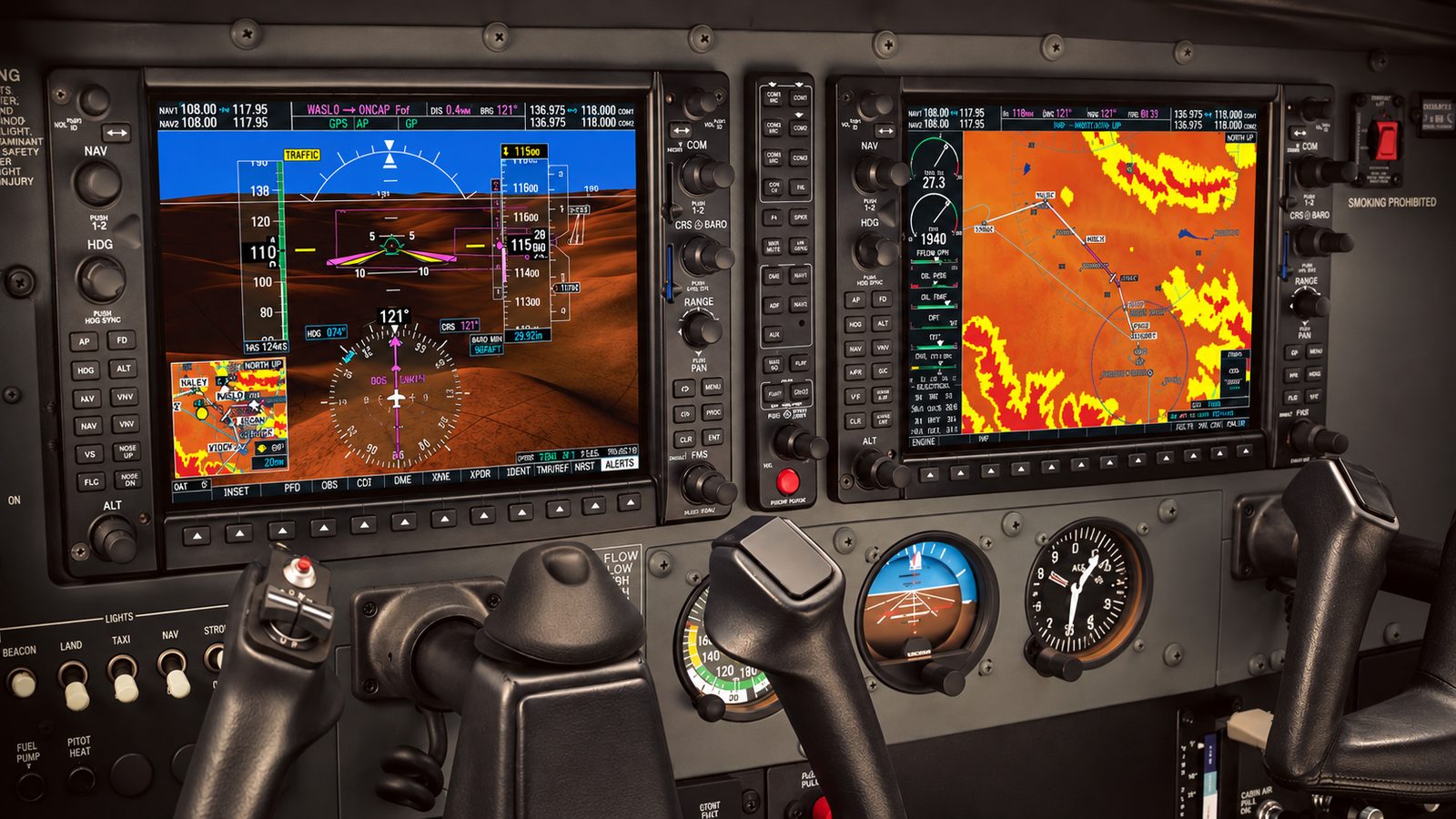
- Avionics: Sightseeing-optimized YMF-5C options include a Garmin G5 electronic attitude indicator, second com (GTR-225), GNC-255 nav/com with GI-106A indicator, and an Aera 796 portable GPS/weather. ADS-B In & Out is standard in this configuration [2].
- Airframe construction: 4130 steel-tube fuselage with epoxy coating and internal corrosion-proofing; aluminum sidewalls; balanced rudder and elevator; four aluminum ailerons; steerable tailwheel; shock-spring main gear; and wheels/brakes by Parker Hannifin or Grove [2].
- Certification flexibility: The YMF-5 platform is certified for VFR or IFR, day or night—exceptional capability for an open-cockpit biplane [1].
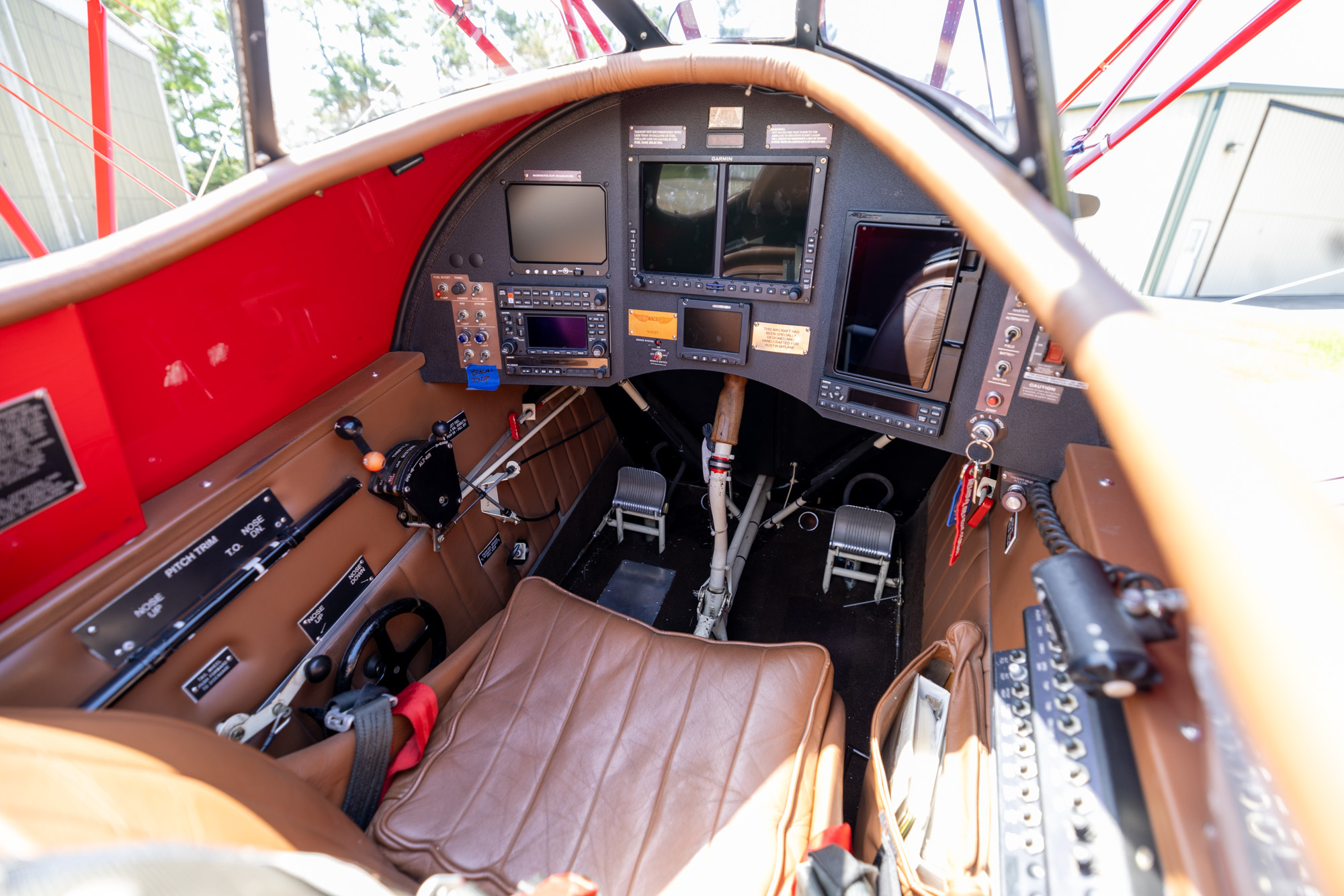
- Operations detail: The front cockpit can accept two passengers thanks to the removable front stick—one reason YMF aircraft are popular for sightseeing and special-occasion flights [9].
- Typical cruise (manufacturer data set): roughly 115 mph at about 14 gph [10].
- Average real-world fuel burn for 275 hp examples: approximately 10–14 gph, depending on power setting and mission profile [7].
- Notable speeds: VNE 214 mph; VS1 59 mph [10].
- Anecdotal cruise observation (pilot report): 105 mph indicated at 3,000 feet and 1,900 RPM—illustrating the WACO’s relaxed cruise profile when you’re in no hurry [9].
- Used examples vary widely with year, panel, engine time, and configuration. A 1995 YMF-5 was highlighted at $205,000 with a 275 hp Jacobs R-755 and a VFR Garmin 530/430 stack—an instructive price point for older, well-kept aircraft [5].
- Active market listings have shown asking prices spanning about $149,500 to $640,000—illustrating how airframe age, avionics, engine time, and cosmetic condition drive value [6].
- For buyers comparing new and late-model used, keep in mind that the platform’s IFR capability, glass-panel options, and ride-operations features were especially robust on later builds. Calibrate valuation accordingly based on actual equipment and condition [1][4][2].
WACO YMF-5D - The Deluxe Variant
The Super YMF-5D denotes a higher-spec build with emphasis on premium equipment and IFR integration. As a reference point, the 2014 Super YMF-5D carried a base price of $479,250; common options like a Garmin G500 glass suite and an S-TEC 55X autopilot pushed typical invoices north of $575,000 in that era. The YMF-5D is IFR certified and often integrates modern weather and engine monitoring such as the JPI EDM-930 [4]. In short, the 5D serves owners who want a full instrumentation and IFR feature set—without compromising the open-cockpit experience [4].
What to know about more recent pricing: a new YMF-5 as shown in a 2023/2024 review was priced at $658,400, with VFR packages starting at $590,000—useful benchmarks for budgeting a modern build against late-model used aircraft [3].
WACO YMF F-Series Comparison
The market is focused on the YMF-5 series, with F3C and F5C occasionally referenced for specific configurations or equipment differences. Check with WACO directly for current production offerings and consult individual listings for panel and engine specifics as the used inventory varies.
Technical Deep Dive - Engineering Excellence in Modern WACO Aircraft
Engine and Powerplant Options
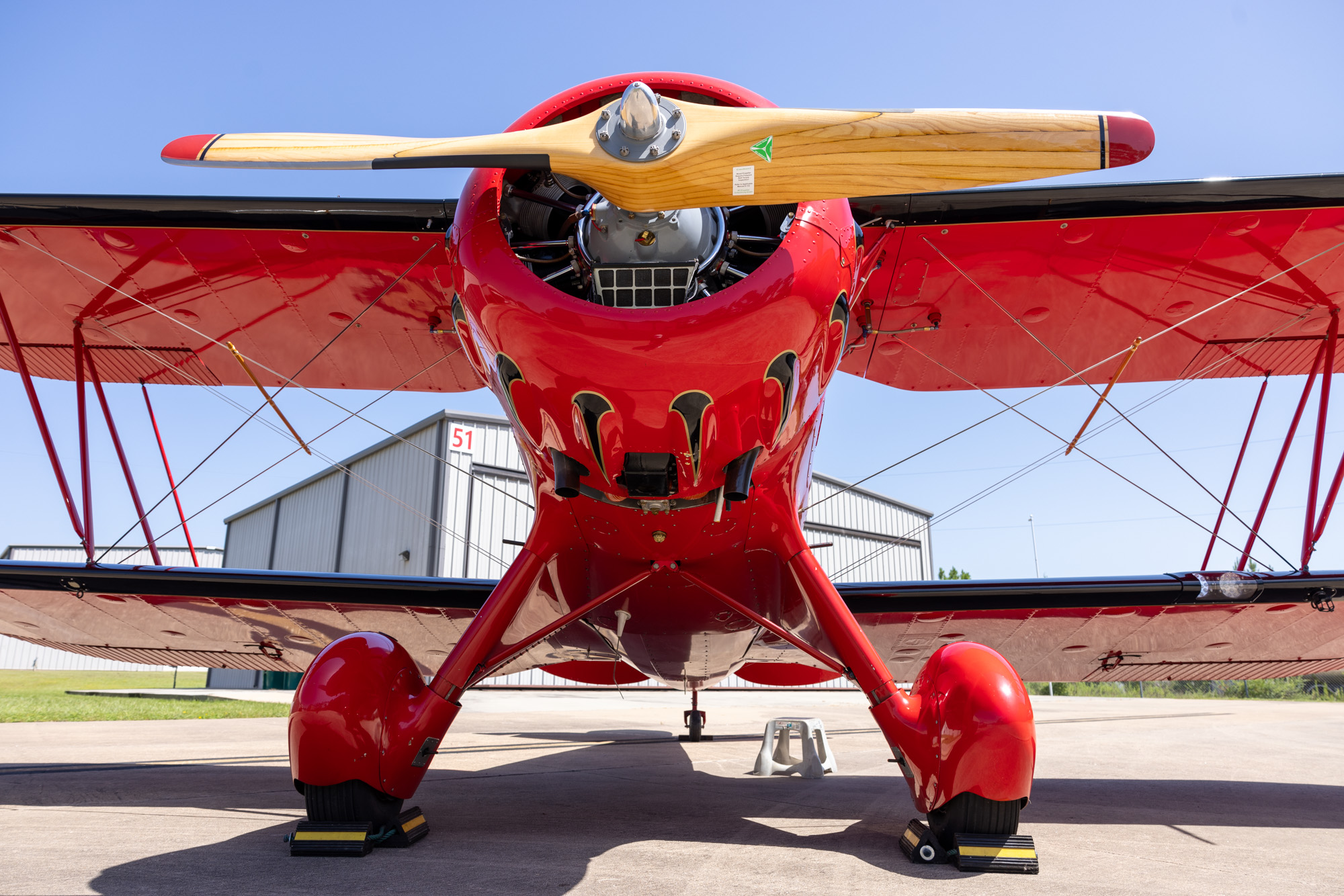
The heart of the modern YMF is the Jacobs radial. Current-production YMF-5 aircraft have been delivered with the R-755-A2 rated at 300 hp, with a published TBO of 1,400 hours when maintained in accordance with current service bulletins [3]. In sightseeing-optimized YMF-5C configurations, you’ll often see the 275 hp variant specified for reliability and operating economics [2].
Operationally, a fixed-pitch MT Propeller is commonly specified on new-production aircraft. Many pilots appreciate that it keeps takeoff and landing handling honest—without the gyroscopic surprises of a heavy constant-speed unit—one factor behind the YMF’s friendly runway manners in competent hands [3][9]. Plan your pre-buy to confirm time since overhaul (TSO), oil analysis trends, and compliance with applicable bulletins. If you intend to fly steady cross-country legs or operate commercial rides, make sure your fuel and power settings are mapped to the fuel capacity on board (48 gallons standard on many specs, 72 gallons on long-range examples) [11][7][8].
Airframe Construction and Materials
This is where WACO’s craftsmanship shows. The YMF-5C sightseeing spec underscores the rugged 4130 steel-tube fuselage with epoxy coat and internal corrosion proofing; wood fuselage stringers; balanced rudder and elevator; four aluminum ailerons; steerable tailwheel; shock-spring main gear; and brakes by Parker Hannifin or Grove [2]. The result is a classic biplane airframe optimized for daily operations—pleasant on grass, friendly on pavement, and forgiving at the lower end of the envelope when flown within its speed limits and weight/balance constraints. For gross weight planning, many modern YMF-5C examples reflect a 2,950 lb maximum gross—verify on the individual airplane, as paperwork and configurations vary in the used market [7].
Avionics and Modern Systems Integration
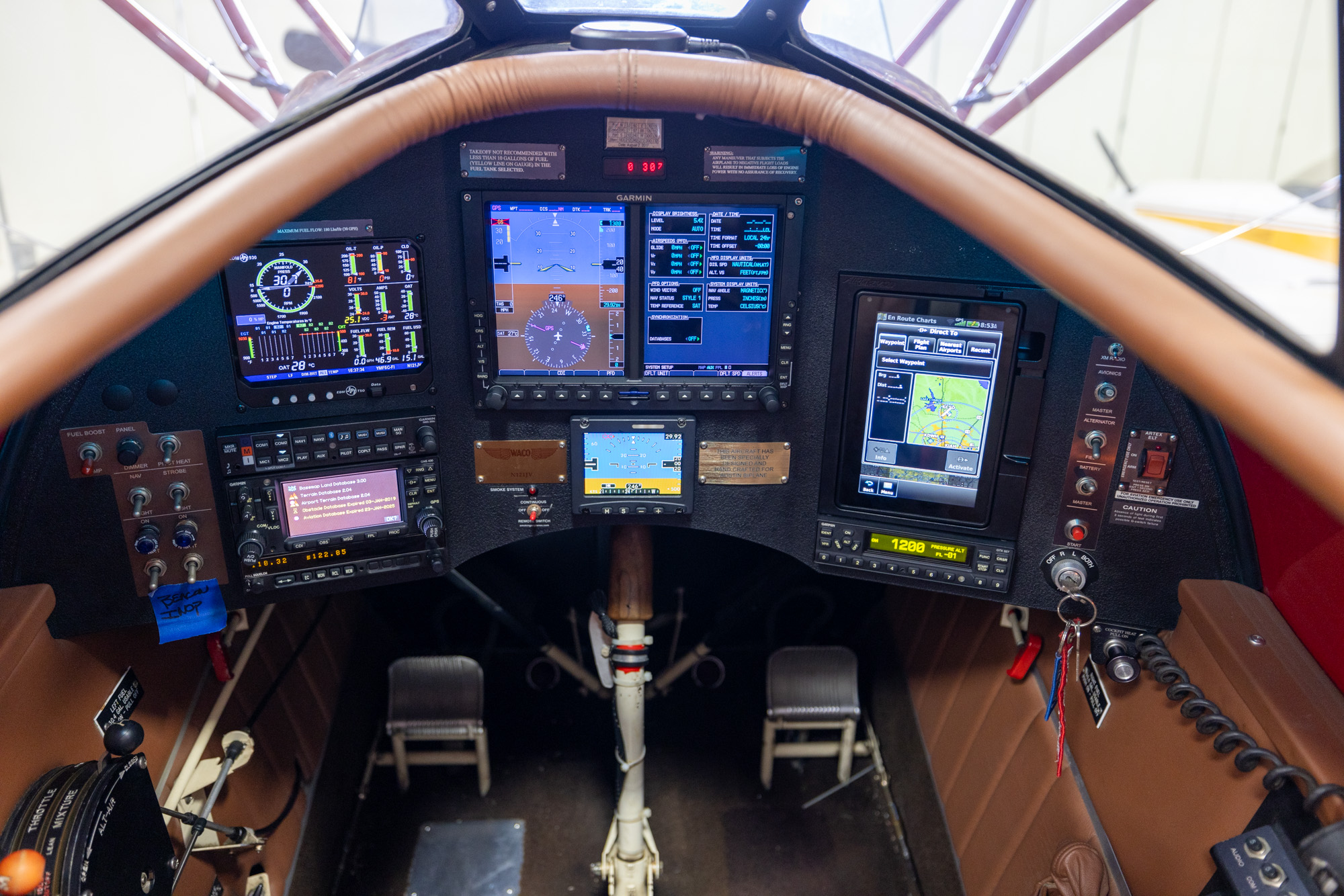
- Glass cockpit (e.g., Garmin G500) with autopilot (e.g., S-TEC 55X) for IFR and cross-country utility [4].
- Sightseeing-optimized packages: Garmin G5 electronic attitude indicator, second com (GTR-225), GNC-255 nav/com with GI-106A indicator, and a portable Aera 796 for moving map and weather. ADS-B In & Out is standard in the sightseeing configuration [2].
- Clean, VFR-only panels with modern Garmin legacy stacks (GNS 530/430) on older used examples [5].
To select the right panel, work backward from your mission: IFR capability for dispatch and training utility, or a lighter VFR panel for simplicity and cost control.
Performance Characteristics and Flying Experience
Flight Performance Data
- Cruise performance is squarely in the classic-biplane envelope. A commonly published figure is about 115 mph on roughly 14 gph, which aligns with what many owners plan for at moderate power settings [10].
- Key speeds: VNE at 214 mph and VS1 at 59 mph frame a broad, forgiving envelope—especially given the YMF’s generous control authority [10].
- In-cockpit anecdotal data points like 105 mph indicated at 3,000 feet and 1,900 RPM serve as a reminder: biplane flying is about savoring the journey—plan legs accordingly [9].
- The YMF’s four-aileron layout and balanced controls deliver light stick forces with predictable response—part of why step-down training from tricycle-gear singles often goes smoothly with the right tailwheel instruction [2][9].
- Stalls are gentle. A pilot report described even a full-power stall as “almost feet on the floor,” illustrating the type’s docile break and easy recovery characteristics [9].
- Light aerobatics (wingovers, lazy eights) are comfortably within reach for many pilots when trained and current; always verify each airframe’s specific limitations and equipment before you explore the envelope [9].
Pilot Experience and Training Requirements
Approach the YMF like any conventional-gear tailwheel airplane—get current, then stay current. A dedicated transition syllabus is smart even for experienced tailwheel pilots because the YMF is heavier and draggier than a Cub or Citabria. Treat the IFR certification as a tool for flexibility, not an excuse to push into marginal open-cockpit weather; the platform is IFR-capable with appropriate equipment, but exposure to wind, precipitation, and temperature will drive your real-world go/no-go decisions [1][4]. Add radial engine discipline to your flows; pilot reports note that the Jacobs can be susceptible to carburetor icing, so active carb-ice awareness belongs in your SOPs [9].
Operating Environment Suitability
- Runways: The YMF is tailwheel with a steerable tailwheel and shock-spring mains; it’s happy on well-prepared grass or paved surfaces. Fly precise tailwheel technique and brief crosswind and braking margins conservatively in your first 25–50 hours as you build type-specific proficiency [2].
- Weather: Open-cockpit flying is weather-dependent, even on an IFR-capable airplane. Dress for temperature and manage cockpit comfort on longer legs; conservative decision-making pays off in enjoyment and safety.
- Hangaring and ground handling: The YMF rewards care—hangaring protects fabric and finishes, and a standard ground-handling brief for line personnel (tow points, tie-down procedures) prevents avoidable wear. These are industry best practices for fabric-and-tube tailwheel aircraft.
Ownership Costs and Financial Considerations
Initial Purchase Investment
- New pricing context: A recent example of a YMF-5 was shown at $658,400, with VFR packages starting at $590,000. This frames current-spec acquisition costs for buyers comparing against late-model used [3].
- Historic reference point: In 2014, the Super YMF-5D base price was $479,250, with common options (glass, autopilot) bringing typical completed prices north of $575,000 [4].
- Used market range: Expect wide spreads based on year, avionics, engine time, and cosmetics. A snapshot of live listings showed pricing from about $149,500 to $640,000. Older but clean examples with a VFR Garmin stack and lower-time Jacobs engines can trade around the $200,000 range, as a 1995 YMF-5 example illustrates [6][5].
- Valuation drivers: Jacobs time since overhaul (TBO is 1,400 hours with current SBs on the 300 hp R-755-A2), panel modernization (glass and autopilot), ADS-B compliance, long-range tanks, paint/fabric age, and documented maintenance history [3][2].
When discussing any pricing, remember that asking prices are market-dependent and subject to listing specifics at any given moment.
Annual Operating Expenses
- Fuel: Plan a realistic 10–14 gph envelope depending on power setting; 14 gph at about 115 mph is a commonly published cruise benchmark [7][10].
- Maintenance: The sightseeing-optimized YMF-5C highlights a low-maintenance Jacobs setup and an airframe designed for high-volume commercial ride operations. Build your annual plan around radial engine best practices and regular inspections of fabric, bracing wires, and landing gear springs [2].
- Hangar and storage: Hangaring reduces UV exposure and weathering—industry best practice for fabric aircraft.
- Insurance: Tailwheel and open-cockpit experience can influence premiums. Building time with a type-experienced instructor and documenting your syllabus often helps with underwriting.
Depreciation and Resale Value Analysis
The market for modern WACOs is niche but resilient, with active listings and global ownership beyond the U.S., which supports liquidity for well-kept airframes [1][6]. Resale is most robust when records are impeccable, fabric and paint are well-maintained, the engine is mid-time or better, and the panel is aligned to buyer missions (IFR glass or a clean, modern VFR suite).

Market Analysis - WACO Aircraft Availability and Trends (2008-2024)
Production Numbers and Market Supply
New aircraft availability is deliberately limited; each YMF-5 is hand-built and not produced in high volume. That craftsmanship-first philosophy naturally constrains supply and helps residuals [1]. On the used side, there is steady inventory across major listing platforms. One recent snapshot showed 13 WACOs available, underscoring a consistent niche market [6]. You’ll also see examples advertised with long-range tanks and ride-operation kits—clues to prior mission profiles that can be a plus if you want the same capability [8].
Geographic Distribution and Market Preferences
WACO ownership is global, which matters for parts support and resale options down the road [1]. In the U.S., ride operators and private owners often gravitate to the YMF-5C and 5D for their combination of modern electronics, IFR approval potential, and classic presentation—consistent with how the factory positions the airplane [1][2][4].
Seasonal Market Patterns
As with most specialty aircraft, spring and fall often prove the most active buying windows. Monitor listings for a few months, track price moves, and be prepared to move quickly when the right airframe appears.

Competitors and Alternative Aircraft Comparison
Direct Competitors in the Modern Biplane Market
If your mission leans to hard aerobatics or competition flying, dedicated aerobatic types may be a better fit. If your mission is open-cockpit touring, sightseeing, and pure stick-and-rudder enjoyment with modern systems, the WACO is in its own lane.
Vintage Aircraft Alternatives
If you are wondering whether you should buy an original 1930s WACO or a modern YMF-5. If you want period authenticity and you’re comfortable with the maintenance realities of an antique, a restored original can be immensely rewarding. If you want classic lines with modern certification, systems, and parts support, the new-production YMF-5 is the more practical path [1][12].
Why Choose WACO Over Competitors
- Unique value proposition: A certificated, open-cockpit radial biplane with IFR capability and glass-panel options is rare in the market, and central to the YMF’s appeal [1][4].
- Craftsmanship: More than 6,000 labor hours per aircraft, focused on materials, finish, and fit [1].
- Mission versatility: From private touring to sightseeing operations, the YMF-5C/5D platform covers personal and commercial use cases with ADS-B, modern avionics, and durable construction [2][1].
Pre-Purchase Inspection and Buyer's Checklist
Essential Pre-Purchase Inspection Items
- Engine and propeller
- Fuel system
- Airframe and controls
- Landing gear and brakes
- Evaluate the tailwheel assembly, shock-spring gear condition, and brake system (Parker Hannifin or Grove) [2].
- Avionics and electrical
- Documentation
- Review logs for engine SBs and recommended practices (Jacobs), Form 337s, STCs, and conformity to equipment lists [3][2].
- Validate weight and balance for your typical mission profile (two up front, fuel load, baggage); the YMF can carry two in the front cockpit when configured with a removable front stick [9].
Working with WACO Dealers and Brokers
A WACO-savvy broker or dealer can save you time by correlating panel, powerplant, and configuration to current market comps. Many aircraft are highly customized—glass vs. round, IFR vs. VFR—so a clean apples-to-apples valuation is critical before you bid.
Financing and Insurance Preparation
- Lenders will look for clear logs, time on engine/prop, and avionics that support your stated mission (IFR or VFR).
- For insurance, prepare a transition plan with a type-experienced instructor and anticipate minimum dual requirements, especially if you’re light on tailwheel time.
Ownership Experience and Community
WACO Owner Groups and Communities
The best post-purchase asset you’ll have is the community—owners, instructors, and shops who know these airplanes and share practical tips on operations, care, and upgrades. Join early and tap into tribal knowledge on everything from cold-weather ops to fabric care.
Maintenance and Service Network
WACO’s ongoing production and global owner base support a viable maintenance ecosystem. The Jacobs engine, MT prop, and modern avionics choices help keep parts availability manageable compared to purely antique restorations [1][3][4]. Building a relationship with a shop that understands radials and fabric pays for itself in reliability and dispatch.
Long-term Ownership Satisfaction
Owners choose WACO because every flight feels special. Keep the airplane hangared, attend to the fabric, and treat the engine properly; you’ll protect both your experience and your residual value. A thoughtful glass upgrade—or a clean, modern VFR panel—can broaden your buyer pool when it’s time to sell.
Future Considerations and Market Outlook
WACO Aircraft Company Direction
Handcrafted, limited-volume production with modern safety and avionics options is core to WACO’s identity—and it supports values on the secondary market. The company builds to order, with IFR/VFR flexibility and configuration choice baked into the offering [1]. If you want a new one, plan early and spec it to your mission.
Regulatory Environment Impact
Investment Perspective
Conclusion - Making Your WACO Aircraft Decision
Here’s my bottom line. If you’re drawn to classic aircraft ownership but you want modern reliability, parts support, and certificated systems, the WACO YMF-5 is the gold standard. The company’s build quality and IFR/VFR flexibility are unmatched for an open-cockpit, radial biplane: handcrafted in Battle Creek, 6,000+ labor hours per airplane, with more than 150 owners worldwide validating the formula [1]. As a buyer:
- Understand your mission. If it’s sightseeing and local joyrides, the YMF-5's Jacobs, ADS-B standard, and straightforward avionics are ideal [2].
- If you want IFR capability and long legs with modern situational awareness, target 5D builds with glass, autopilot, and comprehensive engine monitoring [4].
- Price intelligently. Use current new pricing (~$590,000 VFR packages; ~$658,400 as shown) to calibrate your used search, and compare against live market ranges ($149,500–$640,000, with equipment and condition driving the spread) [3][6].
- Vet each airplane on its specifics: Jacobs model/TBO status, fuel capacity (48 vs. 72 gallons), avionics currency, fabric/finish age, and documentation [3][11][7][8].
If your dream is a modern classic that feels special every time you strap in—and that still gives you the practicality of modern avionics and certification—the WACO YMF-5C and 5D deserve a serious look. When you’re ready, I’ll help you pick the right airplane, structure a proper pre-buy, and get you flying the kind of biplane that never goes out of style.
Frequently asked questions
What is the cruise speed of a WACO YMF-5C?
How much does a new WACO YMF-5 cost?
Is the WACO YMF-5C certified for IFR flight?
How many passengers can the WACO YMF-5C carry?
What engine is used in the modern WACO YMF-5C?
Sources
- WACO Aircraft YMF-5
- WACO YMF-5C Super Sightseeing Configuration
- We Fly: WACO YMF-5
- Plane & Pilot: New Bottle, Old Wine
- Flying Magazine: 1995 WACO YMF-5 Aircraft for Sale
- WACO for Sale Listings - Controller
- SkyQuest International WACO Classic YMF-F5C
- Trade-A-Plane: WACO Aircraft for Sale
- Pitts Specials: WACO Pilot Report
- AOPA: WACO YMF-5 Guide
- GlobalAir: WACO YMF-5 Specifications
- DreamWacos: WACO Classic Pilot Report and Comparison

We promise we don't send spam